
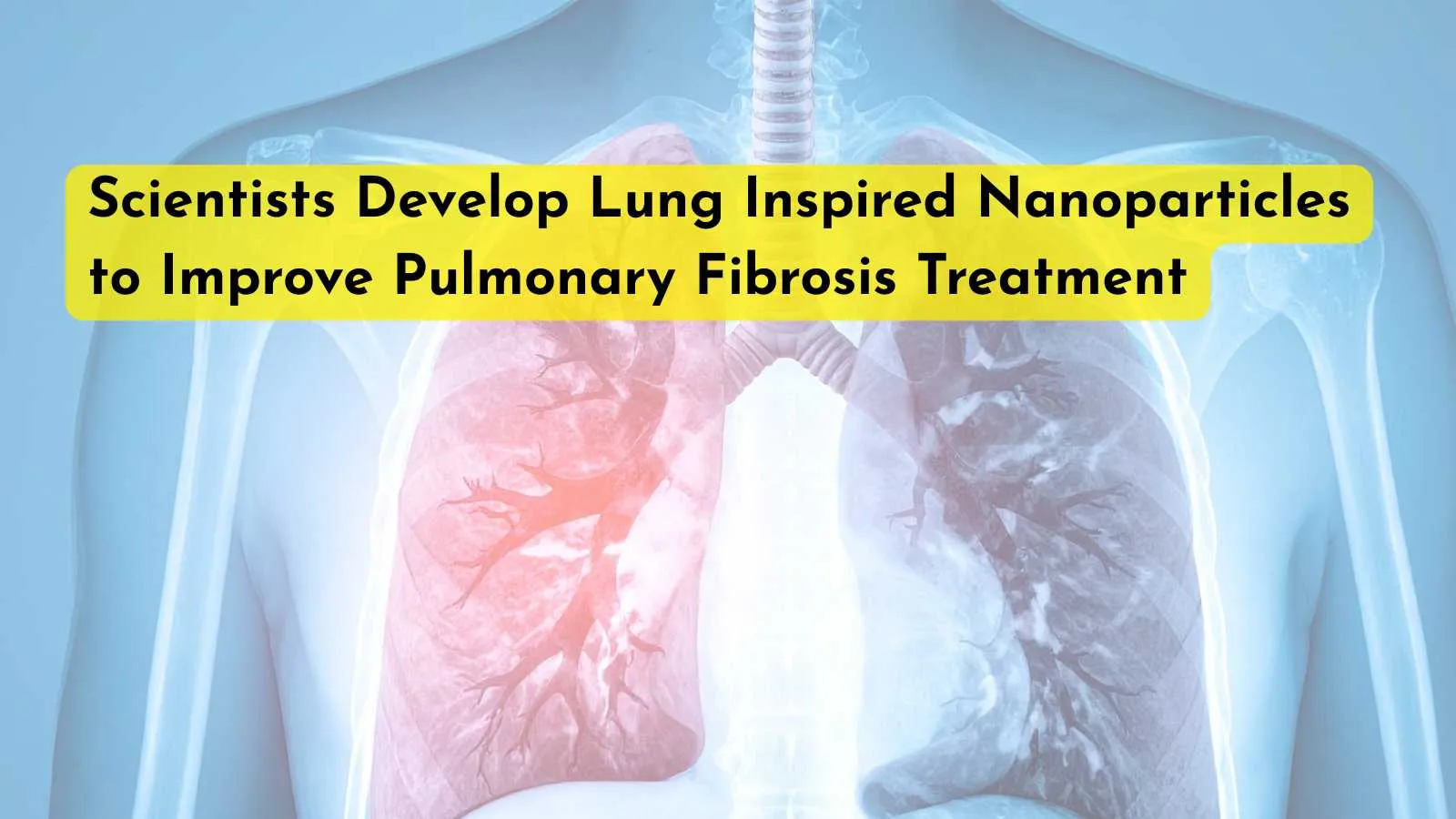
Researchers at the CIC biomaGUNE Center for Cooperative Research in Biomaterials have developed a novel lung inspired nanoparticle platform that could significantly improve the treatment of pulmonary fibrosis while reducing drug-related side effects.
The newly developed nanoparticles are designed to mimic pulmonary surfactant, the natural mixture of lipids and proteins that lines the lung alveoli and plays a critical role in breathing. By using this naturally occurring material as a drug carrier, scientists have created a targeted delivery system capable of transporting antifibrotic medicines directly to diseased lung tissue.
Pulmonary fibrosis is a chronic and progressive condition characterized by the formation of scar tissue in the lungs, which gradually reduces breathing capacity. Existing therapies are typically administered orally and can be associated with significant adverse effects, creating a need for more effective and safer treatment approaches.
According to the research team, the biomimetic nanoparticles demonstrated remarkable lung retention in preclinical studies. Experiments in mice showed that approximately 90% of the administered nanomedicine remained within the lungs after inhalation, enabling the therapeutic agent to concentrate at the disease site while limiting exposure to other organs.
This targeted delivery approach could allow lower doses of antifibrotic drugs to achieve therapeutic benefits, potentially reducing the risk of systemic side effects commonly observed with conventional treatments.
The study, published in Advanced Healthcare Materials, also describes an automated microfluidic manufacturing process that produces highly uniform nanoparticles with consistent drug encapsulation and stability. Researchers believe this reproducible synthesis method may help accelerate the development and future commercialization of inhaled nanomedicines.
One of the major challenges in pulmonary drug delivery is the lung's natural defense system, which often removes inhaled particles before they can exert their therapeutic effect. By closely resembling the body's own pulmonary surfactant, the newly developed nanoparticles are better able to navigate these biological barriers and distribute efficiently throughout lung tissue.
Researchers noted that the platform preserves the native proteins and lipids found in pulmonary surfactant, helping maintain its natural functionality and improving drug transport within the respiratory system.
Beyond pulmonary fibrosis, the technology could potentially be adapted for the treatment of a wide range of respiratory diseases requiring localized drug delivery. The scientists believe their findings open new possibilities for developing more effective inhaled therapies that combine enhanced efficacy with improved safety profiles.
The research was led by the Molecular and Functional Biomarkers group at CIC biomaGUNE under the direction of Professor Jesús Ruiz-Cabello, in collaboration with researchers from the Department of Biochemistry and Molecular Biology at the Complutense University of Madrid.
While further studies and clinical evaluation are needed, the results highlight the growing potential of biomimetic nanomedicine to transform the treatment of chronic lung diseases through precision drug delivery.