  • Lilly Highlights Retatrutide’s Potential as Next-Generation Treatment for Obesity and Related Conditions

    Eli Lilly has provided new insights into retatrutide, its investigational medicine that is attracting significant attention for its potential to treat obesity, type 2 diabetes, and several obesity-related health conditions. While the therapy remains under clinical development and is not yet approved for public use, ongoing research suggests it could become one of the most impactful treatments in the rapidly growing obesity care market.

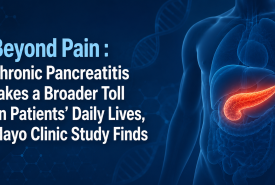
  • Beyond Pain : Chronic Pancreatitis Takes a Broader Toll on Patients’ Daily Lives, Mayo Clinic Study Finds

    Chronic pancreatitis (CP) is often recognized for the severe abdominal pain it causes, but new research from Mayo Clinic suggests that the disease affects far more than pain alone. The study reveals that CP significantly impacts mobility, self-care, routine activities, mental well-being, and overall quality of life, highlighting the need for a more comprehensive approach to patient care.
    The findings were first made available online on August 27, 2025, and later published in the Journal of Pancreatology (Volume 9, Issue 1) on March 30, 2026.

  • AI Expands Role in Cardiac Arrest Treatment and Emergency Response

    Artificial intelligence is rapidly moving into one of medicine’s most critical areas — cardiac arrest care, with researchers reporting that AI tools may soon help doctors predict cardiac arrests, guide CPR decisions, improve emergency response systems, and support recovery planning after resuscitation.

    A new review published in the World Journal of Emergency Medicine examined how artificial intelligence is being applied across the full chain of cardiac arrest care, from early risk detection to post-resuscitation recovery.

  • Experts Raise Concerns Over UK’s Fast-Track Drug Approval System

    A newly introduced drug approval pathway in the United Kingdom is facing criticism from healthcare experts, who argue that the system may favor pharmaceutical companies more than patients or the public healthcare system. According to an analysis published in The BMJ, the accelerated process could lead to quicker market access for medicines without guaranteeing meaningful benefits for patients.

  • New Era in Deafness Treatment : FDA Clears First Gene Therapy to Restore Hearing

    In a landmark medical breakthrough, the U.S. Food and Drug Administration has approved the world’s first gene therapy designed to treat a rare form of inherited hearing loss, marking a major step toward curing, not just managing, deafness.

  • Takeda's Dengue Vaccine Clears India's Expert Panel, Approval Imminent

    India has moved a decisive step closer to having its first tetravalent dengue vaccine on the market after a Subject Expert Committee (SEC) under the Drugs Controller General of India (DCGI) recommended approving Takeda Biopharmaceuticals' Dengue Tetravalent Vaccine (TDV) for import and use in individuals aged 4 to 60 years.

  • India’s Homegrown Antibiotic Moves Closer to Europe as Wockhardt Files EMA Application
    Wockhardt has taken a major step in global healthcare by filing a Marketing Authorisation Application with the European Medicines Agency, EMA for its new antibiotic WCK 5222
  • Mounjaro : A strong performer in the last 9 months

    Mounjaro (tirzepatide) has emerged as one of the most impactful brands in the GLP‑1 category, showing remarkable traction over the last nine months. With growing acceptance among clinicians and increasing awareness among patients, Mounjaro’s performance reflects both strong clinical confidence and rising demand in the metabolic therapy space.

  • Peptides in Cosmetics

    Vinay KumarVinay Kumar Singh. 
    Head-Formulation
    Kumar Organic Products Research Centre Pvt. Ltd.,
    Bengaluru
    Email : formulation_krc@kopresearchcentre.net

  • New Research finds ADHD Stimulant medications work in unexpected way

    Researchers at Washington University School of Medicine in St. Louis suggest that common stimulant medications used to treat attention-deficit/hyperactivity disorder (ADHD), such as Ritalin and Adderall, may work in ways scientists didn’t previously understand. The findings challenge the long-held belief that these drugs primarily improve attention by acting directly on the brain’s attention circuits.

Subscribe to Pharmapedia