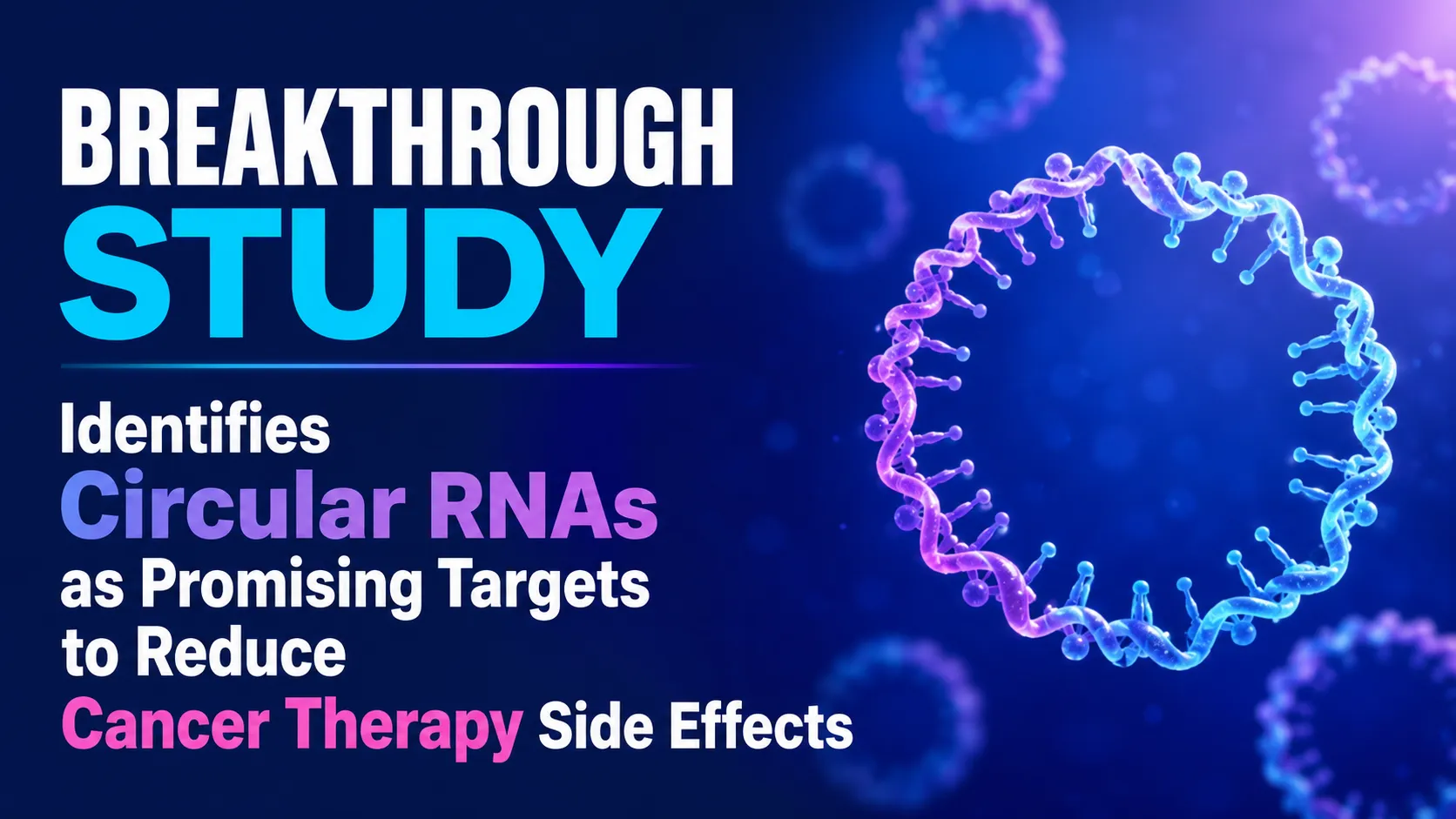
As cancer treatments continue to improve survival rates, managing treatment-related side effects remains one of the biggest challenges in oncology. A new scientific review has highlighted the significant role of circular RNAs (circRNAs) in understanding and potentially reducing the toxic effects associated with chemotherapy, radiotherapy, and immunotherapy.
Circular RNAs are a unique class of RNA molecules that form stable, closed-loop structures, making them highly resistant to degradation. Researchers are increasingly recognizing these molecules as key regulators of several biological processes, including oxidative stress, apoptosis, mitochondrial function, inflammation, and DNA damage, all of which contribute to toxicity caused by cancer therapies.
According to the review, circRNAs play a dual role in treatment-related toxicity. Some circRNAs can worsen tissue damage by promoting inflammation and oxidative stress, while others appear to protect healthy cells by maintaining cellular balance and reducing injury. This complex regulatory function suggests that circRNAs could serve as both indicators of toxicity risk and therapeutic targets to prevent adverse effects.
The review also highlights the involvement of circRNAs in several forms of organ-specific toxicity commonly seen during cancer treatment, including cardiotoxicity, nephrotoxicity, neurotoxicity, and gastrointestinal toxicity. By influencing multiple signaling pathways, circRNAs help determine how different organs respond to cancer therapies.
One of the most promising findings is the potential use of circRNAs as biomarkers for the early detection of treatment-related toxicity. Their remarkable stability and tissue-specific expression patterns make them attractive candidates for monitoring patients during therapy and identifying complications before they become clinically significant. Such early detection could enable clinicians to intervene sooner and improve treatment outcomes.
Researchers also noted the growing importance of circRNAs in immune-related adverse events associated with cancer immunotherapy. Since these molecules regulate immune signaling and inflammatory pathways, they may help explain why patients experience different levels of treatment tolerance and could support the development of more personalized therapeutic strategies.
Despite these encouraging findings, the authors emphasize that several hurdles must be overcome before circRNA-based approaches become part of routine clinical practice. Improvements in detection technologies, standardized analytical methods, and further validation through clinical studies will be essential to translate these discoveries into patient care.
Overall, the review suggests that advancing research on circular RNAs could pave the way for safer and more personalized cancer treatments. By targeting circRNA-mediated pathways, future therapies may reduce treatment-related toxicity while preserving the effectiveness of anticancer interventions, ultimately improving both survival and quality of life for patients