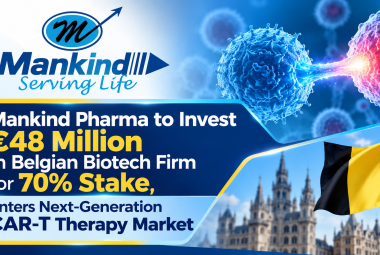

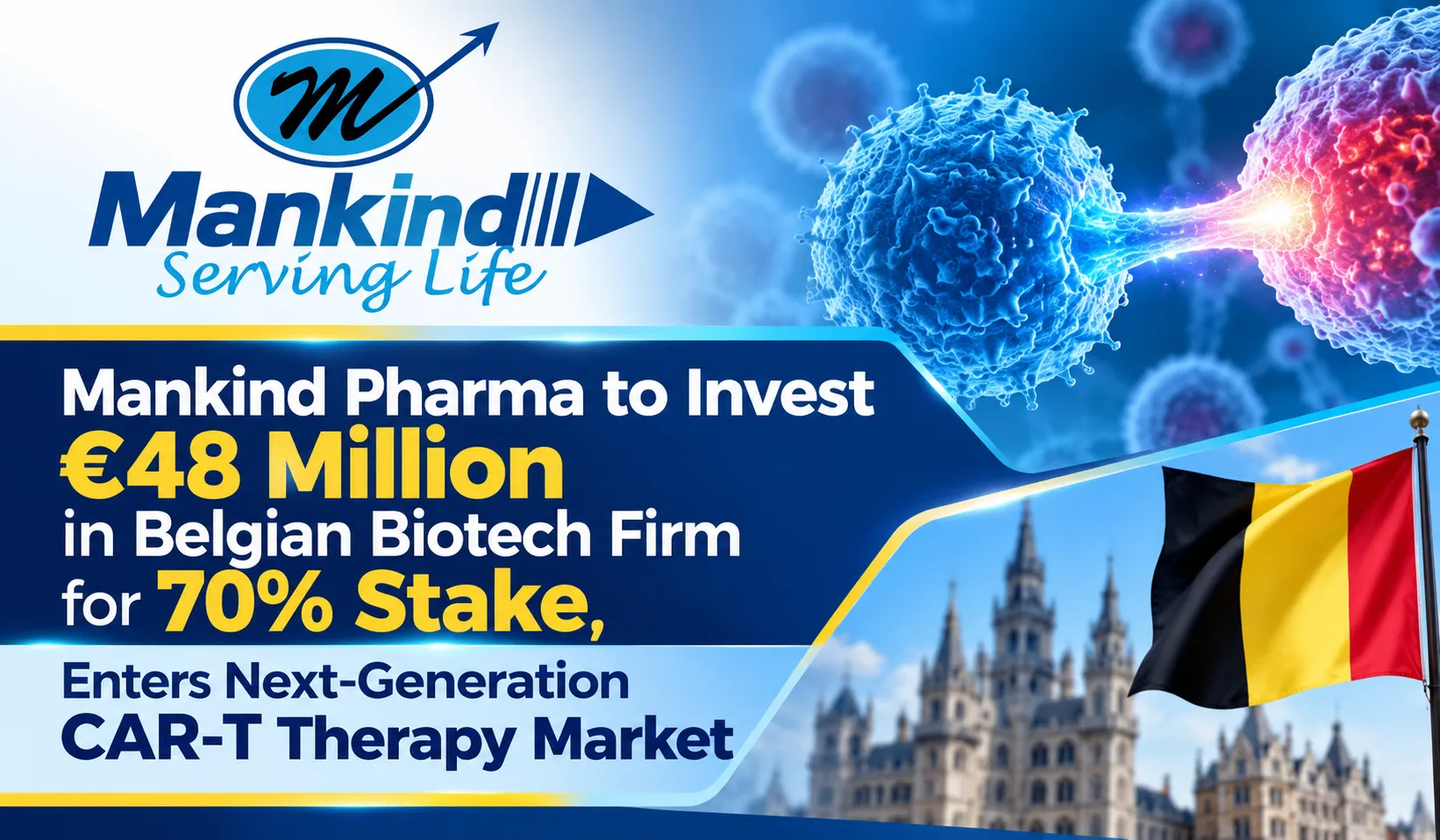
Mankind Pharma Limited has entered into a definitive agreement to acquire a 70% stake in Armed Cell Therapeutics B.V. (ACTx), a Belgium-incorporated biotechnology company developing next-generation chimeric antigen receptor T-cell (CAR-T) therapies for cancer. The acquisition will be made through Mankind Pharma’s wholly owned subsidiary, Mankind Pharma (Netherlands) B.V., with an investment of 48 million euro to be paid in instalments.
The acquisition marks Mankind Pharma’s strategic entry into next-generation CAR-T therapies as the company seeks to build a global, innovation-led pharmaceutical business. According to the regulatory filing dated October 15, 2026, the company’s board has also approved an additional investment of up to 45 million euro in its Netherlands subsidiary, increasing the aggregate investment limit to 50 million euro, including the previously approved 5 million euro.
Armed Cell Therapeutics is developing next-generation CAR-T therapies designed to strengthen and sustain the immune system’s ability to attack cancer cells. Its lead development programmes target non-Hodgkin lymphoma and small cell lung cancer. The company’s research and development activities are led by experienced teams based in the United States and Europe.
CAR-T cell therapy is an advanced form of cancer immunotherapy in which T cells are engineered to recognise and attack cancer cells. Although the approach has transformed the treatment of certain blood cancers, challenges such as treatment resistance, relapse and limited effectiveness against solid tumours remain. Armed Cell Therapeutics is developing armed CAR-T approaches that incorporate additional biological payloads intended to improve antitumour activity and treatment durability.
The company also plans to pursue innovative approaches, including in vivo CAR-T cell generation. Its research strategy includes addressing challenges associated with CAR-T cell persistence, T-cell exhaustion and the emergence of resistant cancer cells. Approaches designed to target multiple cancer antigens may also help reduce the likelihood of cancer cells escaping immune recognition. However, the clinical benefits of these approaches will need to be established through further research and clinical studies.
Mankind Pharma stated that the investment is part of its long-term strategy to expand into complex and chronic disease areas and strengthen its global research capabilities. Through the acquisition, the company expects to gain access to ACTx’s scientific expertise, research platforms and pipeline of next-generation CAR-T candidates.
Commenting on the transaction, Arjun Juneja, Chief Operating Officer of Mankind Pharma, said innovation would be one of the company’s defining growth engines over the coming decades. He described the investment as the first step towards building a global pipeline of breakthrough therapies and highlighted the company’s ambition to make advanced treatments more accessible to patients in India and around the world.
Paul Stoffels, Chair of the Board of Armed Cell Therapeutics and former Chief Executive Officer of Galapagos, said next-generation CAR-T therapies could potentially reach more patients if their activity and durability were improved. He expressed confidence in the company’s research assets and team, supported by Mankind Pharma’s investment.
The transaction will provide Mankind Pharma with an opportunity to participate in the development of advanced cancer treatments beyond its established pharmaceutical formulations and consumer healthcare businesses. It also reflects growing interest among pharmaceutical companies in biotechnology and innovative therapeutic platforms.
However, Armed Cell Therapeutics’ lead programmes remain under development, and the acquisition does not mean that its therapies are already approved or available for routine clinical use. Their future progress will depend on research outcomes, clinical evidence, regulatory approvals and commercial development.