

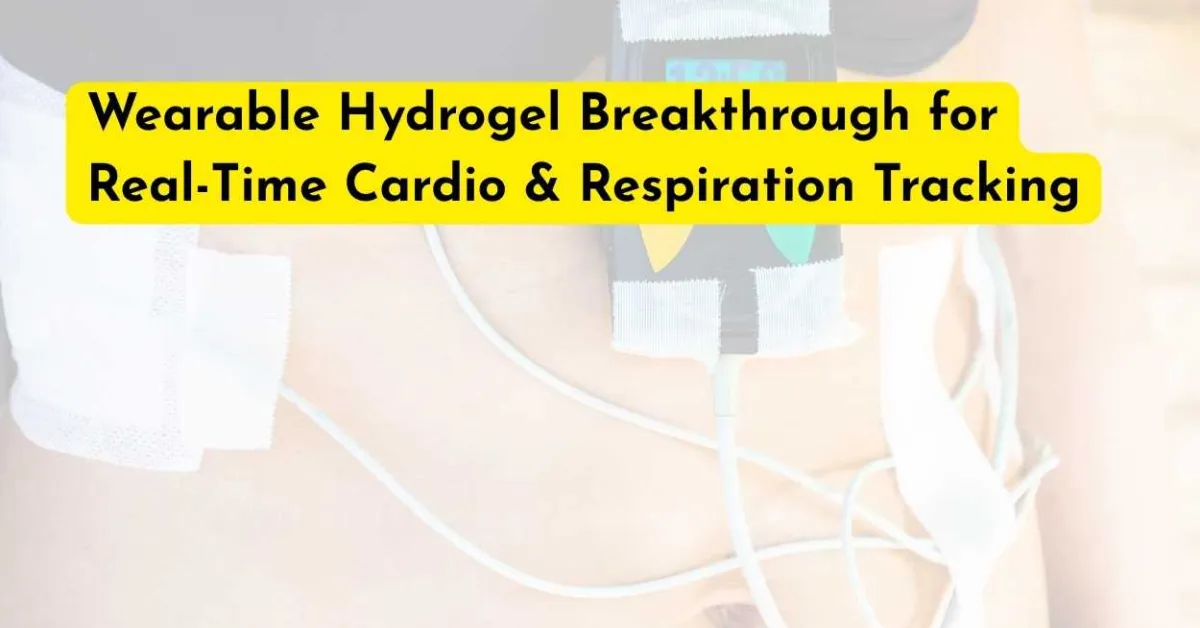
Scientists have developed an advanced MXene-based wearable hydrogel sensor capable of continuous heart rate and respiratory monitoring under extreme conditions such as high heat, humidity and vigorous exercise. The innovation promises more reliable physiological tracking for endurance sports and broader health applications.
A team from Xi’an Jiaotong-Liverpool University and collaborators engineered a dual-network conductive hydrogel reinforced with MXene nanosheets, combining moisture retention, stretchability and antibacterial protection. This flexible material closely mimics human skin, overcoming common limitations of rigid electronic wearables that often suffer motion artifacts, discomfort and unreliable readings during intense activity.
Under simulated marathon conditions such as high temperature and humidity, the sensor maintained stable performance for hours, enabling consistent tracking of cardiovascular and respiratory signals such as pulse and breathing patterns. Its high strain sensitivity and strong environmental stability make it suitable for real-time physiological monitoring where traditional devices struggle.
The hydrogel’s antibacterial properties and robustness under sweat-rich environments further distinguish it from conventional sensors, suggesting applications beyond sports, including rehabilitation, occupational health monitoring and continuous patient tracking in challenging conditions.
Published in Microsystems & Nanoengineering, this research highlights the potential of material-science innovations in next-generation wearable health technologies that deliver accurate, continuous monitoring with greater comfort and durability.