
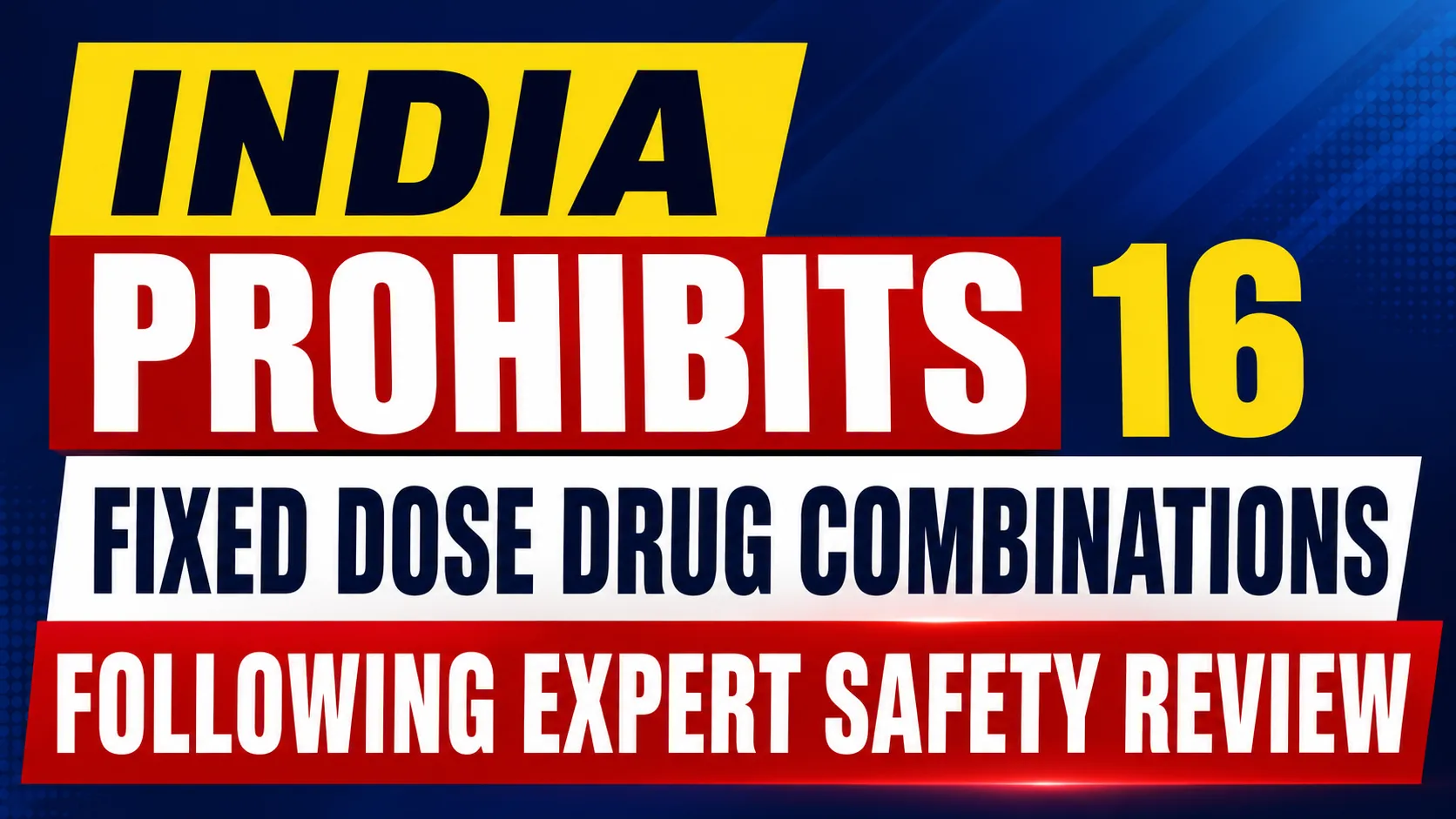
Ministry of Health and Family Welfare has prohibited the manufacture, sale and distribution of 16 Fixed Dose Combinations (FDCs) for human use across India with immediate effect.
The decision was taken under Section 26A of the Drugs and Cosmetics Act, 1940, following an extensive scientific review of drug combinations available in the Indian market. The move forms part of the government's ongoing efforts to ensure that only scientifically validated, safe and therapeutically justified medicines remain available to patients.
The review process was initiated in compliance with directions issued by the Supreme Court of India, which had called for a comprehensive examination of Fixed Dose Combinations marketed in the country. Subsequently, the Drugs Technical Advisory Board (DTAB) constituted an Expert Committee to evaluate the safety, efficacy and therapeutic relevance of various FDCs.
After detailed scientific assessment, the Expert Committee identified 16 combinations that were found to lack adequate therapeutic justification or were considered to pose potential health risks when compared to their claimed benefits. Based on these findings, the Ministry issued notifications prohibiting their manufacture, sale and distribution throughout the country.
The banned formulations span multiple therapeutic categories, including dermatological preparations, pain-relief medicines, antispasmodics, antidiabetic products and antibiotic combinations. Several of the prohibited products contain combinations involving aloe vera extracts, vitamin preparations, pain relievers such as paracetamol, gastrointestinal medicines, and antibiotics combined with enzymes like serratiopeptidase.
Among the notable combinations prohibited are Dicyclomine with Paracetamol and Clidinium Bromide, Gliclazide with Chromium Picolinate, Paracetamol with Lignocaine, Amoxicillin with Serratiopeptidase, Cefadroxyl with Probenecid, and Cefuroxime with Serratiopeptidase.
Health authorities emphasized that irrational Fixed Dose Combinations can expose patients to unnecessary risks, increase the possibility of adverse drug reactions, and contribute to inappropriate medication use. The latest action reflects the government's commitment to ensuring that medicines available in the market meet established standards of safety, efficacy and therapeutic value.
The Ministry has directed all State Drug Controllers and regulatory authorities to enforce the ban strictly. Manufacturers, distributors, importers and other stakeholders have also been instructed to take immediate corrective measures and ensure compliance with the notifications.
This is not the first time that the government has acted against irrational drug combinations. Over the years, several FDCs have been removed from the market following scientific reviews, reinforcing India's regulatory focus on patient welfare and rational prescribing practices.
With the latest prohibition, regulators hope to further strengthen drug safety standards and promote the use of medicines supported by sound clinical evidence, ultimately improving the quality of healthcare delivered to patients across the country.