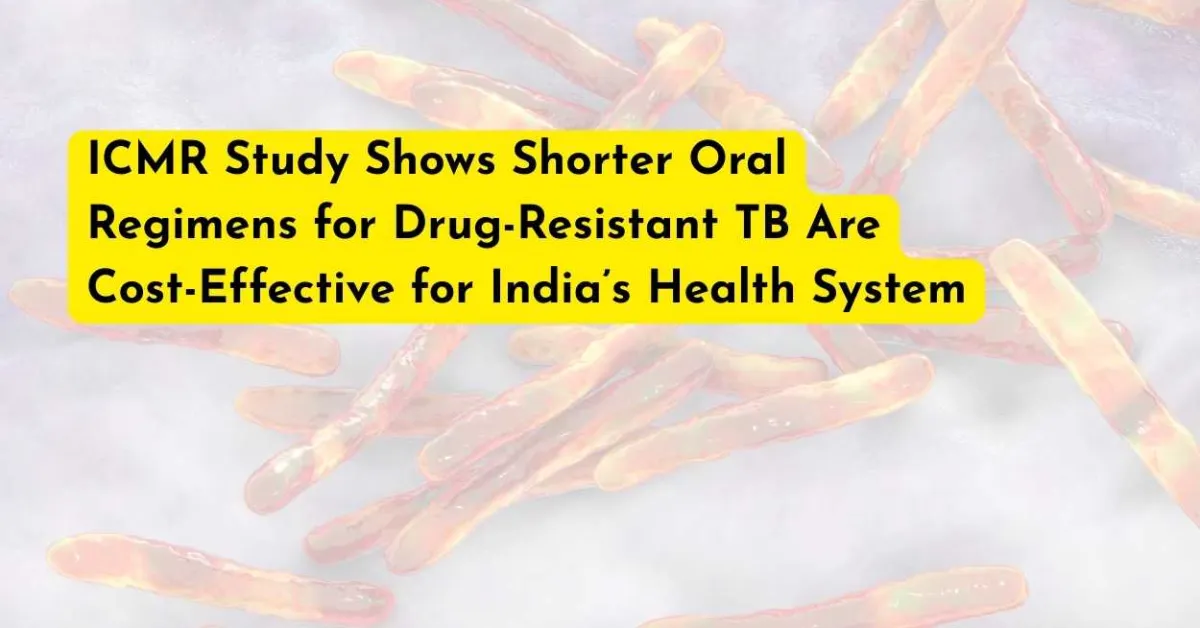
A recent study led by the Indian Council of Medical Research (ICMR) has found that shorter, all-oral treatment regimens for multidrug-resistant and rifampicin-resistant tuberculosis (MDR/RR-TB) could deliver better health outcomes at lower costs compared to longer traditional therapies in India.
The economic evaluation, published in the Indian Journal of Medical Research, assessed newer treatment combinations under India’s National TB Elimination Programme (NTEP). These include: BPaL regimen -combining bedaquiline, pretomanid, and linezolid and BPaLM regimen- adding moxifloxacin to the BPaL mix
Both regimens shorten treatment to six months of all-oral therapy versus standard regimens lasting 9-20 months. The analysis found that the BPaL regimen not only improved patient outcomes but also saved about ₹379 in health system costs for every additional Quality-Adjusted Life Year (QALY) gained. The BPaLM regimen was similarly cost-effective at a marginal additional cost of ₹37 per QALY gained.
Shorter, all-oral regimens are considered transformative because they can simplify treatment, improve patient adherence, reduce side effects, and ease the burden on India’s healthcare infrastructure. Traditional longer treatments often require injectable drugs, which can be painful, difficult to administer, and harder for patients to complete.
MDR/RR-TB remains one of the toughest forms of tuberculosis to manage due to lengthy therapies and higher risk of adverse effects. Shortening the treatment duration without compromising effectiveness is seen as a crucial step toward achieving India’s goal of eliminating TB as a public health threat.
Based on these results, the researchers have recommended that the shorter BPaL-based regimens be considered for wider adoption under programmatic conditions to accelerate progress against drug-resistant tuberculosis in the country.