
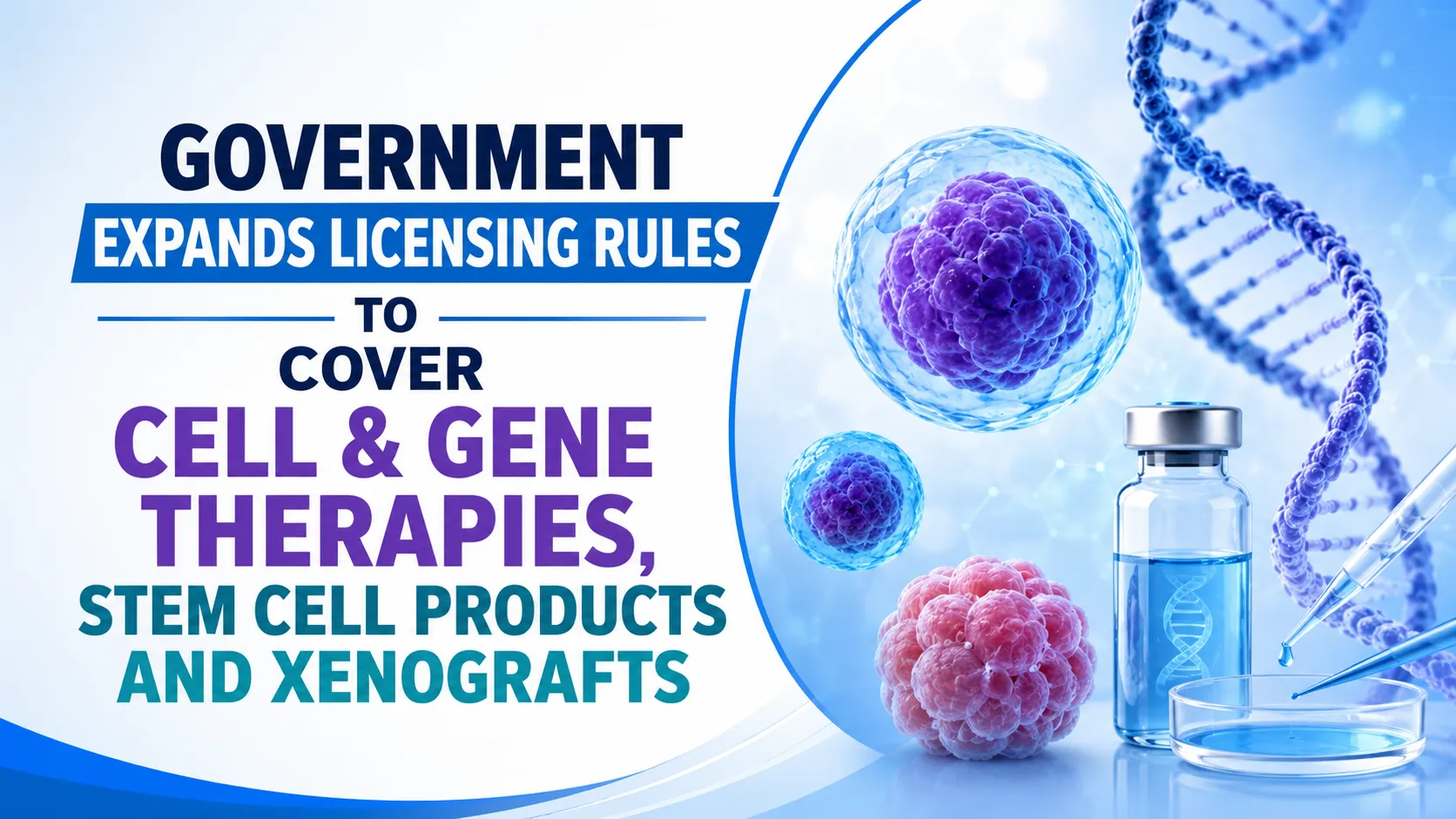
In a significant move to strengthen the regulation of advanced biological therapies in India, the Ministry of Health and Family Welfare has notified the Drugs (Eighth Amendment) Rules, 2026, expanding the scope of the Central Licence Approving Authority (CLAA) under the Drugs Rules, 1945. Through this amendment, Cell or Stem Cell Derived Products, Gene Therapeutic Products, and Xenografts have been formally included alongside Recombinant DNA (r-DNA) derived drugs within the CLAA licensing framework. The notification came into effect immediately upon its publication in the Official Gazette on 29 June 2026.
The amendment follows the publication of draft rules in October 2025 for public consultation under the Drugs and Cosmetics Act, 1940. According to the notification, no objections or suggestions were received during the consultation period, following which the Central Government finalized the amendments after consultation with the Drugs Technical Advisory Board (DTAB).
The notification revises Rules 75, 75A, 76, and 76A of the Drugs Rules, 1945, by inserting references to Cell or Stem Cell Derived Products, Gene Therapeutic Products, and Xenografts wherever provisions previously referred only to Recombinant DNA (r-DNA) derived drugs. In addition, the amendment updates Forms 27D, 27DA, 28D, and 28DA under Schedule A to ensure that applications for manufacturing licences now explicitly cover these advanced therapy products.
This regulatory expansion reflects the rapid growth of regenerative medicine and advanced therapeutic technologies. Cell-based therapies, gene therapies, and xenografts are increasingly being developed for the treatment of genetic disorders, cancers, rare diseases, and tissue regeneration. By bringing these products under the centralized CLAA approval mechanism, the government aims to establish a uniform licensing process, strengthen regulatory oversight, improve product quality and patient safety, and provide greater clarity for pharmaceutical and biotechnology companies involved in the development and manufacture of these innovative therapies.
The amendment is expected to have a substantial impact on manufacturers, biotechnology firms, research organizations, and healthcare institutions working in the field of advanced biological products. Going forward, companies manufacturing Cell or Stem Cell Derived Products, Gene Therapeutic Products, or Xenografts will be required to obtain licences under the revised CLAA framework, ensuring that these emerging therapies are regulated under a standardized national approval system.