
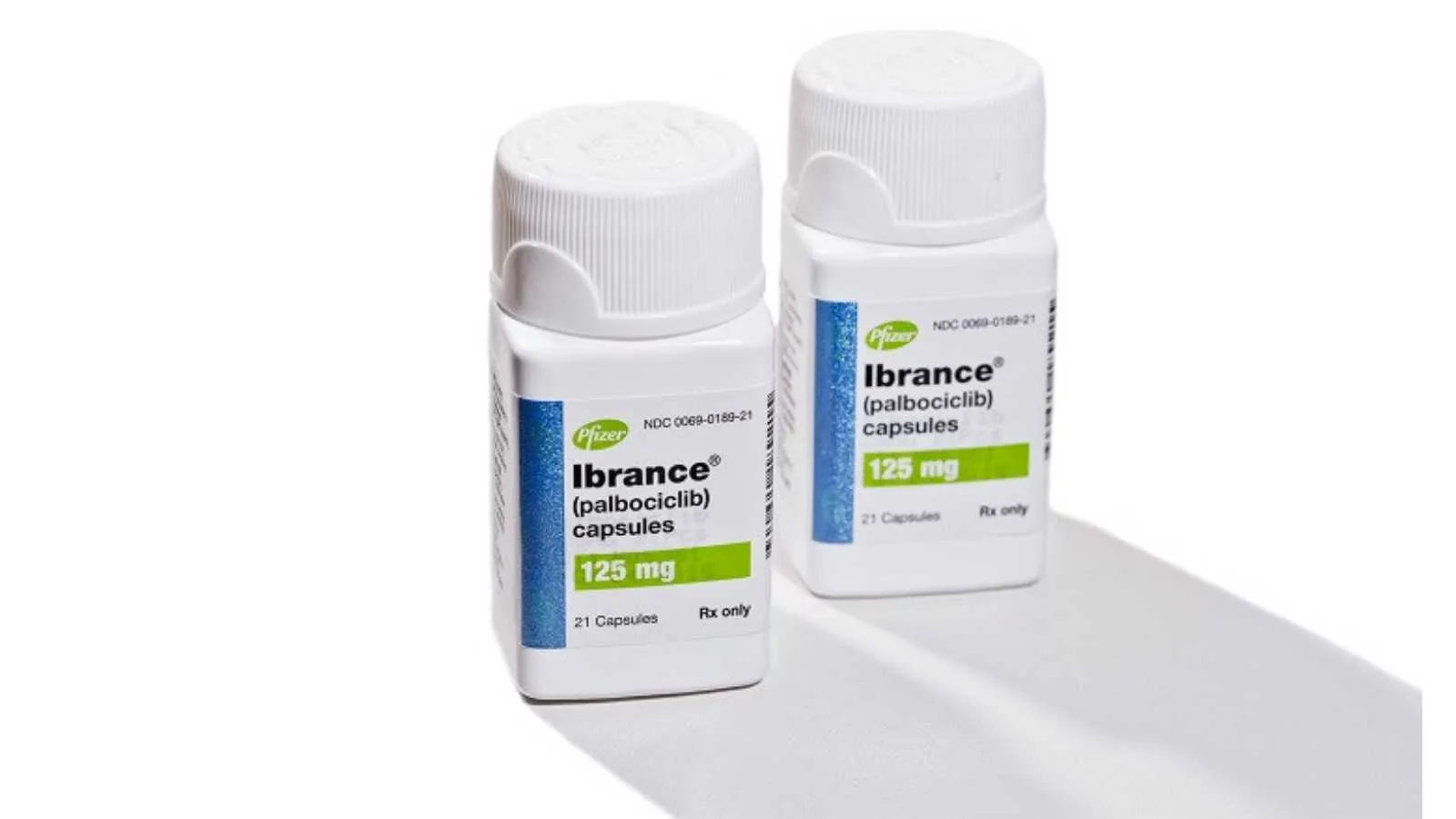
The U.S. Food and Drug Administration (FDA) has approved a new indication for Pfizer's IBRANCE (palbociclib), allowing its use in combination with trastuzumab, with or without pertuzumab, and endocrine therapy as maintenance treatment for adults with hormone receptor-positive (HR+), HER2-positive (HER2+) locally advanced or metastatic breast cancer following induction therapy. The approval marks a significant expansion for the widely used CDK4/6 inhibitor.
The decision is based on results from the global Phase 3 PATINA trial, which evaluated the addition of IBRANCE to standard anti-HER2 therapy and endocrine treatment. The study demonstrated a 24% reduction in the risk of disease progression or death compared with anti-HER2 therapy and endocrine therapy alone. Patients receiving the IBRANCE regimen achieved a median progression-free survival of 44.3 months, representing an improvement of more than 15 months over the control group.
With this approval, IBRANCE becomes the first and only CDK4/6 inhibitor approved for HR-positive metastatic breast cancer regardless of HER2 status. Experts believe this addresses a major unmet need, as patients with HR+/HER2+ disease often develop resistance to endocrine therapy and HER2-targeted treatments over time.
The PATINA trial enrolled 518 patients with HR+/HER2+ locally advanced or metastatic breast cancer who had completed induction therapy with a taxane and trastuzumab, with or without pertuzumab, and had no evidence of disease progression. Participants were randomized to receive either the IBRANCE-based maintenance regimen or standard maintenance therapy until disease progression or unacceptable toxicity occurred.
Safety findings were consistent with the established profile of palbociclib. The most common adverse events included neutropenia, leukopenia, fatigue, stomatitis, diarrhea, anemia, thrombocytopenia, and infections. Healthcare providers are advised to monitor complete blood counts regularly and manage dose adjustments when necessary.
The approval represents Pfizer's first FDA label expansion for IBRANCE in seven years, reinforcing the medicine's role in metastatic breast cancer treatment. Researchers anticipate that the expanded indication will provide clinicians with a new maintenance option capable of delaying disease progression in patients with HR+/HER2+ metastatic breast cancer.