
Job for Research Associate at Institute of Life Sciences | Government of India
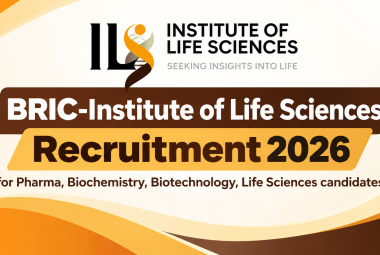
 Institute of Life Sciences (ILS) was established in the year 1989 as an autonomous institute under the administrative control of Govt. of Odisha. In 2002, it was taken over by the Department of Biotechnology, Govt. of India. The Prime Minister of India Shri Atal Bihari Vajpayee dedicated the institute to the nation in July 2003. Institute of Life Sciences has a broad vision of carrying out high-quality multidisciplinary research in the area of life sciences. The goal is for overall development and betterment of human health, longevity, agriculture and environment. The stated mission of the institution is to work towards upliftment of the human society and generate skilled human resources for future India.
Post : Research Associate
 Retired Armed Forces personnel till 2002 could avail medical facilities only for specific high cost surgery/treatment for a limited number of diseases covered under the Army Group Insurance(Medical Branch Scheme) (AGI(MBS)) and Armed Forces Group Insurance Scheme(Management Information System) (AFGIS (MIS)) schemes. These medicare schemes could provide some relief to the ESM, but it was not a comprehensive scheme as compared to and available for other Central Government Employees. Therefore, the requirement was felt of establishing a medicare system which could provide quality medicare to the retirees of the Armed Forces.
 India's Council of Scientific and Industrial Research (CSIR) has a specialized service Unit for Research and Development of Information Products (URDIP) which is involved in the pre-research and pre-development phase of the research projects by providing intellectual property and techno-commercial information services. URDIP provides value added information services to wide array of clients including start-up companies, SMEs, Research Institutes within and outside CSIR, large Indian Corporate and Multinational Corporations. It’s primary clients include R&D, legal, new business development and mutifunctional corporate teams.
 Directorate of Health Services is commited to provide preventive, promotive, curative,and quality health services at an affordable price to the people of Assam. Directorate of Health Services (DHS) has an important role in the provision and administration of health services and in order to raise the quality, extend accountability and deliver the services fairly, effectively and courteously.
 Department of Science & Technology (DST) was established in May 1971, with the objective of promoting new areas of Science & Technology and to play the role of a nodal department for organising, coordinating and promoting S&T activities in the country. The Department has major responsibilities for specific projects and programmes like Formulation of policies relating to Science and Technology, Matters relating to the Scientific Advisory Committee of the Cabinet (SACC) and etc.
 National Institute of Biologicals an autonomous Institution under the Ministry of Health & Family Welfare (MOHFW)-Government of India, was set up in January, 1992 to act as the national control laboratory for assuring the availability of high standard and good quality biological products for consumption in India and for exports. It was set up as a society (vide No. S-22590) under the Societies Registration Act 1860. laid down in Bye-Laws of the institute, for quality control of indigenously produced and imported biological products. Initial financial assistance in setting up the institute was provided by USAID and OECF - Japan.
 The Public Health Foundation of India (PHFI) is a not-for-profit public private initiative that has collaboratively evolved through consultations with multiple constituencies including Indian and international academia, state and central governments, multi & bi-lateral agencies and civil society groups. PHFI is a response to redress the limited institutional capacity in India for strengthening training, research and policy development in the area of Public Health. The PHFI focuses on broad dimensions of public health that encompass promotive, preventive and therapeutic services, many of which are frequently lost sight of in policy planning as well as in popular understanding.