
Articles

Crack GPAT — Prepare for GPAT Online 
  • THERAPEUTIC POTENTIAL OF VENOMOUS PEPTIDE IN VARIOUS DISEASES

    ABOUT AUTHORS:
    1*Anjali Choba, 2Shikha Attri
    1M.Pharma in pharmacology from shoolini university solan, himachal pradesh
    2M.Pharm in pharmaceutical chemistry from lachoo memorial college of science and technology, jodhpur
    *anji5057@yahoo.in

  • NOVEL SYNTHETIC APPROACHES FOR THE TREATMENT OF MALIGNANT MELANOMA UNDER CLINICAL TRIAL

    ABOUT AUTHORS:
    Tara Shankar Basuri1*, Ishvar Parmar1, Vishal Modi2, Virag Shah3, Niyatee Thakur4
    SSR College of pharmacy, Silvassa,
    U.T of Dadra & Nagar Haveli-396230
    *tbasuri@gmail.com

    ABSTRACT
    Malignant melanoma is the most lethal form of skin cancer and an increasingly common disease worldwide. It remains one of the most treatment-refractory malignancies. The current treatment options for patients with metastatic melanoma are limited and in most cases non-curative. This review focuses on novel synthetic and herbal drugs for malignant melanoma treatment, by a single or combinational agent approach. These molecules are widely used by the oncologists for the treatment of this type of cancer. So this review can help to the public to aware the malignant melanoma and its treatment and novel target for its treatment.

  • ANGIOGENESIS IN MYOCARDIAL ISCHEMIA : AN ORGANIZED REVIEW

    ABOUT AUTHORS:
    Jalaram H Thakkar*, Ashiyana A Mansuri, Chirag Patel, Girish K Jani,
    SSR College of Pharmacy,
    Silvassa
    .
    *jay_143143@yahoo.com
    { DOWNLOAD AS PDF }

    ABSTRACT:
    The term Angiogenesis was coined by DR. John Hunter, a British surgeon in 1787. Later professor Judah Folkman gave the idea that growth of tumor depends on their blood supply and a new began research in this new field of therapeutics called ANGIOGENESIS.  Then, the identification of angiogenic growth factors, Vascular Endothelial Growth Factor (VEGF) and Fibroblast Growth Factor (FGF) fueled interest in using these factors in inducing therapeutic angiogenesis.[1] Initially angiogenesis was implicated only in few diseases like cancer, psoriases and arthritis. But, in recent years, it has been evident through a deep research that even excessive, insufficient and abnormal angiogenesis contribute to the pathogenesis of many disorders. Angiogenesis is regulated by a balance between pro- and anti- angiogenic factors. Research shows that angiogenesis and anti angiogenesis has given promising results in treatment of diseases like AIDS, atherosclerosis, ischemic heart disease and Alzheimer’s. In twenty first century, application of angiogenesis in therapeutics may have an impact on disorders similar to that which the discovery of antibiotics had in twentieth century.

  • GREEN BLOOD THERAPY

    About Author:
    Ravi Kant
    B.Pharm
    Maharshi arvind institute of pharmacy, jaipur
    rvkantyadav00@gmail.com

    1. Introduction:-
    Wheat grass consists of carbohydrates, proteins, all essential minerals and vitamins. As wheat grass juice bears a closer resemblance to the " haemogolobin " in our blood, the juice is often called as " green blood" and the therapy using it is called as " green blood therapy" wheat grass juice is complete food. Wheatgrass (baby wheat) juice is an extremely natural food. Since Dr. Anne Wigmore rediscovered the nutritional qualities of wheatgrass juice in 1960, the juice has helped hundreds of thousands of people around the world to overcome serious health problems.

    However wheatgrass juice is not a panacea. If you continue to consume processed foods, drugs, alcohol, tobacco, burned foods and other toxic substances that can make you ill, a few milliliters of wheatgrass juice each day won't make much difference. Instead, try consuming a predominately (or entirely) raw food diet with organic wheatgrass juice. You will most likely experience a world of improvement.

  • NOVEL DRUG DELIVERY SYSTEM

    About Authors:
    Aruna Rastogi
    Roorkee College of Pharmacy and UTU
    Patanjali Ayurved Ltd, Sr. Chemist
    arunarastogi10@gmail.com

    1.   INTRODUCTION
    1.1 NOVEL DRUG DELIVERY SYSTEM:
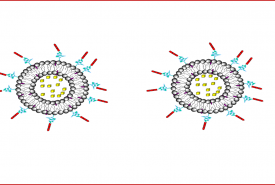
    The method by which a drug is delivered can have a significant effect on its efficacy. Some drugs have an optimum concentration range within which maximum benefit is derived, and concentrations above or below this range can be toxic or produce no therapeutic benefit at all. On the other hand, the very slow progress in the efficacy of the treatment of severe diseases, has suggested a growing need for a multidisciplinary approach to the delivery of therapeutics to targets in tissues. From this, new ideas on controlling the pharmacokinetics, pharmacodynamics, non-specific toxicity, immunogenicity, biorecognition, and efficacy of drugs were generated. These new strategies, often called drug delivery systems (DDS), are based on interdisciplinary approaches that combine polymer science, pharmaceutics, bioconjugate chemistry, and molecular biology.

  • I.T.S. Paramedical Pharmacy College invites for AICTE Sponsored seminar on 5th & 6th April 2013 Pharmacovigilance: Regulators, Presepective & Prospects for Risk Management

    I.T.S - The Education Group - established in 1995 under the aegis of Durga Charitable Society, is one of the most reputed education groups in the field of Pharmacy, Dentistry, Engineering, Management, Information Technology, Physiotherapy and Biotechnology. I.T.S has shown incessant growth ever since. The Group has 4 campuses, 8 Institutions and 2D courses. The quality of education is incontrovertibly laudable.

  • STANDARDIZATION OF HERBAL DRUGS/PRODUCTS: BOON TO INDIAN PHARMA MARKET

    About Author:
    Swati Manik
    Department of Pharmacognosy,
    I.S.F. College of Pharmacy, Moga, Punjab
    swatimanik@yahoo.in

  • NATURALLY OCCURRING MYCOTOXINS – AFLATOXIN

    About Authors:
    Sahu Deepak*
    Ass. Professor, Geetanjali Institute of Pharmacy,
    Dabok, Udaipur [Rajasthan] – 313022
    deepak.sahu.bhl@gmail.com

    { DOWNLOAD AS PDF }

    Abstract:
    A toxin produced by mold that can damage the liver and may lead to liver cancer. Aflatoxins cause cancer in some animals. The fungi that produce aflatoxin grow on crops such as peanuts (especially) and wheat, corn, beans and rice. Aflatoxin is a problem particularly in undeveloped and developing countries.
    Aflatoxin is a naturally occurring mycotoxin produced by two types of mold: Aspergillus flavus and Aspergillus parasiticus. Aspergillus flavus is common and widespread in nature and is most often found when certain grains are grown under stressful conditions such as drought. The mold occurs in soil, decaying vegetation, hay, and grains undergoing microbiological deterioration and invades all types of organic substrates whenever and wherever the conditions are favorable for its growth. Favorable conditions include high moisture content and high temperature. At least 13 different types of aflatoxin are produced in nature with aflatoxin B1 considered as the most toxic. While the presence of Aspergillus flavus does not always indicate harmful levels of aflatoxin it does mean that the potential for aflatoxin production is present.1,2,3

  • JAPANESE PATENT CLASSIFICATION: AN AUXILIARY TOOL IN PATENT ANALYTICS

    About Authors:
    Arun Kumar
    Department of Intellectual Property Management,
    Nectar Lifesciences Limited, Punjab, India
    feedback2arun@gmail.com

    { DOWNLOAD AS PDF }

    Abstract
    With advancements in technology, new inventions are emerging day-by-day, resulting in more number of patent filings all over the globe. The analysis of existing patents to analyze novelty or patentability of upcoming inventions and to check the non-infringing process of the patented technology, there is need to analyze patents of targeted domain technology. The analysis of patents is done not only to analyze novelty or infringement but also to explore the undiscovered innovative knowledge covered in patents. Patent searching using keywords, sometimes, gives very broad results. The analysis of thousands of patents becomes difficult for patent analyst. The methodology used with IPC (International Patent Classification) codes helps to reduce the result of patent search and helps patent analyst in targeted search. But in case of Japanese patent search, IPC alone unable to give targeted results. Then it becomes important to understand the concept of JPC (Japanese Patent Classification) codes and their use to make the Japanese patent search easy. The Japanese Patent Classification includes File Index, Facets and F-term. In this article, Japanese Patent Classification codes are explained in details with their consequences, applications, constructions and search methodology using them.

  • ANTIDEPRESSANT ACTIVITY OF POLYHERBAL EXTRACT ON RODENTS

    About Authors:
    A.Tamil Selvan*, R.Suresh1, D.Benito Johnson2, R.Suresh Kumar3, R.Venkatanarayanan4, L.Sivakumar5
    Department of Pharmacology
    Teegala Ram Reddy College of Pharmacy, Meerpet, Hyderabad – 97
    1-4RVS College of Pharmaceutical Sciences, Sulur, Coimbatore- 641402
    5SKM Siddha and Ayurvedha Company (India) Limited, Erode - 638104.

    *tamilselvanpharmacologist@gmail.com

    ABSTRACT
    In this study, polyherbal extract of Cycas circinalis, Nardostachys jatamansi and Artemisia absinthium ethanolic fraction was explored for its antidepressant property using Forced swim test (FST) and Tail suspension test (TST). Many of its individual constituents have been used for central nervous system (CNS) activities but no systematic work was carried on this combination. In this study its effect on depression was explored in rats. For this purpose the plants part were extracted by successive solvent extraction by Soxhylation. Ethanolic extract was chosen for the pharmacological evaluation, based upon the phytochemical and instrumental analysis. The ethanolic extract was subjected to FT-IR analysis for finding the possible number and nature of function groups present in it. Also the extract was analysed by HPLC for the number possible phytocompounds/phytoconstituents present, which may directly or indirectly involve in the brain neurochemical activity. Acute and Subacute toxicity study revealed the dose upto 2000mg/kg the extract had not toxic symptoms and no mortality. The therapeutic dose was found to be 200mg/kg and there was no toxic damage to liver and kidney observed in subacute toxicity study. The ethanolic extract of the polyherbal combination exhibited significant (P<0.001) antidepressant activity  as indicated by its ability to decrease swim stress and tail suspension induced immobility time in rats as compared with that standard Fluoxetine. As well as restoring biogenic amines to normal level that was altered by the swim stress and tail suspension test in whole rat brain assay by HPTLC method. The result indicates this polyherbal combination can be a potential candidate for .managing depression. However further studies are required to confirm the exact therapeutic efficacy.

Subscribe to Articles