

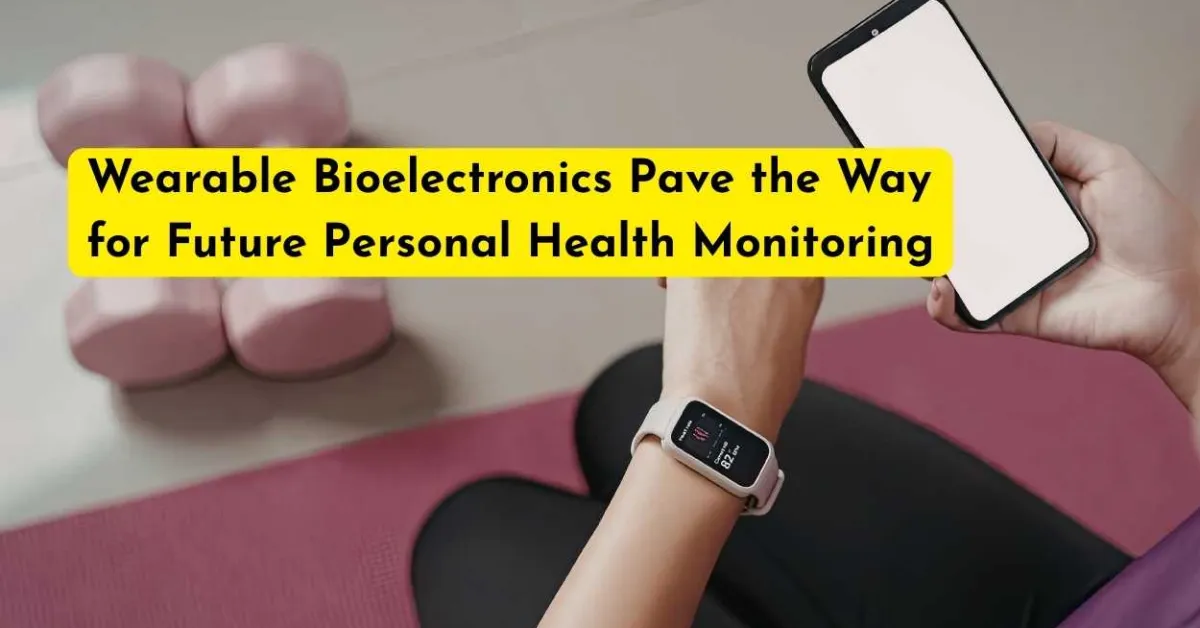
Advances in soft and sustainable wearable bioelectronics are set to transform personal health monitoring and digital healthcare, according to a new Perspective article published in BIO Integration. Researchers highlight how skin-like wearable systems can continuously track health signals during daily life, moving care beyond occasional hospital visits.
The article, titled “Wearable Bioelectronics: Toward Future Personal Health Monitoring,” explains that modern wearable bioelectronics combine soft materials, hydrogel-based interfaces, and wireless communication to monitor electrical, mechanical, and biochemical signals such as heart rhythm, motion, temperature, and sweat biomarkers. Some systems can also deliver therapies in real time, creating closed-loop healthcare solutions.
Recent progress has enabled ultrathin skin patches for chronic disease management, soft interfaces for cardiovascular and neural regulation, and intelligent hydrogel dressings for wound monitoring and treatment. These technologies aim to improve comfort, reduce skin irritation, and provide more clinically meaningful data compared to conventional rigid wearables.
A key focus of the article is sustainability. Researchers are increasingly designing devices using biodegradable materials, self-healing hydrogels, and bioresorbable conductors to reduce electronic waste and align device lifetimes with therapeutic needs. Such approaches are especially relevant for disposable patches, wound dressings, and temporary implants.
The authors also discuss how artificial intelligence and digital health platforms can convert continuous data streams into actionable insights, alerts, and personalized interventions. Applications span chronic disease management, long-term heart and nerve regulation, and smart wound care connected to telemedicine systems.
Despite rapid progress, challenges remain. Long-term biocompatibility, device stability, data privacy, cybersecurity, and regulatory frameworks for AI-driven medical devices are identified as major hurdles for widespread adoption.
The article concludes that if these technical and regulatory challenges are addressed, soft and sustainable wearable bioelectronics could support a shift from episodic, reactive healthcare to continuous, proactive, and personalized health management, operating seamlessly within future digital healthcare ecosystems.