
Modern research on secondary metabolites from microbes, plants, and marine organisms has revealed a remarkable diversity of chemical structures and bioactivities with broad applications in biotechnology, agriculture, and medicine. Most natural products are composed of primary biogenic elements such as carbon, hydrogen, nitrogen, and oxygen.
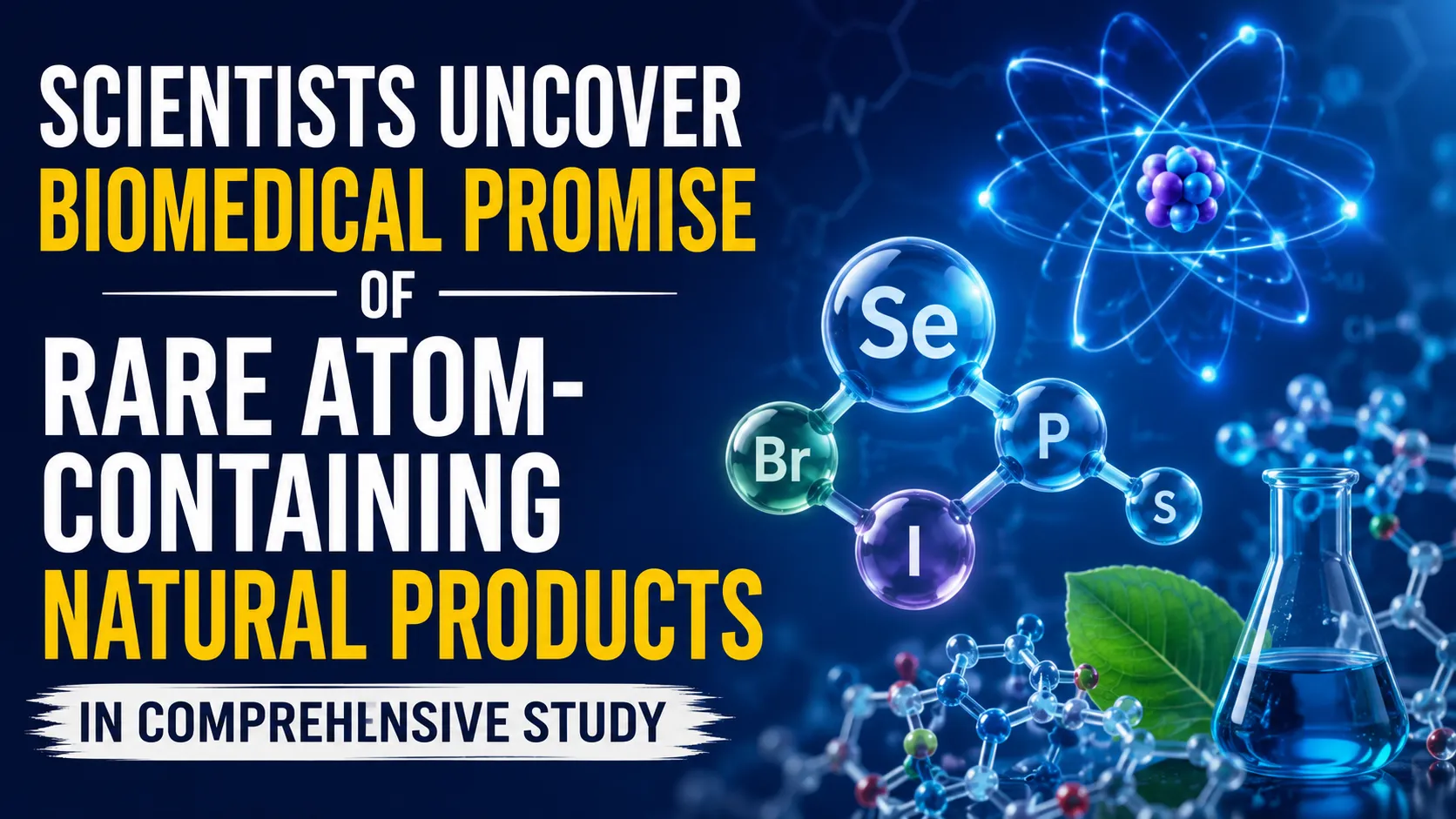
However, a small proportion of these metabolites contain atypical elements, including boron, iodine, fluorine, selenium, and arsenic. Their unusual atomic composition gives rise to distinct biosynthetic pathways, unique biological functions, and specialized chemical reactivity, challenging conventional understanding of natural product biosynthesis.
A new review study published in Natural Product Report on June 4, 2026, brings together discoveries of these unique metabolites reported from 1944 to 2025, discussing the structural diversity, biochemical mechanisms by which these elements are introduced, and unique biological properties. The study was led by Professor Seoung Rak Lee, assistant professor at College of Pharmacy, Pusan National University. “While these compounds are scarce, they reveal how organisms overcome major challenges to synthesis these metabolites that are difficult to achieve under normal biological conditions. We wanted to discuss the enzymatic foundations of these distinctive transformations,” mentioned Prof. Lee, talking about the motivation behind the research
Atypical atoms impart properties that are difficult to achieve through conventional biochemistry. Their incorporation can alter lipophilicity, improve metabolic stability, promote redox activity, facilitate metal coordination, or enhance biological activity.
These atoms are integrated into metabolites through specialized biosynthetic strategies. Fluorine is introduced through rare biological carbon-fluorine bond formation, whereas selenium is incorporated through dedicated selenium-carbon bond-forming pathways. Arsenic-containing compounds often arise through S-adenosyl-L-methionine (SAM)-dependent methylation and subsequent transformations. Boron is typically introduced through non-enzymatic boronate or borate complexation, while iodine is incorporated through halogenase- or haloperoxidase-mediated reactions.
The review highlights diverse metabolite families containing atypical atoms. Boron-containing natural products, including boromycin and tartrolons, exhibit antibacterial, antiparasitic, antiviral, immunomodulatory, and quorum-sensing activities. Fluorinated natural products, such as fluoroacetate, 4-fluoro-L-threonine, and nucleocidin, demonstrate how rare carbon-fluorine chemistry produces potent toxins and antimicrobial compounds.
Arsenic-containing metabolites span a broad chemical and biological spectrum. Compounds such as arsenobetaine and arsenosugars serve as relatively inert storage or detoxification forms in marine food webs, whereas arsenolipids and arsenicin A display greater bioactivity or toxicity. Selenium-containing compounds, including selenoneine and selenocysteine, support antioxidant protection and redox regulation, while iodinated marine metabolites contribute to antimicrobial and cytotoxic defense. Transition metals such as vanadium and molybdenum function primarily as biological cofactors supporting nitrogen fixation, halogenation, nitrate reduction, sulfite detoxification, and purine metabolism.
Collectively, these metabolites contribute to detoxification, redox regulation, defense, signaling, ion transport, nutrient cycling, and global biogeochemical processes.
This review provides the first comprehensive overview of natural products containing atypical atoms. Advances in genome mining, metagenomics, enzymology, metalloproteomics, isotope tracing, cryo-EM, and machine learning could accelerate the discovery of new biosynthetic pathways and enable sustainable biocatalysis, enzyme engineering, and therapeutic innovation.
“Our findings provide a valuable framework for discovering new bioactive natural products and biosynthetic enzymes with applications in drug discovery, biocatalysis, and synthetic biology. Understanding how nature incorporates atypical atoms into complex molecules may also inspire the development of novel pharmaceuticals, environmentally friendly fluorination and selenation strategies, and sustainable biotechnological processes for producing high-value chemicals,” concludes Prof. Lee.