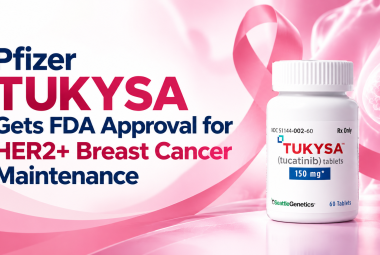

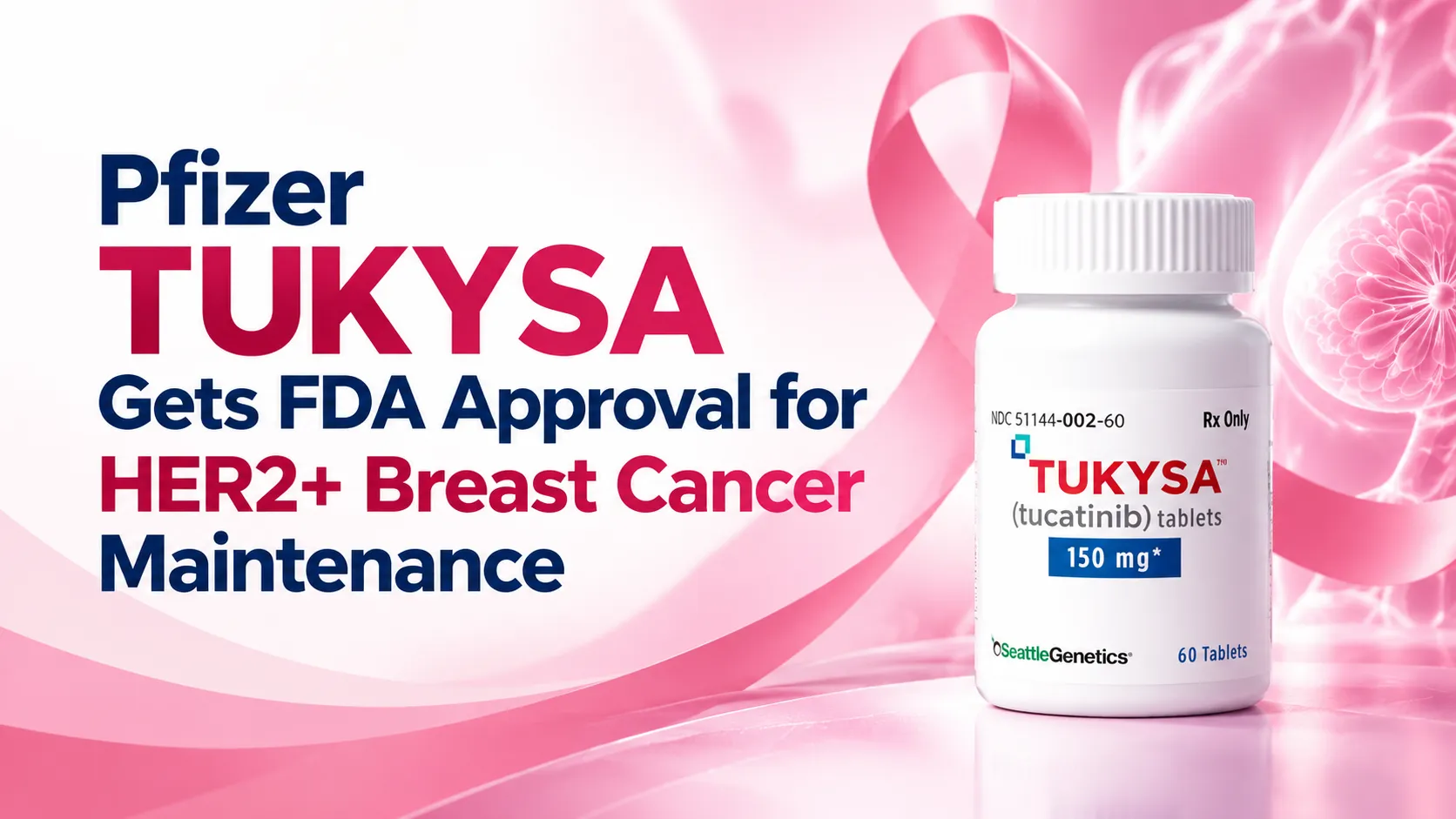
Pfizer has announced that the US Food and Drug Administration (FDA) has approved TUKYSA (tucatinib) in combination with trastuzumab and pertuzumab for the maintenance treatment of adults with unresectable locally advanced or metastatic HER2-positive breast cancer following induction treatment. The approval introduces a chemotherapy-free maintenance option for eligible patients whose disease has not progressed after initial treatment.
The FDA approval is supported by results from the Phase III HER2CLIMB-05 trial, which evaluated TUKYSA in combination with trastuzumab and pertuzumab against placebo with the same two medicines as maintenance therapy following induction treatment. The study enrolled 654 patients who had completed four to eight cycles of induction therapy with trastuzumab, pertuzumab and a taxane without evidence of disease progression.
The trial demonstrated a median progression-free survival (PFS) of 24.9 months in patients receiving TUKYSA with trastuzumab and pertuzumab, compared with 16.3 months in the placebo combination group. This represents an improvement of 8.6 months in median progression-free survival. The treatment reduced the risk of disease progression or death by 35.9%, with a hazard ratio of 0.64 and a p-value of less than 0.0001.
The approval expands the use of TUKYSA into the front-line maintenance setting for HER2-positive metastatic breast cancer. Patients who respond to initial induction treatment may continue targeted therapy to help delay disease progression, without the need for continued taxane chemotherapy as part of the maintenance regimen.
TUKYSA is an orally administered tyrosine kinase inhibitor that targets HER2. Trastuzumab and pertuzumab are monoclonal antibodies that target HER2 through complementary mechanisms. The combination is intended to inhibit tumour growth by targeting HER2 signalling through multiple pathways.
Pfizer reported that the safety profile of TUKYSA in the HER2CLIMB-05 trial was generally consistent with its established safety profile, although increased severity of liver toxicity was observed. The most common adverse reactions, reported in at least 20% of patients, included diarrhoea, musculoskeletal pain, hepatotoxicity, nausea, fatigue, rash and vomiting.
The FDA prescribing information carries a boxed warning for severe and potentially fatal hepatotoxicity. Liver function testing is required before treatment and throughout therapy. In the HER2CLIMB-05 trial, serious adverse reactions included hepatotoxicity in 3.9% of patients, and one patient experienced fatal drug-induced liver injury. TUKYSA can also cause severe diarrhoea and embryo-fetal toxicity, making appropriate monitoring and patient counselling important.
HER2-positive breast cancer is characterised by increased expression of human epidermal growth factor receptor 2, a protein that can promote cancer cell growth. Although HER2-targeted therapies have improved treatment outcomes, some patients with metastatic disease experience progression after initial treatment.
The HER2CLIMB-05 results support the use of tucatinib alongside trastuzumab and pertuzumab as a maintenance strategy for eligible patients. Overall survival remains a key secondary endpoint, and further follow-up will help clarify the longer-term clinical benefit of the regimen.