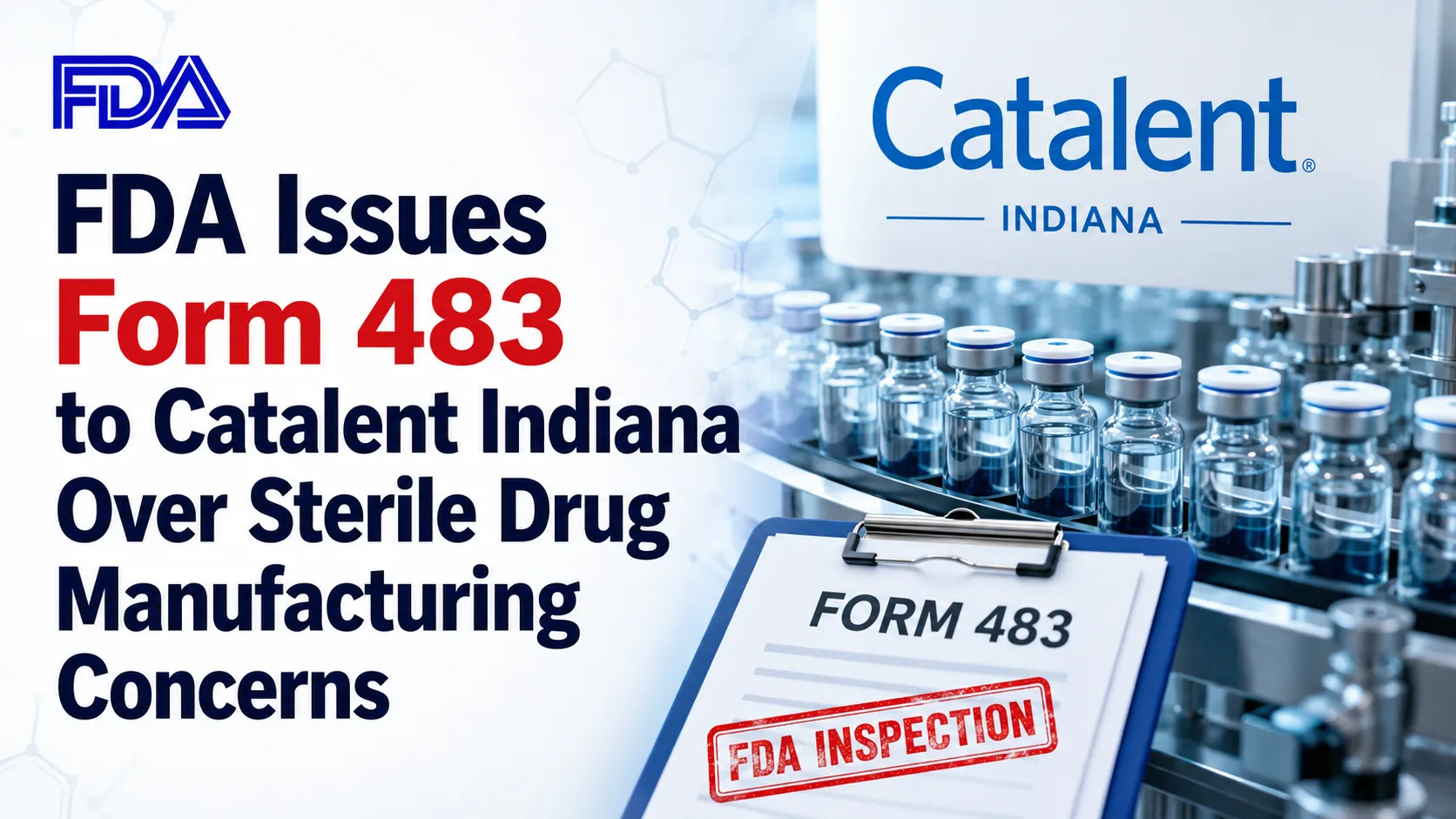
The U.S. Food and Drug Administration (FDA) has issued a Form FDA 483 to Catalent Indiana LLC, Bloomington, Indiana, following an inspection conducted between April 13 and April 24, 2026. The inspection identified multiple observations related to quality systems, contamination control, investigations, and sterile manufacturing practices at the facility.
According to the FDA inspection report, investigators found that the company did not consistently complete timely and adequate investigations into manufacturing deviations and product quality issues. One major concern involved the repeated detection of mammalian hair in finished sterile drug products. FDA noted that similar contamination events had continued since 2025, while root cause investigations remained incomplete and corrective actions had not effectively resolved the issue.
The agency also cited repeated roof leaks and water intrusion into classified aseptic manufacturing areas. Three separate water intrusion incidents occurred within approximately two months, resulting in aborted media fill studies. FDA stated that effective interim controls were not implemented before manufacturing resumed, and the impact on commercial batches was not adequately assessed.
Another observation involved the firm's handling of particulate matter detected during visual inspection. FDA reported that various foreign materials, including polyester fibers, plastics, and other particles, were frequently classified as intrinsic rather than potential contamination, resulting in many events not being fully investigated. The agency also questioned the lack of clear criteria for conducting additional inspections after critical defects were identified.
The inspection further identified deficiencies in complaint handling and batch investigations. FDA observed delays in closing customer complaints, prolonged open deviation records, and insufficient investigations into complaints involving foreign material and damaged sterile drug products. In one case, a container closure integrity testing failure that led to a product recall was not followed by timely and comprehensive impact assessments.
In addition, FDA raised concerns regarding the validation of visual inspection processes and aseptic manufacturing controls. The agency stated that inspection methods had not been adequately qualified to demonstrate consistent detection of critical defects and that procedures intended to prevent microbiological contamination of sterile products lacked sufficient validation.
A Form FDA 483 represents inspectional observations made by FDA investigators at the conclusion of an inspection. It does not constitute a final determination of regulatory compliance, and companies are given an opportunity to respond with corrective actions before the FDA decides whether further regulatory measures are warranted.