Research News

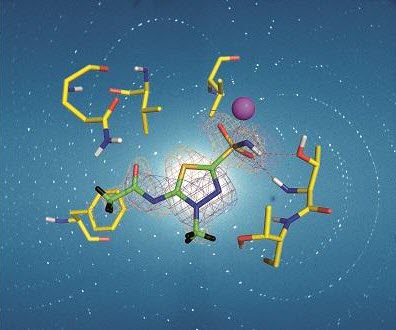
  • Neutron crystallography is an important complementary technique to X-ray crystallography since it provides details of the hydrogen atom and proton positions in biological molecules. Furthermore, as neutrons are a non-destructive probe, the resulting structures are free from radiation damage even at room temperature.

  • Biologists from Bochum and Bonn have detected a cannabinoid receptor in spermatozoa. Endogenous cannabinoids that occur in both the male and the female genital tract activate the spermatozoa: they trigger the so-called acrosome reaction, during which the spermatozoon releases digestive enzymes and loses the cap on the anterior half of its head. Without this reaction, spermatozoa cannot penetrate the ovum. The researchers published their findings in Scientific Reports.

  • Intestinal flora has multiple influences on human health, but researchers have revealed that it is also likely to have an effect on the body's response to drugs. Recent research from Kumamoto University in Japan strongly suggests that changes in the intestinal flora, caused by antibacterial and antibiotic drugs or individual differences between people, may have an effect on a person's response to drugs including side effects. The research focused on the changes in proteins due to the condition of intestinal flora that affect the response to drugs in the liver and kidneys.

  • USC researchers have tracked down two Zika proteins potentially responsible for thousands of microcephaly cases in Brazil and elsewhere -- taking one small step toward preventing Zika-infected mothers from birthing babies with abnormally small heads.

    [adsense:336x280:8701650588]

  • Tuberculosis (TB) is a leading killer of people with HIV, and providing therapy for both illnesses simultaneously saves lives - according to new guidelines on the treatment of drug-susceptible TB developed jointly by the American Thoracic Society (ATS), Centers for Disease Control and Prevention (CDC) and Infectious Diseases Society of America (IDSA). Treatment of TB in the presence of HIV infection is one of several special situations addressed in the new guidelines, published today in the journal Clinical Infectious Diseases.

  • Coherus BioSciences, Inc. reported topline results from an ongoing Phase 3 clinical study of CHS-1420, an adalimumab (Humira®) biosimilar candidate. This study met its primary endpoint demonstrating similarity between CHS-1420 and Humira with respect to percentage of subjects achieving 75% improvement in psoriasis area and severity index (PASI-75) at Week 12. 

  • The parasites responsible for malaria and toxoplasmosis depend on mechanisms inherited from the plant world. This is what a team of researchers from CNRS and the University of Melbourne has shown. They have just published two studies in Cell Microbiology and PLOS Pathogens. This discovery is a major advance for the development of new therapeutic targets for these parasites, which have such substantial public health consequences. 

  • The growing use of biologics, drugs with newer mechanisms of action, and combination therapies are trending in the global rheumatoid arthritis (RA) market. BCC Research reveals in its new report that the biosimilars market should grow at a torrential five-year (2015-2020) compound annual growth rate (CAGR) of 71%. 

    Rheumatoid arthritis is a chronic inflammatory disease characterized by progressive joint damage, disability and systemic complications. The goal of treatment in RA is to achieve clinical remission. When remission, defined as the absence of signs and symptoms of inflammation, is unattainable, the target of treatment is to lower disease activity, particularly in patients with established RA. This report provides perspective on drugs and therapies used in the management of RA. 

    The global market for therapies for RA is expected to grow from USD 19.9 billion in 2015 to nearly USD 21.3 billion by 2020, reflecting a five-year CAGR of 1.3%.As a therapeutic class, anti-interleukin biologics should grow from nearly USD 1.2 billion in 2015 to USD 1.5 billion in 2020 on a five-year CAGR of 4.4%. Biosimilars as a therapeutic class should reach nearly USD 5.4 billion in 2020 on a five-year CAGR of 71.0%, up from an anticipated USD 368 million in 2015. 

    The market for RA treatments in the seven major markets (U.S., France, Italy, Germany, Spain, U.K., and Japan) is expected to reach USD 16.3 billion and USD 17.2 billion in 2015 and 2020, respectively, reflecting a five-year CAGR of approximately 1%. The genericization and introduction of biosimilars for major products such as etanercept, infliximab and rituximab will impact market growth. 

    The market in the rest of the world (RoW), including India and China, should total USD 3.6 billion and USD 4.1 billion in 2015 and 2020, respectively, growing at a five-year CAGR of about 2.5%. The introduction of cheaper biosimilars and Janus kinase inhibitors (JAKs) will drive market growth. 

    The biosimilars market will witness incredible growth both in the RoW and globally. Their robust adoption is expected in the seven major markets, where healthcare providers are pushing for more affordable options to the high cost of biologics therapy, particularly for chronic immunological diseases. 


    "Worldwide, the value of the biosimilars market will grow from about USD 174 million in 2014 to almost USD 5.4 billion in 2020 due to the introduction of biosimilars," says BCC Research analyst Geeta Ogra Bedi. "Presently, a growing number of biosimilars are in the late stage of clinical development. Although biosimilars don't promise the kind of cost savings generated by their small-molecule counterparts, they still possess the ability to yield significant cost savings."

    << Pharma News

    Subscribe to PharmaTutor News Alerts by Email

Subscribe to Research News