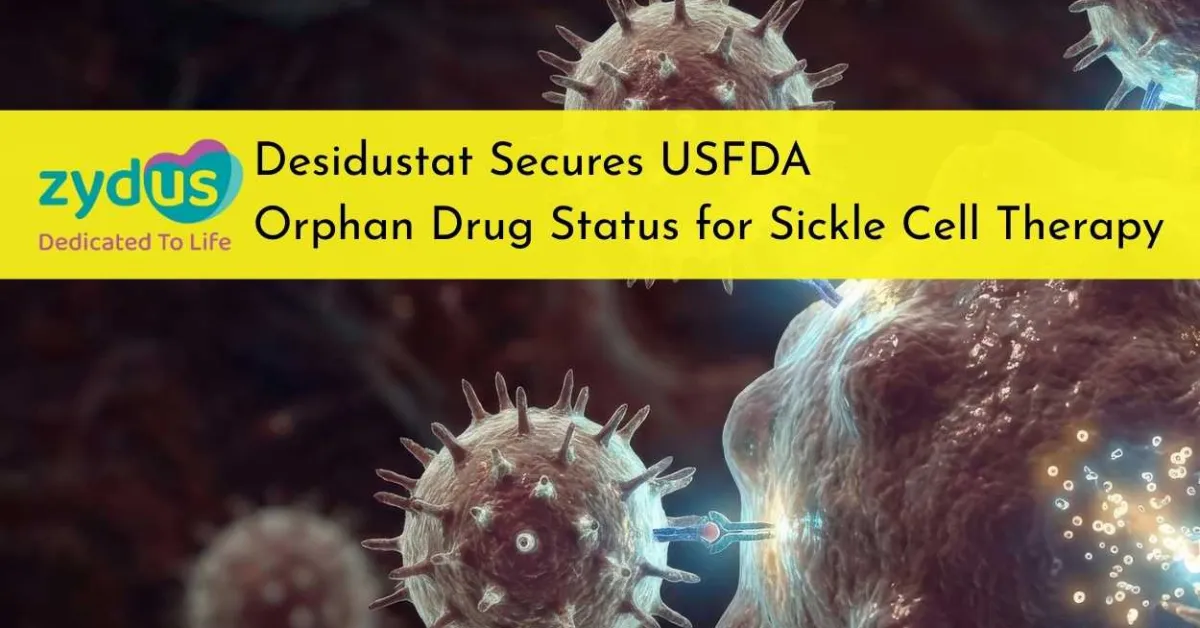
Zydus Lifesciences has achieved a significant regulatory milestone as the U.S. Food and Drug Administration (USFDA) granted Orphan Drug Designation (ODD) to its novel molecule Desidustat for the treatment of Sickle Cell Disease (SCD). The designation highlights the growing recognition of the urgent need for new and effective therapies in this rare and challenging condition.
Desidustat is a new chemical entity (NCE) developed by Zydus and belongs to the class of hypoxia-inducible factor (HIF), prolyl hydroxylase inhibitors (PHI). As an oral therapy, it has the potential to increase haemoglobin levels and red blood cell counts, offering a promising therapeutic approach for patients suffering from chronic anaemia associated with sickle cell disease.
The Orphan Drug Designation is granted by the USFDA’s Office of Orphan Drug Products to encourage the development of medicines for rare diseases affecting fewer than 200,000 people in the United States. With this status, Desidustat becomes eligible for several development incentives, including tax credits for qualified clinical trials, exemption from certain FDA user fees, and a potential seven-year market exclusivity in the U.S., subject to regulatory approval.
Commenting on the development, Dr. Sharvil Patel, Managing Director, Zydus Lifesciences Limited, said that the designation reinforces the unmet medical need in sickle cell disease. He added that the company believes Desidustat has the potential to address critical gaps in current treatment options and improve patient outcomes.
At present, therapeutic choices for managing SCD remain limited. While hydroxyurea is commonly used to reduce the frequency of painful crises, it is not effective for all patients and may cause side effects such as neutropenia and thrombocytopenia. Blood transfusions, another key intervention, are costly, not consistently accessible, and carry risks including iron overload, alloimmunization, and hemolysis.
Zydus has already completed a Phase II, double-blind, randomized, placebo-controlled, multi-centre proof-of-concept study evaluating the efficacy and safety of Desidustat in patients with sickle cell disease. The company has indicated that the study data will be published in a peer-reviewed medical journal.
With this USFDA recognition, Desidustat moves a step closer to becoming a potential new treatment option for patients living with sickle cell disease, reinforcing Zydus’ focus on innovation and addressing unmet needs in rare and serious disorders.