
A cancer drug currently being evaluated in clinical trials may work through a different biological mechanism than scientists originally believed, according to a new study led by the University of Sydney in collaboration with Goethe University, the University of Oxford and the Institute of Cancer Research, London.
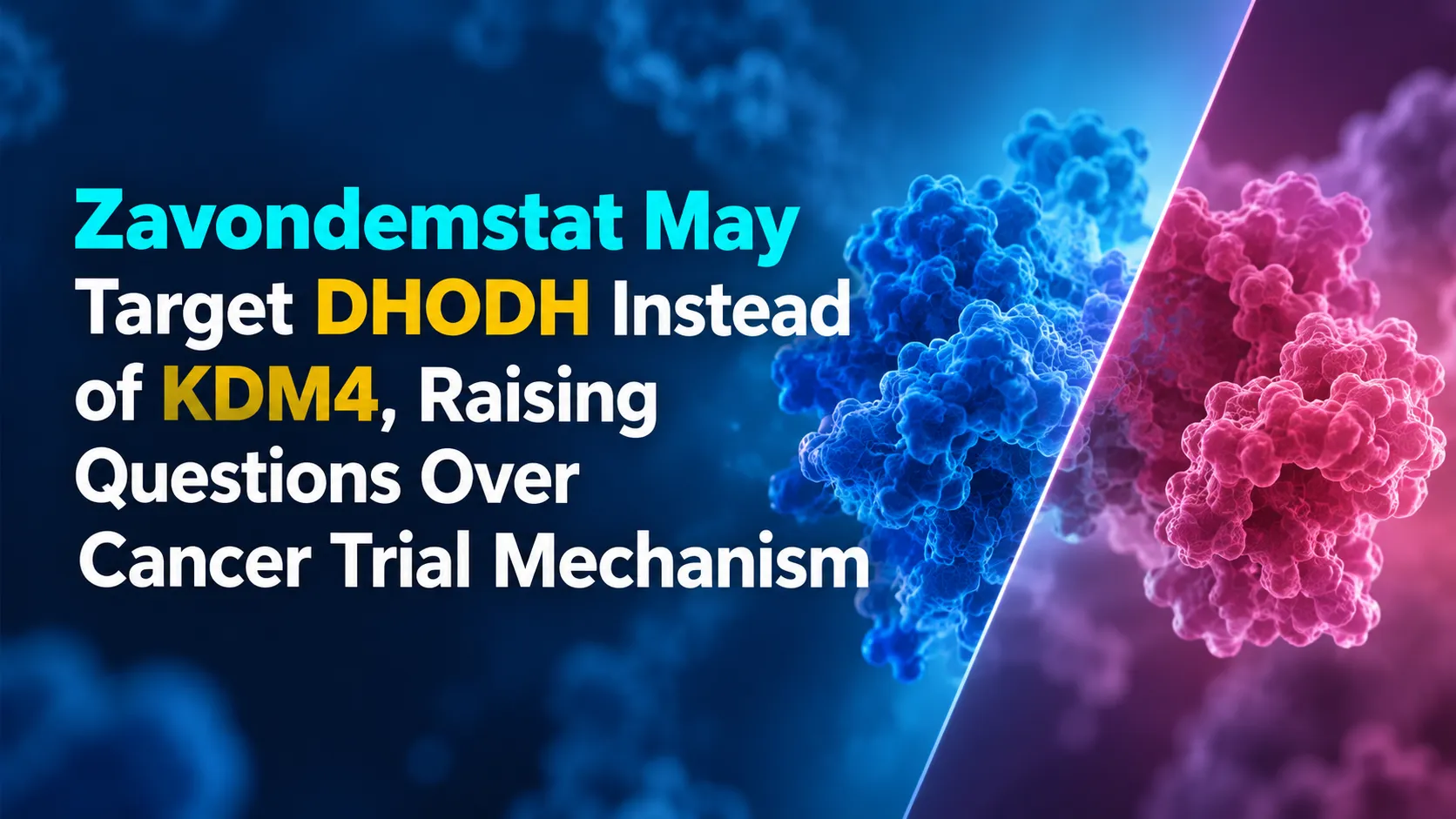
Published in Nature Chemical Biology, the study found that the experimental cancer drug zavondemstat and the related research compound QC6352 do not primarily act by targeting KDM4 proteins, as previously understood. Instead, researchers found that much of their anticancer activity appears to come from blocking dihydroorotate dehydrogenase (DHODH), an enzyme that cancer cells need to produce molecules required for rapid growth.
KDM4 proteins have been investigated as potential cancer targets because excessive activity of these proteins can contribute to cancer-cell growth and spread. QC6352, in particular, has been widely used as a research compound to investigate KDM4 biology.
The researchers initially investigated zavondemstat and QC6352 as potential treatments for glioblastoma, the most common and aggressive form of brain cancer. However, experiments with other KDM4 inhibitors failed to reproduce the anticancer effects observed with QC6352.
According to the researchers, if inhibition of KDM4 were responsible for the observed anticancer activity, other compounds that specifically inhibit KDM4 should have produced similar results. Their different behaviour suggested that QC6352 could be acting through another biological pathway.
Using patient-derived glioblastoma stem cells, tumour models and genetic, molecular and mechanistic experiments, the research team traced the activity of both compounds to DHODH rather than KDM4.
Professor Lenka Munoz from the University of Sydney's School of Medical Sciences and Charles Perkins Centre explained that DHODH can be viewed as a cellular machine responsible for producing the molecular “bricks” required to make new DNA. Blocking this enzyme can leave rapidly dividing cancer cells unable to efficiently replicate their DNA and continue proliferating.
The findings could have implications beyond the current investigation. Researchers worldwide have used QC6352 as a tool to study KDM4, while zavondemstat advanced into clinical development based on the understanding that its activity was linked to KDM4.
The researchers therefore caution that earlier studies using QC6352 to investigate KDM4 biology may need to be interpreted in light of the newly identified mechanism. The findings could also influence how the ongoing clinical development of zavondemstat is understood.
Implications for Cancer Drug Development
The study highlights a broader challenge in cancer drug development: accurately establishing a drug's mechanism of action before advancing it into clinical testing.
An incorrect understanding of a drug's biological target can potentially contribute to poorly designed clinical trials, inappropriate selection of patients and years of research being directed toward the wrong biological pathway.
The researchers said that similar situations have occurred previously in cancer research, where drugs progressed through clinical development before their actual mechanisms were fully understood. They argue that greater emphasis on rigorous target validation could help reduce these risks.
Identifying the true mechanism of a drug early could also help researchers determine which patients are most likely to benefit from treatment and ensure that research funding is directed toward promising therapeutic approaches.
DHODH Emerges as a Potential Glioblastoma Target
The discovery also raises the possibility of exploring DHODH inhibition as a treatment strategy for glioblastoma. Several DHODH-targeting drugs are already being investigated in other cancer settings, potentially providing a foundation for future research into their use against brain cancer.
At the same time, the researchers developed new compounds capable of inhibiting KDM4 without affecting DHODH. These compounds could provide scientists with more precise tools for studying the biological role of KDM4 in cancer.
Overall, the study underscores the importance of confirming a drug's actual molecular target and mechanism of action before drawing conclusions about its therapeutic effects or using it as a research tool.