
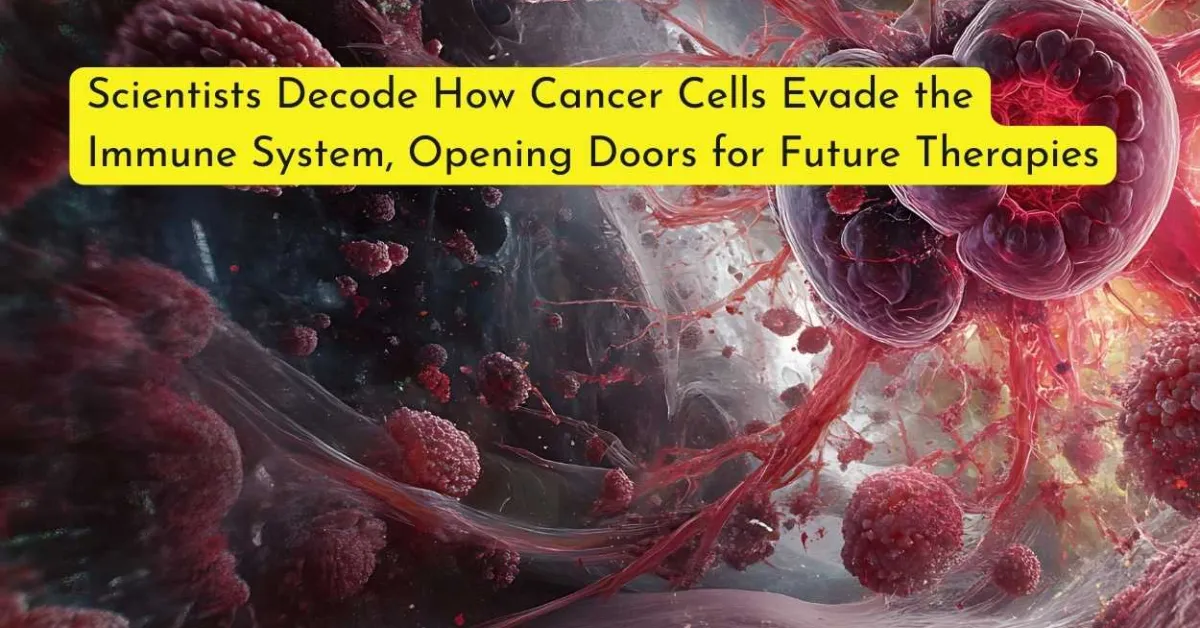
An international team of researchers has uncovered a crucial mechanism that allows certain cancer cells to hide from the body’s immune defenses, a discovery that could reshape future cancer treatments. The study, led by scientists at Julius-Maximilians-Universität Würzburg (JMU) in collaboration with partners in the United States, reveals how the powerful cancer-driving protein MYC not only fuels tumor growth but also helps tumors remain undetected by the immune system.
Cancer cells constantly battle the immune system, which in healthy bodies detects and destroys abnormal cells. However, tumors with high activity of the MYC protein manage to silence alarm signals that would typically alert immune cells to a problem, allowing them to grow unchecked. The new research shows that under stress, MYC switches from its normal role of activating genes to binding newly created RNA inside the cell, triggering structural changes that block immune signaling.
Published in the prestigious journal Cell, the study involved experiments in laboratory models that demonstrated the dual role of MYC. While its gene-activating function promotes rapid tumor growth, its ability to suppress immune alarm signals comes from binding to nascent RNA and recruiting cellular machinery that destroys key immune-activating molecules. This effectively cloaks the tumor from immune surveillance.
Importantly, the research team showed that when MYC’s RNA-binding ability was disrupted, the tumors lost this immune-shielding capacity and were rapidly eliminated by the immune system in animal models. In one striking finding, pancreatic tumors shrank by more than 90 % in cases where the immune camouflage was disabled and a functioning immune response was present.
Experts say this discovery points to a promising new avenue for cancer therapy: instead of trying to block MYC entirely, a strategy complicated by the protein’s role in normal cell functions, future drugs could target its specific immune-evasion function. By lifting the tumor’s “cloak of invisibility,” the immune system could be empowered to recognize and attack cancer cells more effectively.
While these findings are still in the preclinical stage and more research is needed before clinical applications, the breakthrough offers a deeper understanding of how tumors manipulate immune responses and highlights a potential target for next-generation immunotherapies