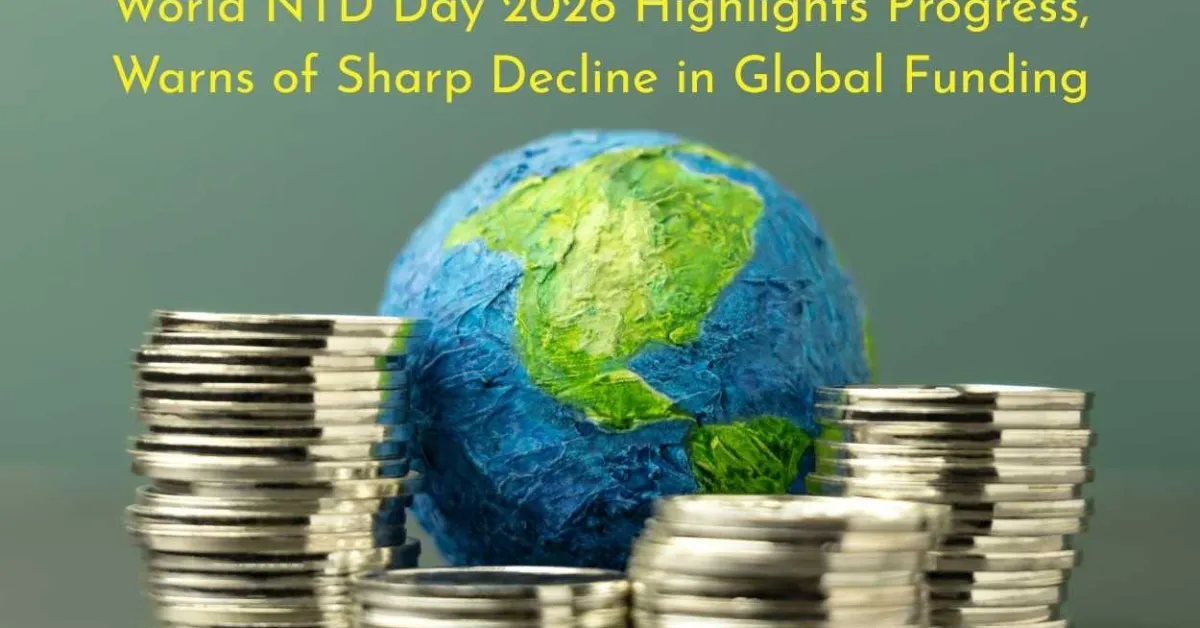
As the world observes World Neglected Tropical Diseases (NTD) Day 2026, global health leaders are celebrating major gains against neglected diseases while raising serious concern over declining financial support. The World Health Organization (WHO) has warned that a 41% decline in NTD aid between 2018 and 2023 threatens to stall or reverse years of progress.
World NTD Day, marked every year on 30 January, draws attention to a group of preventable and treatable diseases that affect more than one billion people worldwide, particularly in low-income and marginalized communities. These diseases continue to cause disability, stigma, and economic loss despite the availability of effective control measures.
“Unite. Act. Eliminate.” - Turning Commitment into Action
The theme for World NTD Day 2026, “Unite. Act. Eliminate.”, calls for stronger collaboration among governments, global partners, civil society, and affected communities. WHO emphasized that eliminating NTDs requires moving beyond symbolic commitments toward sustained investment, stronger health systems, and integrated disease control strategies.
The campaign underscores the need to embed NTD services within primary healthcare and water, sanitation, and hygiene programmes to ensure long-term and equitable impact.
Impressive Gains, Fragile Future
Over the past decade, significant progress has been achieved. Nearly 60 countries have eliminated at least one neglected tropical disease, and the number of people requiring treatment has steadily declined. These successes demonstrate that elimination is achievable when interventions are consistent and well-funded.
However, WHO has cautioned that recent funding trends pose a major risk. The 41% decline in NTD aid between 2018 and 2023 has created widening gaps in prevention, treatment, and surveillance programmes, particularly in countries with fragile health systems.
NTDs Remain Among the Most Underfunded Health Priorities
Despite their heavy disease burden, NTDs continue to receive disproportionately low levels of global health financing. Experts point out that investments in NTD control are highly cost-effective, delivering strong economic and social returns while improving education, productivity, and quality of life.
WHO has urged donor countries and development partners to restore and sustain funding levels, warning that reduced aid could undermine progress toward the 2030 global elimination targets.
Communities and Equity at the Core
World NTD Day 2026 also emphasizes the human side of elimination efforts. Many individuals cured of NTDs continue to face lifelong disabilities and social exclusion. Addressing stigma, mental health, and rehabilitation is now recognized as essential to achieving meaningful and lasting impact.
Community engagement, youth leadership, and the inclusion of affected populations are being highlighted as critical drivers of success.
A Defining Moment for Global Health
As the world moves closer to the 2030 deadline, WHO has described this period as a defining moment for neglected tropical diseases. World NTD Day 2026 serves as both a celebration of progress and a warning that without renewed unity and investment, elimination efforts could lose momentum.
The message is clear: ending neglected tropical diseases is possible but only if global commitment is matched with sustained action and funding.