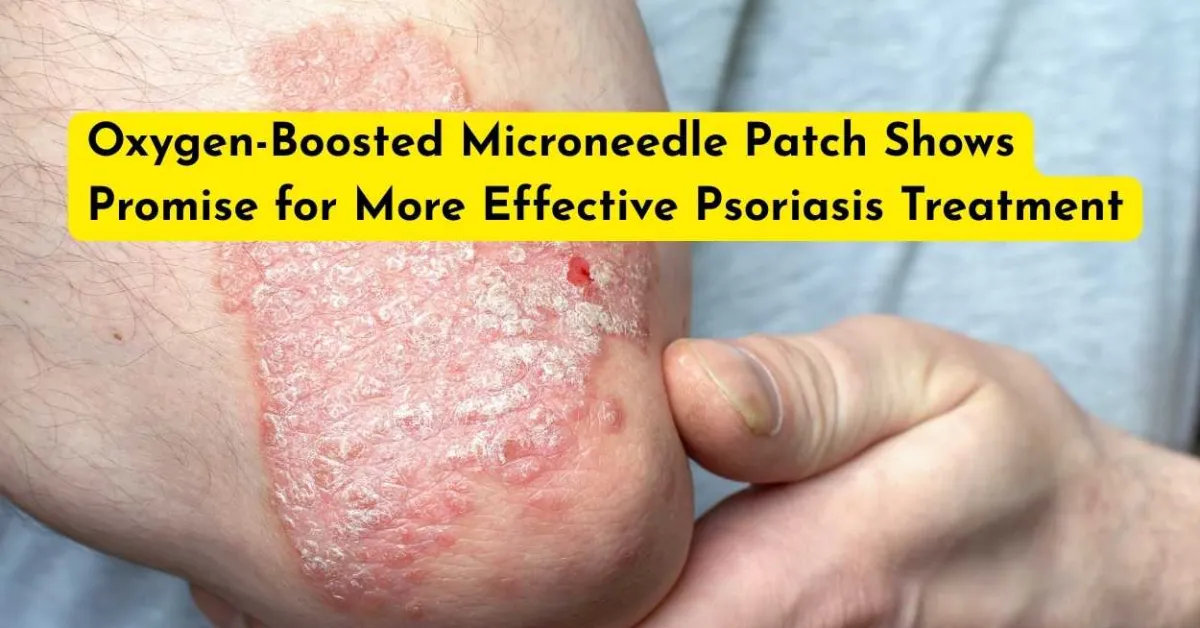
Researchers have developed an innovative oxygen-boosted microneedle patch that significantly improves drug delivery and photodynamic therapy (PDT) for psoriasis, a chronic inflammatory skin disease that affects millions worldwide.
The study, published in Acta Pharmaceutica Sinica B, describes a dual-section microneedle (MN) patch designed to overcome two major challenges in psoriasis treatment: poor drug penetration through thickened skin and reduced efficacy of PDT caused by low oxygen levels in inflamed lesions.
Psoriasis is marked by excessive keratinocyte proliferation, epidermal thickening, and a hypoxic inflammatory microenvironment. These features limit the effectiveness of topical drugs and oxygen-dependent therapies such as PDT. To address this, the research team developed an “S-PTP MN patch” that combines sustained drug release, oxygen generation, and photodynamic action in a single platform.
The microneedle patch has two functional sections. The needle tips are made of hyaluronic acid and contain nanoparticles loaded with the corticosteroid triamcinolone acetonide along with a photosensitizer. These nanoparticles are coated with a reactive oxygen species (ROS)-responsive layer, enabling controlled drug release in inflamed tissue. The base layer of the patch contains sodium percarbonate, which generates oxygen when it comes into contact with skin fluid.
Upon application, the microneedles painlessly penetrate the thickened psoriatic skin and rapidly dissolve. The oxygen generated at the base propels the drug-loaded nanoparticles deeper into the lesion and simultaneously enhances PDT by supplying the oxygen required to generate cytotoxic reactive oxygen species under light irradiation.
In laboratory and animal studies, the patch demonstrated strong mechanical strength, rapid dissolution, and drug delivery efficiency exceeding 90%. The nanoparticles provided sustained release of triamcinolone acetonide for up to six days, ensuring prolonged anti-inflammatory effects.
In an imiquimod-induced psoriasis mouse model, a single application of the S-PTP MN patch produced markedly better outcomes than conventional topical steroid cream. Treated mice showed significant reductions in skin redness, scaling, and epidermal thickness, along with lower levels of inflammatory cytokines such as IL-6, IL-17, IL-23, and TNF-α. Markers of keratinocyte proliferation were also substantially reduced.