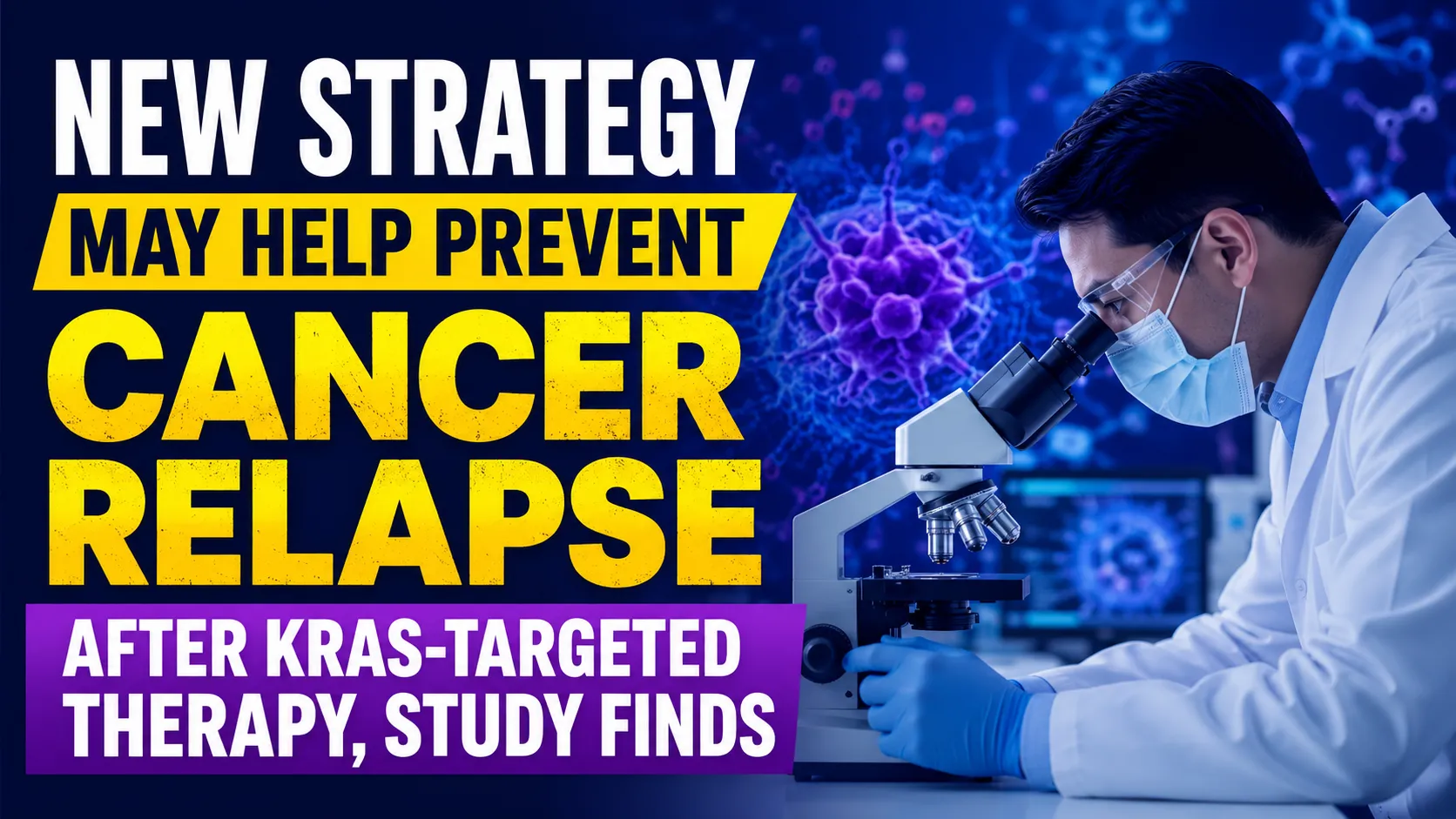
Researchers from Chiba University, Japan, have identified a promising strategy that could help prevent cancer from returning after treatment with KRAS-targeted drugs. The study reveals that a small population of cancer cells, known as drug-tolerant persister cells (DTPs), survives KRAS inhibitor therapy by rewiring its metabolism. By targeting these newly discovered survival mechanisms, scientists believe it may be possible to eliminate these residual cells and reduce the risk of relapse.
KRAS mutations are among the most common genetic alterations driving cancers such as non-small cell lung cancer (NSCLC), pancreatic cancer, and colorectal cancer. Although the introduction of KRAS inhibitors, including sotorasib, has significantly improved treatment options, these therapies often fail to eradicate every cancer cell. Some cells enter a temporary drug-tolerant state, allowing them to survive treatment and potentially restart tumor growth once therapy ends.
In the new study, researchers exposed laboratory models of KRAS-mutant lung and pancreatic cancers to KRAS inhibitors and examined how the surviving cells adapted. They found that these persister cells temporarily stopped dividing but remained capable of regaining their growth after treatment withdrawal. During this drug-tolerant phase, the cells became highly dependent on glutamine metabolism and lysosome-associated cellular functions for survival.
Importantly, when scientists simultaneously blocked glutamine metabolism and lysosomal functions, the survival of these drug-tolerant cells was significantly reduced. The team suggests that disrupting these metabolic adaptations creates a new therapeutic vulnerability that could be exploited alongside KRAS inhibitors.
According to Associate Professor Shigeki Aoki, the study's central finding is that the same adaptive changes that enable cancer cells to survive KRAS-targeted therapy may also expose weaknesses that can be therapeutically targeted. Combining KRAS inhibitors with drugs that attack these survival pathways could help eliminate residual cancer cells before they trigger disease recurrence.
Although the findings are currently limited to experimental laboratory models, the researchers believe this combination strategy could eventually improve long-term outcomes for patients with KRAS-mutant cancers. If future clinical studies confirm these results, treatment may evolve beyond shrinking tumors to preventing relapse by eliminating the persistent cancer cells that remain after therapy.
The research was published in the journal Communications Biology on May 26, 2026, under the title "Dual targeting of glutamine metabolism and lysosomal function in eliminating drug-tolerant KRAS-mutant cancer cells."