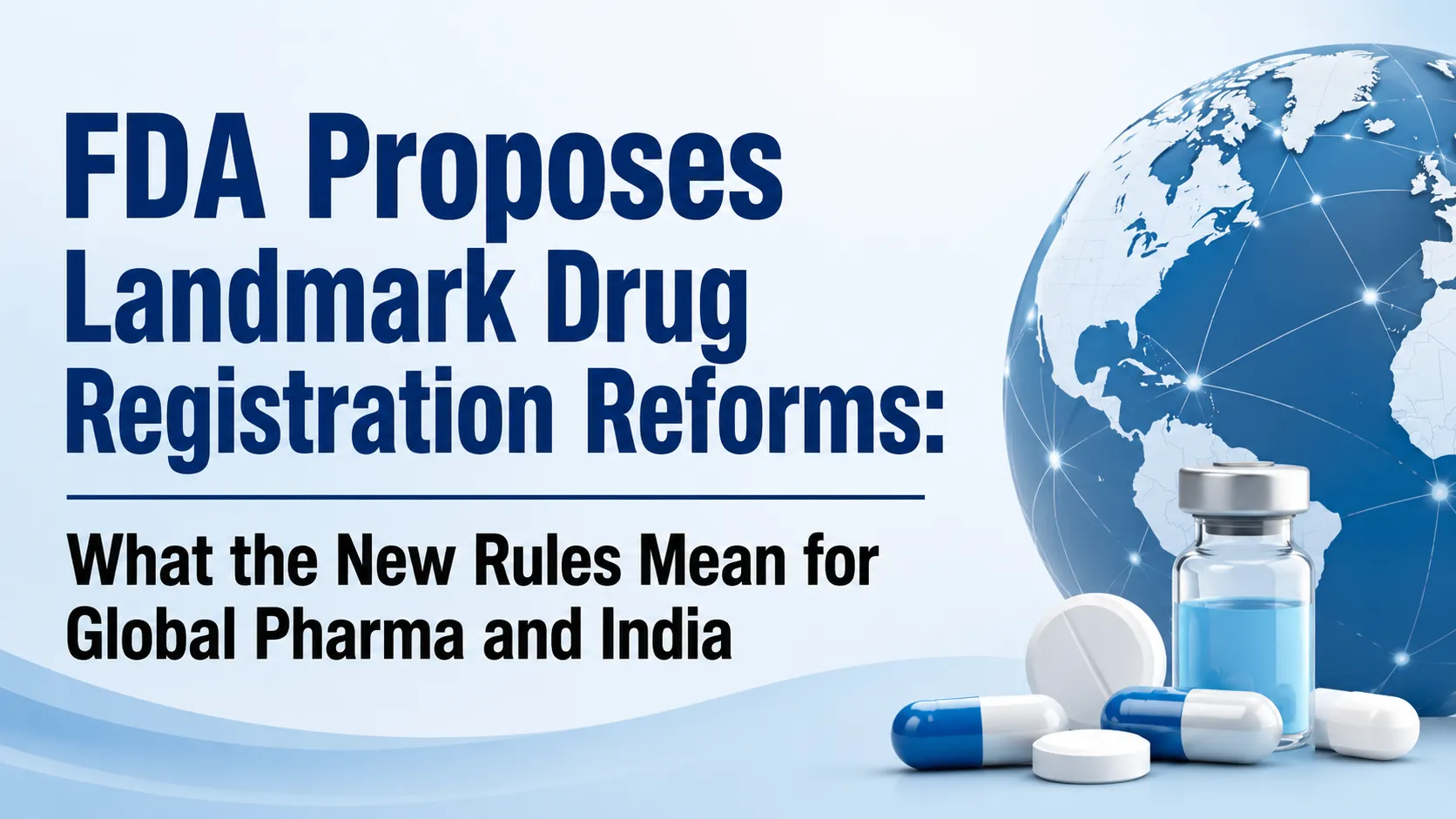
The U.S. Food and Drug Administration (FDA) has proposed a major overhaul of its drug establishment registration and drug listing regulations, aiming to modernize oversight of pharmaceutical manufacturing and improve visibility across global supply chains. If finalized, the rule would introduce a new regulatory framework for distributed manufacturing and expand registration requirements for certain foreign drug manufacturing establishments that currently fall outside existing regulations.
According to the FDA, the proposal is intended to better reflect how medicines are manufactured today, as pharmaceutical companies increasingly adopt advanced technologies such as modular, continuous, and decentralized manufacturing systems.
Modernizing Drug Manufacturing Oversight
One of the most significant changes in the proposal is the introduction of a simplified registration process for Distributed Manufacturing Establishments (DMEs).
Currently, every manufacturing site within a distributed production network is generally required to register separately with the FDA. Under the proposed rule, eligible manufacturers operating under a centralized hub-and-spoke model would be allowed to register the entire manufacturing network as a single establishment.
The FDA believes this approach would reduce administrative burden while maintaining appropriate regulatory oversight. Companies would still be required to notify the agency before relocating manufacturing units or making other significant operational changes.
The proposal is designed to support innovative manufacturing technologies that can improve production efficiency, increase flexibility, and help strengthen the resilience of pharmaceutical supply chains.
Expanded Registration Requirements for Foreign Manufacturers
The proposed regulation also seeks to close an important regulatory gap involving foreign drug manufacturers.
The FDA noted that some overseas facilities producing active pharmaceutical ingredients (APIs), intermediates, or other drug components that are supplied to another foreign establishment before entering the U.S. market may not currently be required to register with the agency.
If the rule is finalized, many of these establishments would be required to register with the FDA and submit drug listing information. According to the agency, the additional reporting would improve traceability throughout the supply chain and enhance its ability to identify quality or safety issues before medicines reach U.S. patients.
Benefits Expected by the FDA
The FDA expects the proposed changes to provide several long-term benefits, including:
* Reduced administrative burden for manufacturers using distributed manufacturing systems.
* Greater flexibility to deploy advanced manufacturing technologies.
* Improved transparency across global pharmaceutical supply chains.
* Better identification of manufacturing facilities involved in drug production.
* Stronger regulatory oversight to support drug quality and help address potential supply disruptions.
The agency's economic analysis also projects savings for manufacturers operating distributed manufacturing networks through simplified registration requirements, although certain foreign facilities may face new compliance obligations.
Potential Implications for India's Pharmaceutical Industry
Although the proposed rule does not specifically mention India, it could be relevant for Indian pharmaceutical manufacturers because India is one of the largest suppliers of generic medicines and active pharmaceutical ingredients (APIs) to the U.S. market.
If finalized, some Indian facilities that manufacture APIs, intermediates, or other drug components destined for the United States, either directly or through global supply chains, could be subject to additional FDA registration and drug listing requirements, depending on the final scope of the rule. Companies may therefore need to review their manufacturing networks and regulatory obligations if the proposal is adopted. Manufacturers with well-established quality and compliance systems may be better positioned to adapt to any new requirements.
Rule Still Open for Public Comment
The proposal has been issued as a Notice of Proposed Rulemaking (NPRM) and is not yet a final regulation. The FDA is inviting comments from pharmaceutical companies, industry associations, healthcare stakeholders, and the public before finalizing the rule.
If adopted, the regulation would represent one of the most significant updates to U.S. drug establishment registration requirements in years, aligning regulatory oversight with modern manufacturing practices while strengthening the security and transparency of the global pharmaceutical supply chain.