

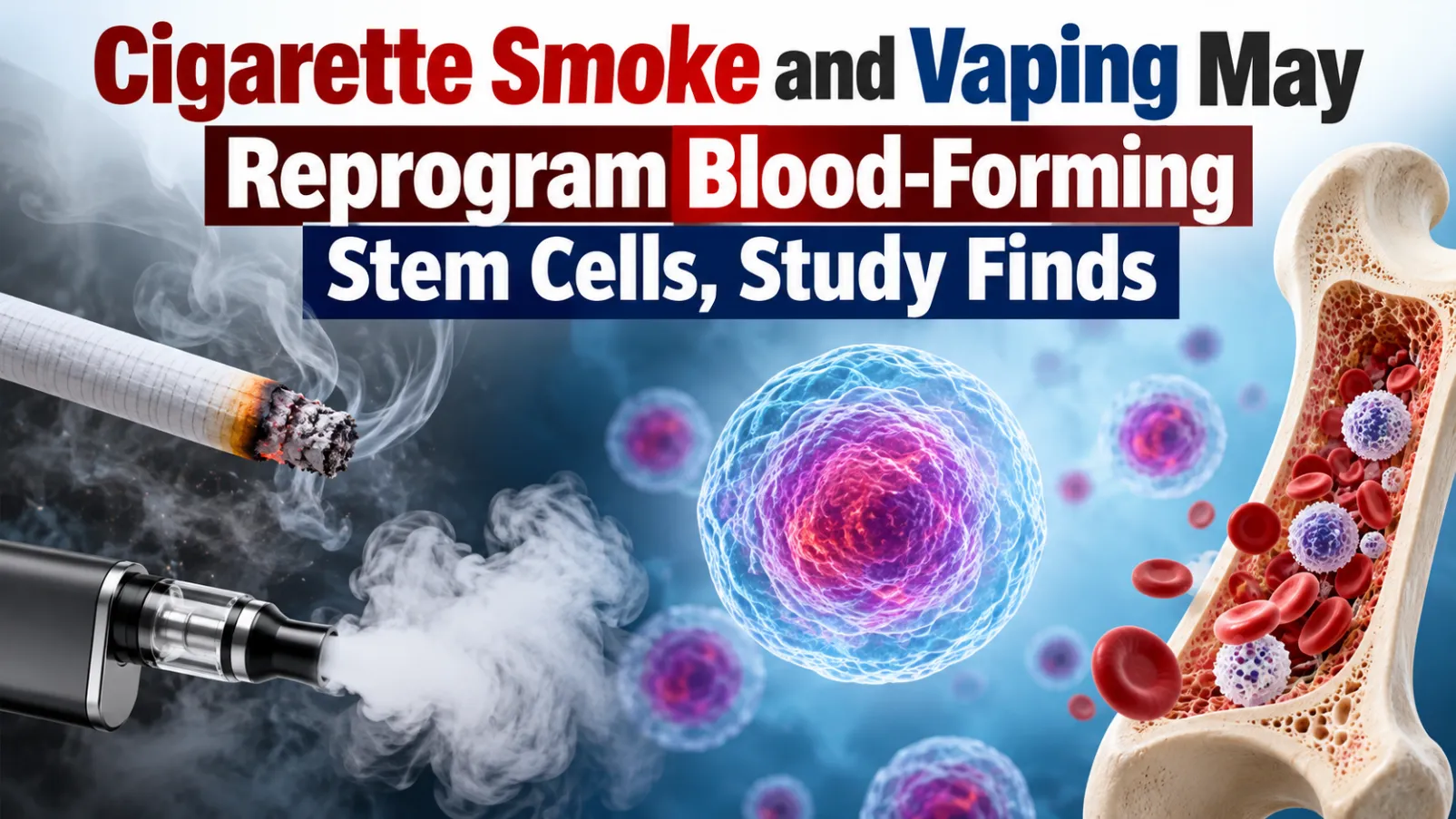
Cigarette smoke and e-cigarette aerosol may have lasting effects on the body's immune system and blood-forming cells, according to a new study by researchers at the University of California, Irvine. The research found that exposure to cigarette smoke and e-cigarette vapor altered immune responses and affected hematopoiesis, the process through which blood cells are produced. The findings raise concerns about the potential long-term consequences of both conventional smoking and vaping on immune function and the hematopoietic system.
The researchers compared cigarette smoke extract (CSE) and e-cigarette vapor extract (EVE) using several macrophage models, including RAW264.7 cells, THP-1-derived macrophages, primary mouse bone marrow-derived macrophages and human peripheral blood mononuclear cells. Cigarette smoke extract consistently reduced lipopolysaccharide-induced secretion of tumor necrosis factor-alpha (TNF-α) in several macrophage models in a dose-dependent manner. In contrast, the e-cigarette vapor extract used in the experiments had little effect on TNF-α production when used alone.
The study also identified an effect of cigarette smoke on macrophage lipid accumulation. Researchers found that cigarette smoke extract increased the formation of foam cells, which are lipid-laden macrophages associated with an early stage of atherosclerosis. The effect was reduced when cells were treated with N-acetylcysteine (NAC), a reactive oxygen species scavenger, suggesting that oxidative stress played a role in cigarette smoke-induced foam cell formation.
Another important finding involved hematopoietic progenitor cells. In laboratory experiments using mouse bone marrow, both cigarette smoke extract and e-cigarette vapor extract reduced myeloid colony formation in a dose-dependent manner. According to the researchers, this indicates that components of both cigarette smoke and e-cigarette vapor can impair the proliferative or differentiation capacity of hematopoietic progenitor cells.
The researchers then examined a sequential exposure pattern designed to resemble people who transition from conventional cigarettes to e-cigarettes. Mice were exposed to combustible cigarette smoke and subsequently switched to e-cigarette aerosol or clean air. The smoke-to-e-cigarette group developed a significant increase in platelet counts, with the most pronounced increase occurring after the switch to e-cigarette exposure. These mice also showed a clear shift toward myeloid cells, whereas mice switched from cigarette smoke to clean air did not show the same significant myeloid skewing.
The effects were particularly notable when researchers performed secondary bone marrow transplantation. Bone marrow from smoke-exposed mice was transplanted into mice that were not subsequently exposed to smoke or e-cigarette aerosol. Cells from both smoke-only and smoke-followed-by-e-cigarette exposure groups produced higher frequencies of monocytes and macrophages over time. The smoke-to-e-cigarette group also showed a significant reduction in neutrophil frequency.
The persistence of these changes after transplantation suggests that exposure to cigarette smoke can produce durable alterations within the hematopoietic system. The researchers described the findings as consistent with a myeloid-biased pattern resembling changes seen with hematopoietic aging. However, they emphasized that the experiments could not determine whether the effect resulted from direct epigenetic reprogramming of hematopoietic stem cells, selective expansion of myeloid-biased stem-cell clones, or changes occurring in progenitor cells.
The study also highlighted an important difference between the laboratory findings in different human samples. While cigarette smoke extract consistently suppressed TNF-α production in several macrophage models, responses among peripheral blood mononuclear cells from nine healthy donors were variable. Six donors showed reduced TNF-α secretion after cigarette smoke exposure, while three showed increased secretion following exposure to cigarette smoke or e-cigarette vapor. The researchers noted that the small sample size limits conclusions about the reasons for this individual variation.
The researchers cautioned that the findings have limitations. The animal experiments did not include an e-cigarette-only exposure group, while the e-cigarette products and exposure parameters used in the experiments may not represent the wide variety of devices, flavors and formulations available commercially. The study also did not include epigenetic or transcriptomic analysis of exposed hematopoietic stem cells, meaning the precise molecular mechanism behind the persistent changes remains unresolved.
Overall, the researchers concluded that cigarette smoke and e-cigarette exposure can affect both mature immune cells and blood-forming progenitor systems. The study found suppressed acute inflammatory cytokine responses alongside changes favoring myeloid blood-cell production, while sequential exposure to cigarette smoke followed by e-cigarette aerosol produced persistent alterations in hematopoietic output. The authors said further research is needed to understand the long-term consequences and the molecular mechanisms responsible for these changes.The study is published in toxicological sciences. (10.1093/toxsci/kfag096 )