
New ‘Smart’ Cancer Drug Targets Tumor Cells While Sparing Healthy Tissue. Scientists in India have developed a promising experimental cancer drug designed to activate mainly inside cancer cells, potentially offering a more selective approach than conventional chemotherapy.
The candidate, RK-251, was developed through collaborative research led by Dr. Asis Bala of the Institute of Advanced Study in Science and Technology (IASST) and Dr. K.P. Bhabak of the Indian Institute of Technology Guwahati.
Unlike traditional chemotherapy, which can affect both cancerous and healthy cells, RK-251 is designed to remain relatively inactive until it encounters the chemical environment found inside many cancer cells.
How does the drug work?
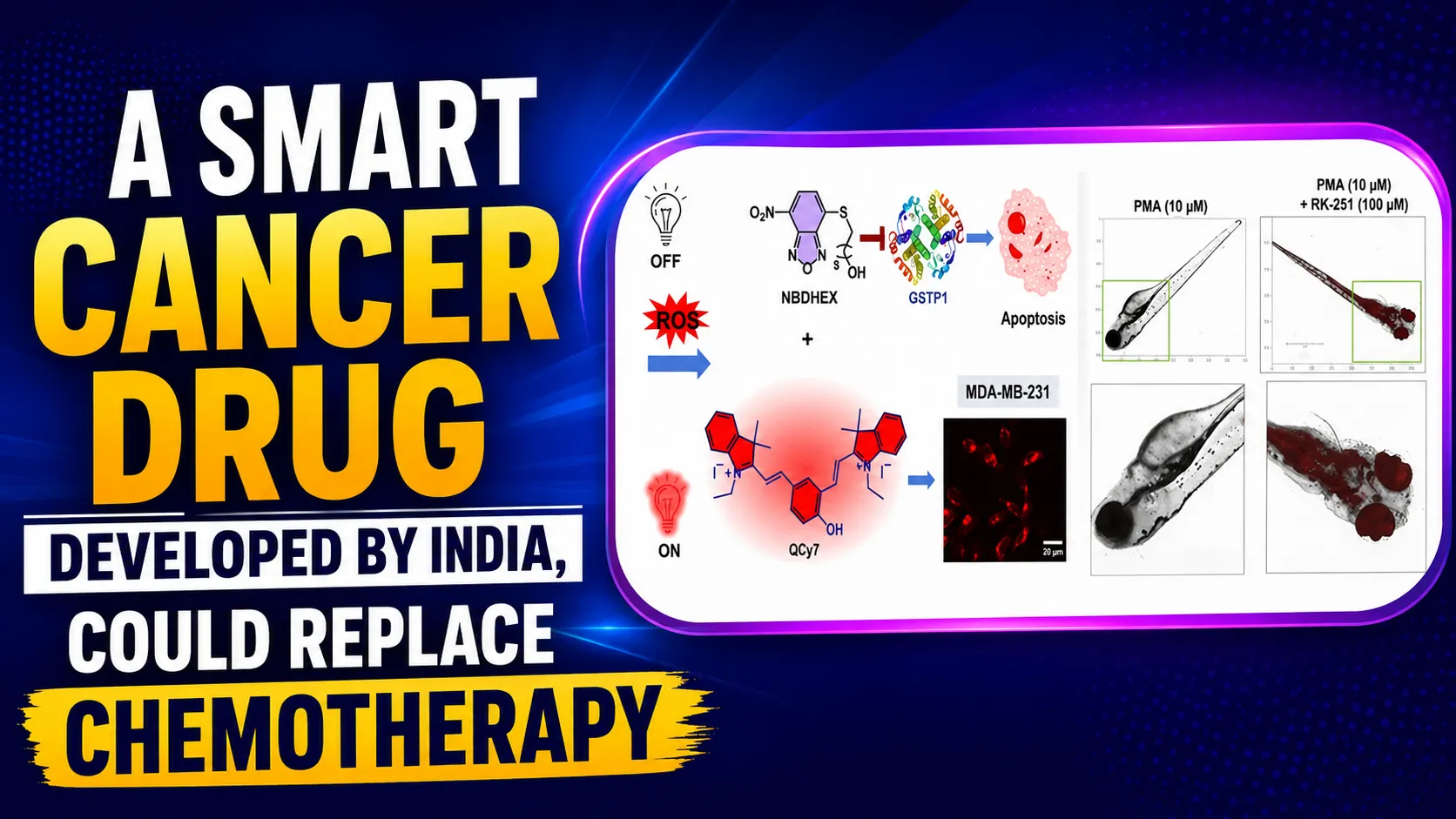
A key feature of RK-251 is its ability to respond to reactive oxygen species (ROS). Cancer cells often contain higher levels of ROS than normal cells.
When RK-251 enters a cancer cell with elevated ROS levels, these molecules trigger the drug to release its active anticancer component, NBDHEX.
NBDHEX then interferes with proteins that cancer cells rely on for survival and resistance to treatment. In this way, the drug is intended to deliver its anticancer activity primarily where it is needed, rather than exposing healthy tissues to the same level of toxicity.
Promising results against aggressive breast cancer
In preclinical experiments, RK-251 demonstrated strong activity against triple-negative breast cancer cells, an aggressive form of breast cancer that can be difficult to treat.
Researchers observed considerably less effect on healthy cells, supporting the potential of the ROS-activated approach.
The team also investigated the candidate's effects in zebrafish embryos (Danio rerio). The study did not show obvious signs of toxicity, while the drug displayed the expected fluorescence in the presence of ROS. This provided additional evidence that RK-251 warrants further investigation.
Could it replace chemotherapy?
The findings are promising, but it is too early to say that RK-251 can replace chemotherapy.
The drug has so far been studied in preclinical models, and much more research is required to establish its safety, effectiveness, appropriate dosage and potential side effects in humans. Clinical trials would be necessary before determining whether the approach can benefit cancer patients.
The research represents an important step toward the development of activatable prodrugs—medicines that are designed to remain less active during circulation and become activated by specific conditions within diseased cells.
The study was published in the ACS Journal of Medicinal Chemistry under the title “Rational Development of Activatable Prodrugs of the GSTP1 Inhibitor NBDHEX: Turn-On NIR Fluorogenic Drug Delivery with Selective Anticancer Activity ”.