
Get the latest news from world and India’s leading pharmaceutical companies Pharma Industry, pharmaceutical marketing, generic drugs, and Complete news for Pharmacy and Life Sciences professionals.

  • For the first time, using a mouse model of Alzheimer's disease, scientists have documented a link between raised levels of calcium in mitochondria and neuronal death in the living brain. This relationship was previously documented in cell culture, but seeing this phenomenon in living mice makes it more likely that this occurs in people also and could point to a new target for Alzheimer's disease.

    "We were able to show mitochondrial calcium dysregulation in the neurons of living mice with Alzheimer's-like symptoms using cutting edge live imaging techniques," says the lead author of the paper, Maria Calvo-Rodriguez, PhD. The senior author is Brian J. Bacskai, PhD. They are both from the Department of Neurology at Massachusetts General Hospital.

    Their collaborators included researchers from Harvard School of Public Health and the School of Medicine at Instituto de Investigacion Biomedica de Cadiz (INIBICA) in Spain. This study was recently published in Nature Communications.

    One of the defining hallmarks of Alzheimer's disease is the deposition of amyloid beta plaques and loss of neurons. The accumulation of amyloid beta has long been thought to be a trigger of the disease, but the exact means by which neurons die in Alzheimer's remain a mystery, and the amyloid beta theory has become controversial because so many drug candidates targeting amyloid beta have failed in clinical trials.

    One of the effects of amyloid beta plaques is that they cause high calcium ion (Ca2+) levels in the brain cells. There is also evidence that, at least in cell culture, exposure to amyloid beta can raise Ca2+ levels within mitochondria and lead to neuronal death.

    Mitochondria influence Ca2+ signaling inside neurons through the "mitochondrial calcium uniporter" that takes up Ca2+ into mitochondria. The investigation of this mechanism in living mice has been hampered by the lack of technologies sensitive enough to directly assess Ca2+ levels in mitochondria in the living brain.


    To explore the relationship between Ca2+, mitochondria and neuronal death, Calvo-Rodriguez and her colleagues combined multiphoton-microscopy with a ratiometric Ca2+ indicator targeted to mitochondria to asses Ca2+ levels. They applied these technologies to examine the neurons of a transgenic mouse model of Alzheimer's disease that develops amyloid plaques similar to those from human patients.

    Their studies demonstrate that increased mitochondrial Ca2+ levels are associated with plaque deposition and neuronal death in this model, indicating that abnormal Ca2+ levels in mitochondria could play a role in neuronal cell death in Alzheimer's disease.

    Additionally, they observed that when soluble Aβ is applied to the healthy mouse brain Ca2+ concentration in mitochondria increases. That process can be prevented by blockage of the mitochondrial calcium uniporter with a drug. Soluble amyloid beta is a type of amyloid beta similar to that in the human Alzheimer's brain.

    "High calcium levels in the mitochondria cause oxidative stress, and the death of neurons via apoptosis," says Calvo-Rodriguez. "We propose that by blocking the neuronal mitochondrial calcium uniporter we can prevent cell death and impact disease progression." Their work suggests targeting calcium entry to the mitochondria could be a promising new therapeutic approach in Alzheimer's disease.
    << Back to Pharma News

    Subscribe to PharmaTutor News Alerts by Email

  • “The Union Minister of Science and Technology, Earth Sciences, and Health and Family Welfare, Dr. Harsh Vardhan said today that India’s fight against the COVID-19 is moving fast ahead strongly and steadily. He was addressing a digital conference, RE-START – ‘Reboot the Economy through Science, Technology and Research Translations’, organized to celebrate the National Technology Day. The Conference was organized by the Technology Development Board (TDB), a statutory body of the Department of Science and Technology (DST) and the Confederation of Indian Industry (CII).

    While applauding the Ministry of Science and Technology’s response to epidemics like COVID in the country, Dr. Harsh Vardhan emphasized that the S&T response reflects the collaborative spirit of the entire S&T ecosystem. “Indian government, academia, scientists, start-ups, entrepreneurs and industry have been working relentlessly to find solutions to combat this pandemic. We must appreciate the efforts of our scientists, our entrepreneurs and our institutions working to find quick and deployable solutions for COVID-19. New discoveries, industry partnerships, and enhanced research initiatives have thus been rapidly developed and adopted”, said the minister.

    “Within a short period of time, the nation has been able to mobilize a number of researchers to develop new testing kits, protective equipment, respiratory devices, etc.”, he added.

    The minister also apprised the audience about the ‘COVID-19 Task Force’ set up by the Government to map COVID-19-related technology capabilities. “Our Government has vigorously supported the ‘Make in India’ Programme. This has brought in scientific institutions and start-ups to develop the COVID-19 tests, masks, sanitizers, personal protective equipment (PPEs) and ventilators,” he further added.

    On the theme for the National Technology Day this year, Dr. Harsh Vardhan pointed out, “We need to mitigate the widespread economic impact and prepare for a stronger recovery using self-reliance as the new mantra. Thus, we look towards new opportunities to galvanize growth in the technological and industrial sector.”

    While delivering his special address, Dr. VK Saraswat, Member, NITI Aayog, pointed out the importance of new-age technologies, medical and manufacturing technologies, etc. in boosting the economy as the world adjusts to the new normal.


    “ Our Government has vigorously supported the ‘Make in India’ Programme. This has brought in scientific institutions and start-ups to develop the COVID-19 tests, masks, sanitizers, personal protective equipment (PPEs) and ventilators”

    Principal Scientific Advisor to the Government of India, Professor K. Vijay Raghavan, pointed out how technology can change the way we live our lives and the way we do things in future, particularly so in the post-COVID era. He pointed out that this is an opportunity to gear up for the future that lies ahead, and a better-equipped R&D workforce and ecosystem will prepare India better for future challenges.

    DST has stepped into its 50th year of existence. DST Secretary Professor Ashutosh Sharma, thus, underlined the significance of the National Technology Day in view of the challenges faced during these times of COVID-19. He further emphasized that the COVID-19 crisis had led R&D and technology development to work in various modes. The private-public model has encouraged R&D to greater heights. Plausible translations, prototyping, start-ups, and industry have seen immense growth.

    “Rebooting the economy requires new-age technologies, appropriate national missions, programmes and schemes to get into quick action. He added that wherever readymade solutions are not available, research and development needs to be more profound, relevant, speedy, impactful and strongly connected to industry. The lessons learnt now would continue to assist us in addressing the overarching challenges of the future—sustainable development, climate change, industry 4.0, anti-microbial resistance, etc., said Professor Sharma.

    Dr. Saumya Swaminathan, Chief Scientist, World Health Organization, highlighted the steps taken internationally to combat the pandemic and the way forward. Dr. Swaminathan appreciated the way India has tackled the COVID-19 challenge. Mr. Chandrajit Banerjee, DG, CII; Mr. Vikram Kirloskar, President, CII, and Dr Neeraj Sharma, Secretary, TDB, were among those who participated in the inaugural session.

    During this occasion, Dr. Harsh Vardhan also inaugurated a virtual exposition of companies whose technologies have been supported by TDB. Various organizations and companies showcased their products in the exposition through a digital B2B lounge.

    The conference has hence brought together scientists, technocrats, government officials, diplomats, WHO officials, and dignitaries from national and international industry, research institutions and academic institutions on a single platform to share their insights on the role played by S&T to combat this global healthcare crisis and to find solutions for the same.

    The conference will have technical sessions on ‘Medicines & Medical Technologies’; ‘Advanced Materials – New Technology Horizons’, ‘Advanced Manufacturing Technologies for Sustainable Future & Global Innovation’ and ‘Technology Alliance for Global Economic Leadership’.

    - India Science Wire

    << Back to Pharma News

    Subscribe to PharmaTutor News Alerts by Email

  • U.S. Food and Drug Administration authorized the first diagnostic test with the option of using home-collected saliva samples for COVID-19 testing. Specifically, the FDA issued an emergency use authorization (EUA) to Rutgers Clinical Genomics Laboratory for their COVID-19 laboratory developed test (LDT), which had been previously added to the high complexity molecular-based LDT “umbrella” EUA, to permit testing of samples self-collected by patients at home using the Spectrum Solutions LLC SDNA-1000 Saliva Collection Device. This announcement builds on last month’s EUA for the first diagnostic test with a home-collection option, which uses a sample collected from the patient’s nose with a nasal swab and saline.

    EUA for Rutgers Clinical Genomics Laboratory’s molecular test permits testing of a saliva sample collected from the patient using a designated self-collection kit. Once patients collect their saliva sample, they return it to the Rutgers Clinical Genomics Laboratory in a sealed package for testing.

    The Rutgers Clinical Genomics Laboratory test is currently the only authorized COVID-19 diagnostic test that uses saliva samples to test for SARS-CoV-2, the strain of coronavirus that causes COVID-19. The test remains prescription only.

    This authorization is limited to testing performed at the Rutgers Clinical Genomics Laboratory using their molecular LDT COVID-19 authorized test for saliva specimens collected using the Spectrum Solutions LLC SDNA-1000 Saliva Collection Device. It is important to note that this is not a general authorization for at-home collection of patient samples using other collection methods, saliva collection devices, or tests, or for tests fully conducted at home.

    << Back to Pharma News

    Subscribe to PharmaTutor News Alerts by Email


  • U.S. Food and Drug Administration approved Retevmo (selpercatinib) capsules to treat three types of tumors – non-small cell lung cancer, medullary thyroid cancer and other types of thyroid cancers – in patients whose tumors have an alteration (mutation or fusion) in a specific gene (RET or “rearranged during transfection”). Retevmo is the first therapy approved specifically for cancer patients with the RET gene alterations.

    Specifically, the cancers that Retevmo is approved to treat include
    • Non-small cell lung cancer (NSCLC) that has spread in adults,
    • Advanced medullary thyroid cancer (MTC) or MTC that has spread, in patients 12 and older who require systemic therapy (a treatment option that spreads across the entire body, is not targeted), and
    • Advanced RET fusion-positive thyroid cancer in those age 12 and older that requires systemic therapy that has stopped responding to radioactive iodine therapy or is not appropriate for radioactive iodine therapy.

    Retevmo is a kinase inhibitor, meaning it blocks a type of enzyme (kinase) and helps prevent the cancer cells from growing. Before beginning treatment, the identification of a RET gene alteration must be determined using laboratory testing.

    The FDA approved Retevmo on the results of a clinical trial involving patients with each of the three types of tumors. During the clinical trial, patients received 160 mg Retevmo orally twice daily until disease progression or unacceptable toxicity. The major efficacy outcome measures were overall response rate (ORR), which reflects the percentage of patients that had a certain amount of tumor shrinkage, and duration of response (DOR). Efficacy for NSCLC was evaluated in 105 adult patients with RET fusion-positive NSCLC who were previously treated with platinum chemotherapy. The ORR for the 105 patients was 64%. For 81% of patients who had a response to the treatment, their response lasted at least six months.

    Efficacy was also evaluated in 39 patients with RET fusion-positive NSCLC who had never undergone treatment. The ORR for these patients was 84%. For 58% of patients who had a response to the treatment, their response lasted at least six months.

    Efficacy for MTC in adults and pediatric patients was evaluated in those 12 years of age and older with RET-mutant MTC. The study enrolled 143 patients with advanced or metastatic RET- mutant MTC who had been previously treated with cabozantinib, vandetanib or both (types of chemotherapy), and patients with advanced or metastatic RET-mutant MTC who had not received prior treatment with cabozantinib or vandetanib. The ORR for the 55 previously treated patients was 69%. For 76% of patients who had a response to the treatment, their response lasted at least six months. Efficacy was also evaluated in 88 patients who had not been previously treated with an approved therapy for MTC. The ORR for these patients was 73%. For 61% of patients who had a response to the treatment, their response lasted at least six months.


    Efficacy for RET fusion-positive thyroid cancer was evaluated in adults and pediatric patients 12 years of age and older. The study enrolled 19 patients with RET fusion-positive thyroid cancer who were radioactive iodine-refractory (RAI, if an appropriate treatment option) and had received another prior systemic treatment, and eight patients with RET fusion-positive thyroid cancer who were RAI-refractory and had not received any additional therapy. The ORR for the 19 previously treated patients was 79%. For 87% of patients who had a response to the treatment, their response lasted at least six months. Efficacy was also evaluated in eight patients who had not received therapy other than RAI. The ORR for these patients was 100%. For 75% of patients who had a response to the treatment, their response lasted at least six months.

    The FDA granted approval of Retevmo to Loxo Oncology, Inc., a subsidiary of Eli Lilly and Company.

    << Back to Pharma News

    Subscribe to PharmaTutor News Alerts by Email

  • U.S. Food and Drug Administration is providing an update on the agency’s efforts to combat the extremely concerning actions by companies and individuals that are exploiting or taking advantage of widespread fear among consumers during the COVID-19 pandemic. In response to scammers on the internet selling unproven medical products, the FDA has taken – and continues to take – a number of steps to find and stop those selling unapproved products that fraudulently claim to mitigate, prevent, treat, diagnose or cure COVID-19.

    To date, the FDA has issued 42 warning letters to companies making bogus COVID-19 claims, including one to a seller of fraudulent chlorine dioxide products, equivalent to industrial bleach, frequently referred to as “Miracle Mineral Solution” or “MMS”, as a treatment for COVID-19. After the seller refused to take corrective action, a federal court issued a preliminary injunction requiring the seller to immediately stop distributing its unproven and potentially dangerous product.

    Additionally, as part of the FDA’s Operation Quack Hack, in just a few short weeks, the agency has discovered hundreds of such products including fraudulent drugs, testing kits and personal protective equipment (PPE) sold online with unproven claims. We continue to work with online marketplaces, domain name registrars, payment processors and social media websites to remove from their platforms products that fraudulently claim to mitigate, prevent, treat, diagnose or cure COVID-19 and to keep those products from reappearing under different names. At this time, the FDA has sent hundreds of abuse complaints to domain name registrars and internet marketplaces, who in most instances, have voluntarily removed the identified postings. We will continue to monitor the online ecosystem for fraudulent products peddled by bad actors seeking to profit from this global pandemic.

    There are a number of examples of unproven products that the FDA is keeping out of the country. Recently, the agency intercepted and investigated a case of mislabeled COVID-19 “treatment kits” offered for import. As a result, Special Agents with the FDA’s Office of Criminal Investigations, with the help of domestic and international law enforcement counterparts in the United Kingdom, led the Department of Justice to bring a criminal complaint against a British man who sought to profit from this pandemic and jeopardize public health.

    Until the curve is flattened, and even after, the FDA will continue to carry out the agency’s mission of protecting the health and safety of American consumers and strive to prevent unlawful FDA-regulated products from entering, or being distributed in, domestic commerce.

    << Back to Pharma News


    Subscribe to PharmaTutor News Alerts by Email

  • U.S. Food and Drug Administration approved Tabrecta (capmatinib) for the treatment of adult patients with non-small cell lung cancer (NSCLC) that has spread to other parts of the body. Tabrecta is the first FDA-approved therapy to treat NSCLC with specific mutations (those that lead to mesenchymal-epithelial transition or MET exon 14 skipping).

    The FDA also approved the FoundationOne CDx assay (F1CDx) as a companion diagnostic for Tabrecta today. Most patients had tumor samples that were tested for mutations that lead to MET exon 14 skipping using local tests and confirmed with the F1CDx, which is a next-generation sequencing based in vitro diagnostic device that is capable of detecting several mutations, including mutations that lead to MET exon 14 skipping.

    NSCLC is a disease in which malignant cancer cells form in the tissues of the lung. It is the most common type of lung cancer with up to 90% of all lung carcinomas falling into the non-small cell category. NSCLC occurs when healthy cells become abnormal and grow rapidly. One danger of this form of cancer is that there’s a high likelihood that the cancer cells will spread from the lungs to other organs and body parts. Cancer metastasis consists of a sequential series of events, and MET exon 14 skipping is recognized as a critical event for metastasis of carcinomas. Mutations leading to MET exon 14 skipping are found in 3-4% of patients with lung cancer.

    Tabrecta is a kinase inhibitor, meaning it functions by blocking a key enzyme that results in helping to stop the tumor cells from growing. The FDA approved Tabrecta based on the results of a clinical trial involving patients with NSCLC with mutations that lead to MET exon 14 skipping, epidermal growth factor receptor (EGFR) wild-type and anaplastic lymphoma kinase (ALK) negative status, and at least one measurable lesion.

    Tabrecta may cause harm to a developing fetus or newborn baby. Health care professionals should advise pregnant women of this risk and should advise both females of reproductive potential and male patients with female partners of reproductive potential to use effective contraception during treatment with Tabrecta and for one week after the last dose.

    The FDA granted approval of Tabrecta to Novartis Pharmaceuticals Corporation. The approval of the F1CDx companion diagnostic was granted to Foundation Medicine, Inc.


    << Back to Pharma News

    Subscribe to PharmaTutor News Alerts by Email

  • ICU Medical, Inc. is voluntarily recalling one single lot of Lactated Ringer's Injection, USP. The products are being recalled to the hospital/user level due to the presence of particulate matter identified as iron oxide. ICU Medical became aware of this issue through a single customer complaint.

    Administration of a drug product that contains metal particulate matter could result in adverse events ranging from inflammation at the site of injection to more serious events that could include the formation of a blood clot obstructing the flow of blood which could lead to end-organ damage or death. To date, ICU Medical, Inc. has not received reports of adverse events related to this recall.

    Lactated Ringer's Injection, USP is indicated for parenteral replacement of extracellular losses of fluid and electrolytes, with or without minimal carbohydrate calories, as required by the clinical condition of the patient. Product was distributed nationwide both by ICU Medical direct to customers and through medical distributors. The product is for human and veterinary use.

    This recall is being conducted with the knowledge of the U.S. Food and Drug Administration.

    << Back to Pharma News

    Subscribe to PharmaTutor News Alerts by Email

  • Glenmark Pharmaceuticals, a research-led, integrated global pharmaceutical company has initiated Phase 3 clinical trials in India on Antiviral tablet Favipiravir, for which it received approval from India’s drug regulator DCGI in late April. Glenmark is the first company in India to initiate Phase 3 clinical trials on Favipiravir for COVID-19 patients in India. Favipiravir is a generic version of Avigan® of Fujifilm Toyama Chemical Co. Ltd., Japan, a subsidiary of Fujifilm Corporation. Clinical trials have commenced and over 10 leading government & private hospitals in India are being enrolled for the study. Glenmark estimates study completion by July/August 2020.

    Glenmark has successfully developed the API and the formulations for the product through its in-house R&D team. Favipiravir has demonstrated activity against influenza viruses and has been approved in Japan for the treatment of novel influenza virus infections. The molecule if commercialized, will be marketed under the brand name ‘FabiFlu®’ in India.

    Commenting on this development, Dr. Monika Tandon, Vice President & Head, Clinical Development, Global Specialty/Branded Portfolio, Glenmark Pharmaceuticals Ltd., said, “Several health and medical experts, both in and outside of Glenmark are eager to see the effect that Favipiravir has on COVID-19 cases. We believe the study results will be significant as there is currently no effective treatment for the virus.” She added, “The data we get from these trials will point us in a clearer direction with regard to COVID-19 treatment and management.”

    Further, Mr. Sujesh Vasudevan, President, India Formulations, Middle East and Africa, Glenmark Pharmaceuticals Ltd. mentioned “Our effort is to launch a treatment for COVID-19 patients as soon as possible and control the spread of the pandemic. We will do all it takes to ensure accessibility of the product across the country if the clinical trials are successful.”

    Glenmark was the first pharmaceutical company in India to be given an approval by the regulator to start the trial on COVID-19 patients in India. As per the approved clinical trial protocol, 150 subjects with mild to moderate COVID-19 will be randomized in the study in a 1:1 ratio to Favipiravir with standard supportive care or standalone standard supportive care. Treatment duration is a maximum of 14 days and the total study duration will be a maximum of 28 days from randomization.

    << Back to Pharma News


    Subscribe to PharmaTutor News Alerts by Email

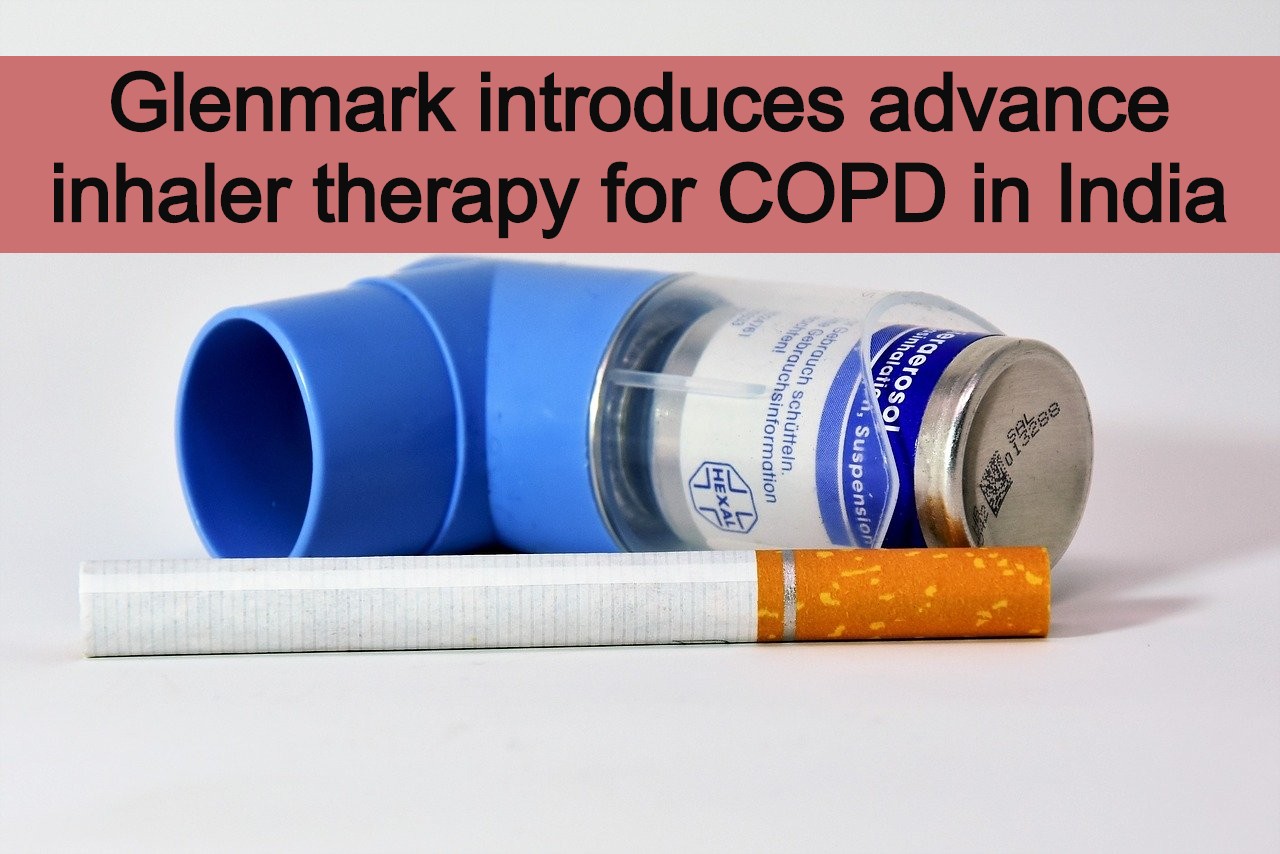
  • Glenmark Pharmaceuticals Ltd. (Glenmark), a research-led global integrated pharmaceutical company, today announced the launch of a Single Inhaler Triple Therapy AIRZ-FF - a combination of two bronchodilators, Glycopyrronium & Formoterol and the inhalation corticosteroid Fluticasone propionate, for Chronic Obstructive Pulmonary Disease (COPD).

  • To urgently develop safe and effective Biomedical solutions against SARS CoV-2, Department of Biotechnology and Biotechnology Industry Research Assistance Council (BIRAC) had invited applications for COVID-19 Research Consortium. In addition, BIRAC has also created a provision to fund COVID-19 solutions that are ready for immediate deployment under a ‘Fast Track Review Process’.

    Under the research consortium, DBT and BIRAC have continuously been evaluating applications with an intent to support Industry/ Academia and Jointly Academia & Industry for developing Diagnostics, Vaccines, Novel Therapeutics, Repurposing of Drugs or any other intervention for control of COVID-19. Through a rolling multitiered review mechanism, 70 proposals of devices, diagnostics, vaccine candidates, therapeutics and other interventions have been recommended for receiving financial support. The shortlisted proposals includes 10 Vaccines candidates, 34 Diagnostics products or scale-up facilities, 10 Therapeutics options, 02 proposals on Drug Repurposing and 14 projects which are categorised as preventive interventions.

    To be able to provide an accelerator approach for vaccine development, DBT has identified institutes which will provide animal models for testing pre-clinical efficacy and also make available neutralization assays. IIT Indore will produce Pseudovirus SARS CoV-2 which can be used for development of in-vitro assays. Enzene biosciences limited will make available Spike protein and Receptor Binding Domain protein in large quantities to vaccine and diagnostic companies as a reagent. The portfolio of vaccine candidates has further been enhanced by providing support for development of Next-generation mRNA vaccine candidate by Gennova and also separately to CMC, Vellore for a lipid encapsulated mRNA based vaccine.

    Early development work for developing an Intranasal vaccine candidate for COVID-19 has also been awarded to Indian Institute of Chemical Technology.

    University Delhi South Campus has initiated work towards discovering neutralizing antibodies from an existing phage display based library and are being supported under National Biopharma Mission of DBT.

    To ensure complete indigenization of COVID diagnostics, support has already been provided to AMTZ and other companies to scale-up production of RT PCR kits. In addition anticipating long term need for diagnostics, DBT/ BIRAC have also committed support for different types of diagnostics platforms like: Fluorescence and Electrochemistry Mediated Rapid Detection of SARS-Cov-2 Nucleic Acid from Bennett University, Greater Noida;  portable microfluidics embedded on chip rRT-PCR and microelectrode array coupled point-of care optoelectronic device for large scale screening: JNU, Delhi; Development and evaluation of aptamer based lateral flow assay kit for detection of SARS-CoV2 detection to IIT Delhi and CRISPER based diagnosis of Covid-19 using paper microfluidics form  IIT Guwahati.  Other companies to get funding support are Denovo, Biolabs, ShineBiotech, Prantae, Proma Therapeutics, Achira. In total, 34 companies and academic institutes will receive financial support for ensuring there is no shortage of indigenous diagnostic kits in the near future.


    Department of Biotechnology has also  launched a National Biomedical Resource Indigenization Consortium (NBRIC) in a Public Private Partnership model to foster indigenous innovation focused on developing reagents and resources for  diagnostics, vaccines and therapeutics for COVID19 which is in partnership with ABLE and CII and is being hosted by C-CAMP.

    Under its ‘Fast Track Review Process’ Process BIRAC has created a provision to fund COVID solutions that are ready for immediate deployment. Through this initiative Startups with PPE solutions have been approved for supporting manufacturing of “Full body coverage suits”  to Aarna Biomedical Products and for “Face Shields” to Alpha Corpusles Pvt Ltd. Automoted Sanitizer  to  MicroGO, Remote patient monitoring Stasis Health Pvt Ltd. Turtle Shell for DOZEE a sleep monitoring device, Monitra for remote monitoring of patients, Perisodhana for N-95 Mask’s and Remidio for Ambu bags.

    << Back to Pharma News

    Subscribe to PharmaTutor News Alerts by Email

Subscribe to Pharma News