
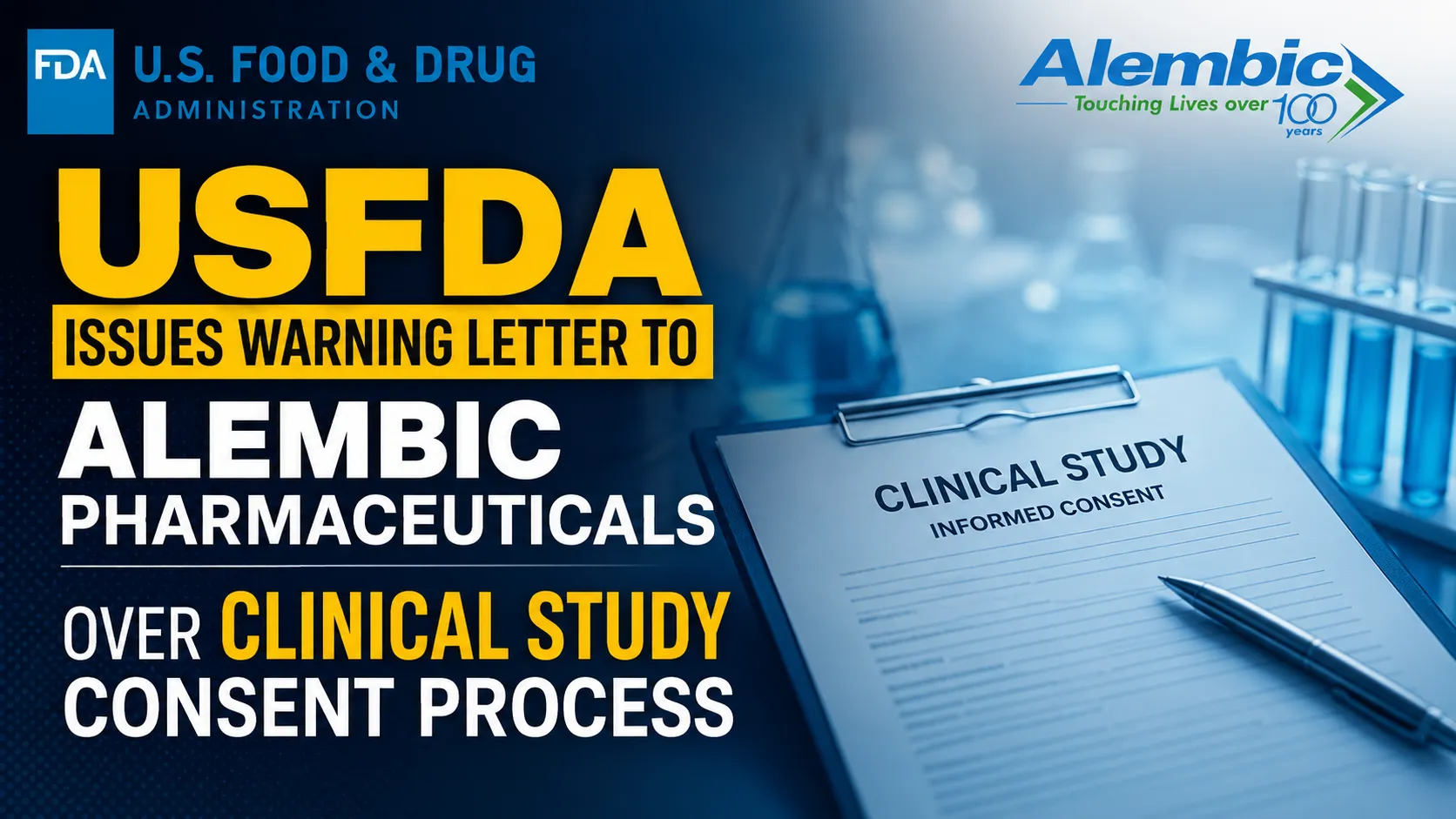
The US Food and Drug Administration (FDA) has issued a Warning Letter to Alembic Pharmaceuticals Ltd. after identifying deficiencies during an inspection of the company's bioequivalence research facility in Vadodara, Gujarat. The inspection was conducted between March 3 and March 7, 2025, as part of the FDA's Bioresearch Monitoring Program.
According to the FDA, the main concern was related to the informed consent process followed during a clinical bioequivalence study. The agency stated that the informed consent form told participants that "no part of the study is of an experimental nature." The FDA said this statement could mislead volunteers and prevent them from fully understanding that they were taking part in a clinical investigation.
The FDA explained that people joining a clinical study must receive clear and accurate information before agreeing to participate. Participants should understand the purpose of the study, any possible risks, and the experimental nature of the research so they can make an informed decision.
In its response, Alembic acknowledged the observation and said it has taken several corrective steps. These include updating its standard operating procedures, revising the informed consent form by removing the disputed statement, training clinical staff, and making changes to consent forms used in ongoing and future studies.
However, the FDA said the company's response was not sufficient because it did not provide enough information to show how future compliance with FDA regulations would be ensured. The agency also noted that additional documentation and investigator training details were not adequately provided.
The FDA has asked Alembic Pharmaceuticals to submit a detailed written response within 15 business days explaining the actions taken to prevent similar violations in future clinical studies. The agency warned that failure to adequately address the issues could result in further regulatory action.