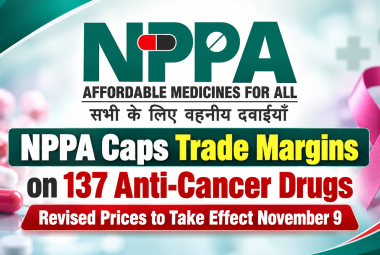

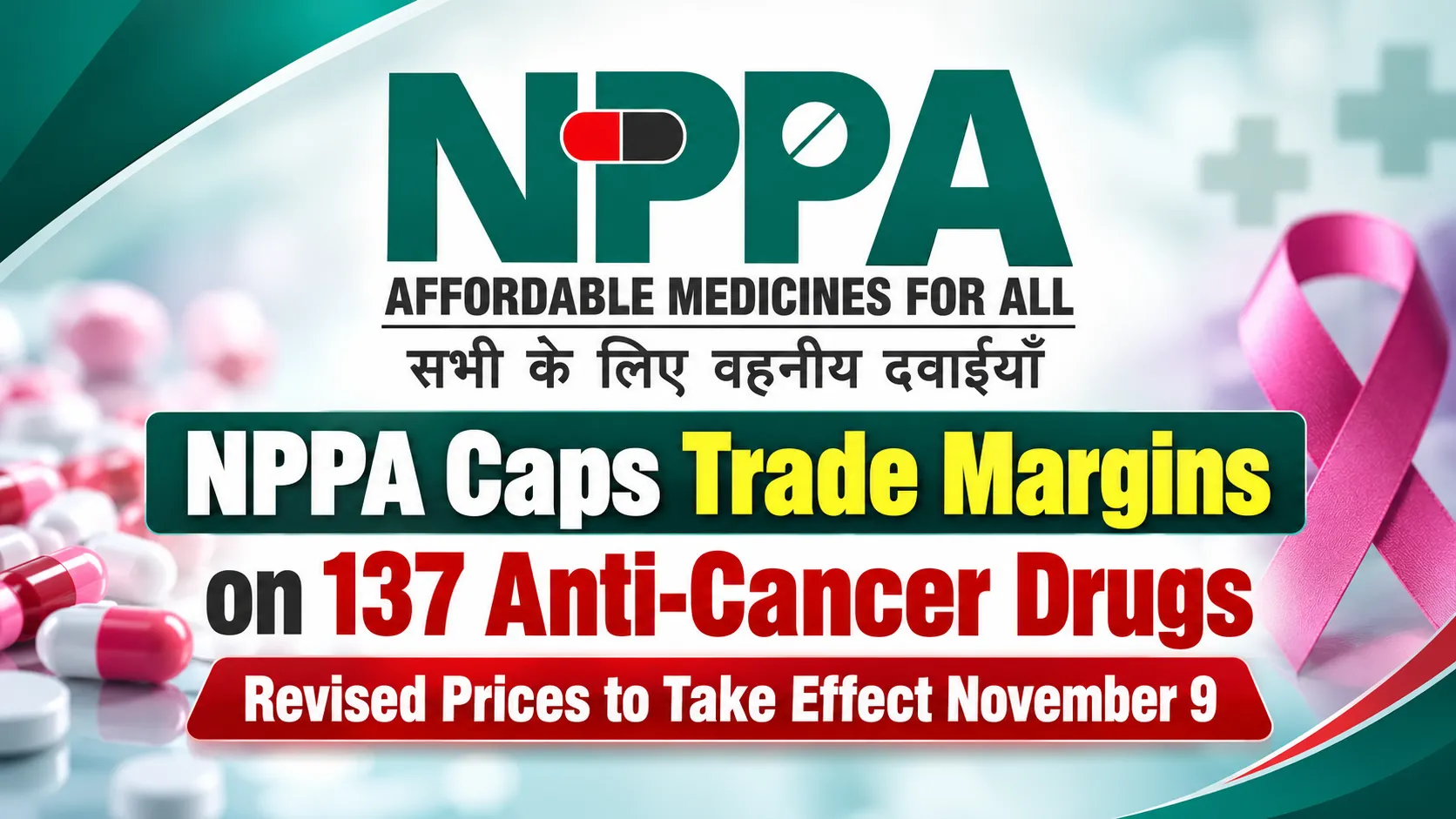
The National Pharmaceutical Pricing Authority (NPPA) has introduced Trade Margin Rationalisation (TMR) for 137 identified non-scheduled anti-cancer drugs, aiming to reduce excessive trade margins and make cancer treatment more affordable for patients across India.
Under the order issued by the Department of Pharmaceuticals, Ministry of Chemicals and Fertilizers, the trade margin on the identified medicines has been capped at 30%. The move is expected to reduce the maximum retail prices (MRPs) of affected medicines by varying amounts, with reductions of up to 70% anticipated depending on existing price structures.
Major Cancer Medicines Covered
The list of 137 drugs includes several widely used cancer treatments, including pembrolizumab, durvalumab, osimertinib, bevacizumab, denosumab and pegfilgrastim. The identified medicines cover a range of cancer treatments, including immunotherapies used against multiple types of cancer.
The order also covers formulations containing the listed drugs, whether used individually or in combination, regardless of dosage strength, dosage form or route of administration.
How the Price Regulation Will Work
The NPPA has invoked Paragraph 19 of the Drugs (Prices Control) Order (DPCO), 2013, to implement the measure in the public interest. Manufacturers have been directed to calculate revised MRPs using the price to stockist or price to distributor for March 2026, subject to the prescribed formula and applicable GST.
The order is intended to address substantial differences between manufacturers' selling prices and the prices charged to patients. It also seeks to curb excessive mark-ups in the retail and hospital distribution channels while maintaining legitimate manufacturer revenues.
Manufacturers Given Seven Days to Report Prices
Manufacturers must submit the required information on revised prices to the NPPA and the relevant State Drug Controller within seven days of publication of the Gazette notification, even where no price change has occurred.
They must also issue updated price lists and circulate them to dealers, retailers and other relevant institutions. Retailers, hospitals and medical institutions will be required to display the applicable revised prices and ensure compliance from November 9.
Hospitals and medical institutions, which receive substantial supplies of anti-cancer medicines directly, have specific responsibilities under the order to monitor and display the revised prices. State Drug Controllers will oversee compliance by manufacturers, dealers, hospitals and medical institutions.
Continuity of Drug Supply to Be Maintained
The NPPA has also directed manufacturers to maintain existing production levels for the covered formulations. Manufacturers seeking to reduce average monthly production must obtain prior approval, while discontinuation of production or imports is subject to the prescribed advance-notification requirements.
The provisions are designed to prevent artificial shortages and help ensure uninterrupted access to essential cancer treatments.
Building on the 2019 Initiative
The latest intervention expands on the NPPA's 2019 pilot exercise, which covered 42 non-scheduled anti-cancer drugs. According to the government, that initiative led to substantial savings and reductions in the prices of numerous medicine brands.
The current list of 137 drugs was recommended by an expert committee constituted under the Directorate General of Health Services. The NPPA stated that the list may be updated periodically in response to market developments and public-health considerations.
Where Patients Can Check Revised Prices
Patients and caregivers can consult the NPPA website and the Pharma Sahi Daam app to check applicable medicine prices. The revised prices are scheduled to take effect on November 9, 2026.
The measure is intended to ease the financial burden on cancer patients and their families by limiting excessive trade margins and improving the affordability of treatment across India.