
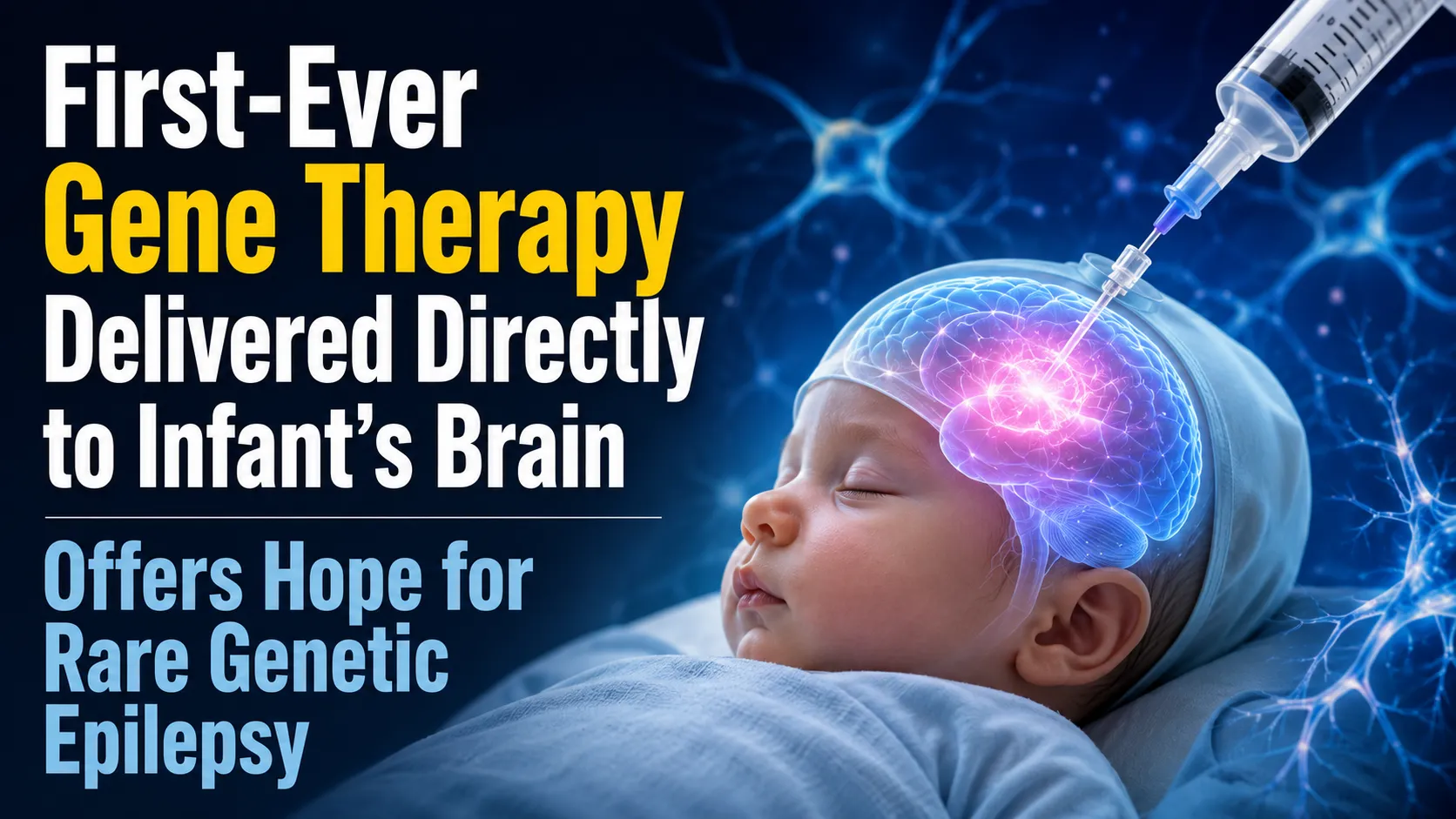
In a groundbreaking advancement for precision medicine, doctors in Israel have successfully administered the world's first gene replacement therapy directly into the brain of an infant suffering from a rare and devastating genetic epilepsy disorder. The experimental treatment aims to restore the function of the defective WWOX gene, offering new hope to children affected by this life-threatening condition.
The therapy was performed at Schneider Children's Medical Center of Israel on an eight-month-old infant diagnosed with WOREE syndrome (WWOX-related epileptic encephalopathy), a rare inherited neurological disorder characterized by severe drug-resistant seizures, developmental delays, and a high risk of premature death.
The child appeared healthy at birth but began experiencing frequent and severe epileptic seizures at just six weeks of age. Genetic testing later revealed a mutation in the WWOX gene, which is critical for normal brain development and function.
The breakthrough treatment is the result of more than a decade of research led by Prof. Rami Aqeilan from the Faculty of Medicine at the Hebrew University of Jerusalem. His research team discovered that, beyond its previously known role in cancer biology, the WWOX gene is essential for healthy neurological development.
Using advanced animal models, researchers demonstrated that loss of WWOX function leads to epilepsy, developmental abnormalities, impaired brain myelination, and shortened lifespan, symptoms closely resembling those seen in children with WOREE syndrome.
Building on these findings, scientists developed a gene replacement strategy using an adeno-associated viral vector (AAV9) to deliver a healthy copy of the WWOX gene directly to neurons in the brain. Preclinical studies showed promising results, including reduced seizures, improved neurological function, better growth, and increased survival rates.
"What began as an effort to understand the biological function of a gene has evolved into a potential therapeutic strategy for children affected by one of the most severe forms of genetic epilepsy," said Prof. Aqeilan.
The technology was later licensed to biotechnology company Mahzi Therapeutics, which helped produce a clinical-grade version of the therapy and supported regulatory and translational development efforts.
Following extensive regulatory approvals and a compassionate-use authorization, the gene therapy was administered directly into the infant's brain. One month after treatment, the child remained clinically stable and had experienced no recurrence of the severe seizures that previously threatened his life and development.
Although the early results are encouraging, researchers caution that long-term monitoring will be necessary to fully assess the therapy's safety and effectiveness.
Experts believe this achievement marks a significant milestone in the development of personalized treatments for rare genetic neurological disorders. It also demonstrates how years of basic scientific research can ultimately translate into life-changing therapies for patients with previously untreatable diseases.
The success of this pioneering treatment could pave the way for future gene therapies targeting other rare inherited brain disorders, offering renewed hope to families around the world affected by severe genetic diseases.