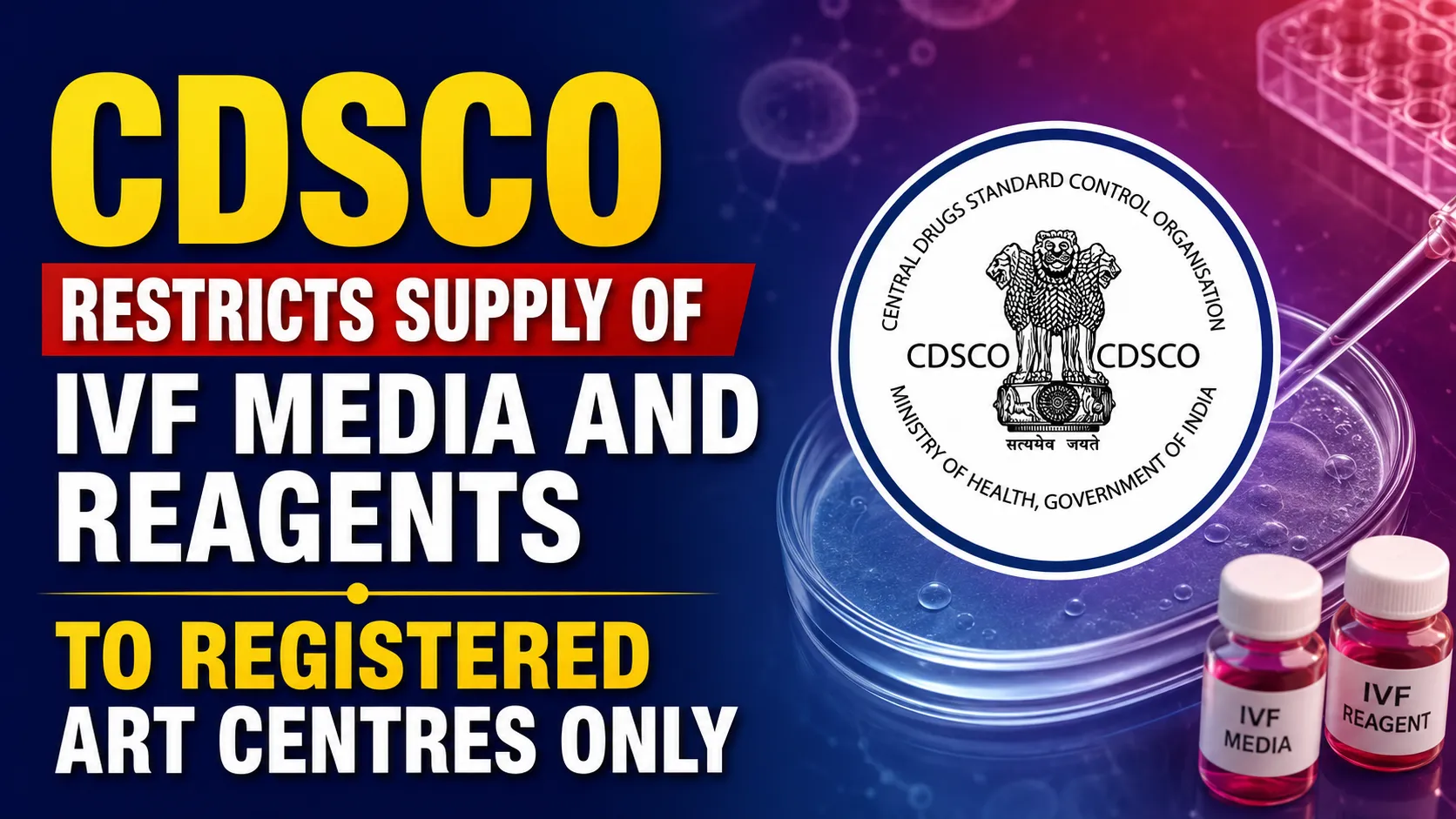
The Central Drugs Standard Control Organization (CDSCO) has issued a public interest circular directing all stakeholders to ensure that In-Vitro Fertilization (IVF) media, reagents, and related consumables are supplied only to centres registered under the Assisted Reproductive Technology (Regulation) Act, 2021 and the Surrogacy (Regulation) Act, 2021. The move is aimed at strengthening patient safety, preventing misuse of reproductive technologies, and ensuring compliance with India's medical device regulations.
According to the circular issued by the Medical Devices Division of CDSCO on 23 June 2026, IVF media, cryopreservation media, reagents, and other consumables used in Assisted Reproductive Technology (ART) procedures are regulated as medical devices under the Medical Devices Rules, 2017. As such, these products require appropriate licences for import or manufacture to ensure their quality, safety, and performance.
CDSCO noted that these products are intended for use by ART clinics and banks registered under the Assisted Reproductive Technology (Regulation) Act, 2021 and the Surrogacy (Regulation) Act, 2021, which were enacted to regulate safe and ethical reproductive healthcare practices in India.
However, the regulator has received information indicating that IVF media and related consumables are being supplied to facilities that are not registered under these Acts. According to CDSCO, such unauthorized distribution poses a potential risk to patient health and could facilitate the misuse of assisted reproductive technology services.
In response, CDSCO has requested manufacturers, importers, distributors, and all other stakeholders to verify that supplies of IVF media, reagents, and related consumables are made exclusively to duly registered ART centres. The regulator emphasized that adherence to this requirement is essential to safeguard ethical reproductive healthcare practices and protect patient welfare.