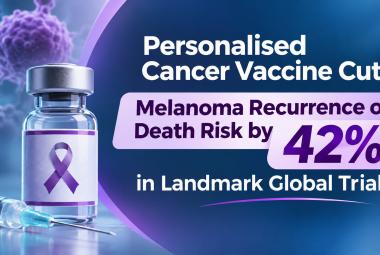

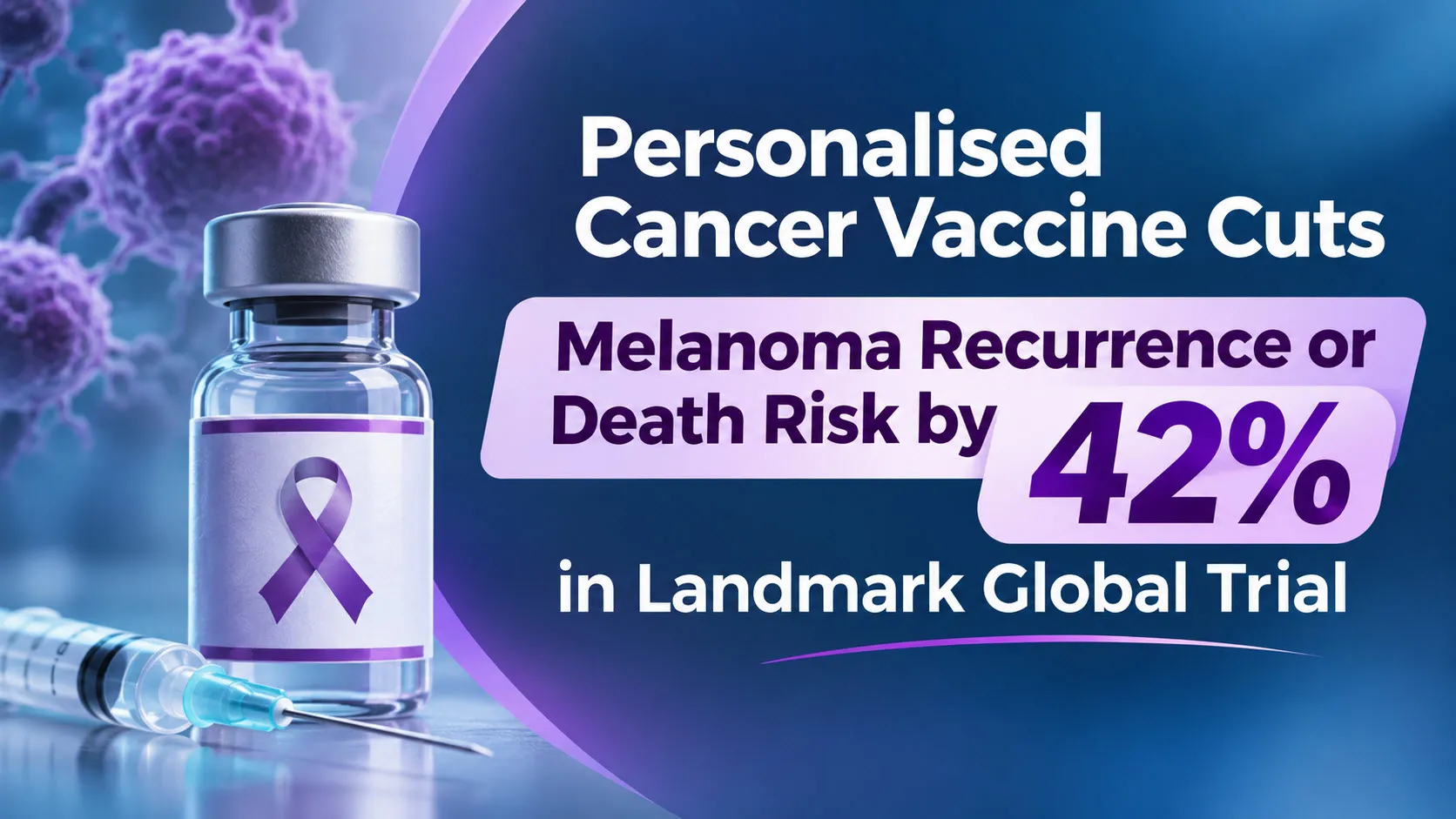
A groundbreaking cancer vaccine developed using each patient's own tumour has shown promising results in a major international clinical trial, potentially opening a new chapter in personalised cancer treatment. Researchers have reported that a personalised therapeutic cancer vaccine reduced the risk of melanoma recurrence or death by 42% when combined with immunotherapy, compared with immunotherapy alone.
The findings come from the Phase III INTerpath-001 clinical trial, involving 1,137 patients with high-risk melanoma whose tumours had been surgically removed. The experimental vaccine, known as intismeran autogene (V940 or mRNA-4157), is being jointly developed by pharmaceutical companies Moderna and Merck (MSD).
How does the personalised vaccine work?
Unlike conventional preventive vaccines, this treatment is designed for patients who have already been diagnosed with cancer.
Scientists analyse a sample of the patient's tumour to identify unique abnormal proteins called neoantigens. Using mRNA technology, they then create a personalised vaccine that teaches the immune system to recognise and attack cancer cells carrying those specific markers.
The vaccine is administered alongside pembrolizumab, an immunotherapy drug that helps the immune system overcome mechanisms cancer cells use to evade detection.
Promising results from the clinical trial
The Phase III trial demonstrated:
- 42% lower risk of melanoma recurrence or death compared with pembrolizumab alone.
- 58% lower risk among patients who remained recurrence-free beyond six months from the start of treatment.
- The addition of the vaccine did not increase pembrolizumab-related side effects.
- Reported vaccine-related side effects were generally mild and temporary, including injection-site pain, headache and chills.
The international study was conducted across 157 research sites worldwide.
A potential breakthrough in personalised cancer medicine
Professor Georgina Long, Medical Director of Melanoma Institute Australia and a leading investigator in the trial, described the findings as a foundational shift in cancer treatment.
The results suggest that therapies designed around the unique biological characteristics of an individual patient's tumour could help the immune system identify and eliminate cancer cells that remain after surgery.
Researchers believe this approach could eventually have implications beyond melanoma, although further studies will be needed to establish its effectiveness in other cancers.
What happens next?
The trial results are scheduled for presentation at the European Society for Medical Oncology (ESMO) Congress 2026 and publication in the New England Journal of Medicine.
The treatment remains investigational and must undergo regulatory review before it can become widely available. Approval timelines will depend on individual countries.