 About Authors
Harsh Bardwaj1*, Monika CHamoli2, Raaz K Maheshwari3
Assistant Professor, Department of Chemistry, Shri Ratanlal Kanwarlal Patni Girls’ College, Kishangarh, Ajmer, Rajasthan, India
2PhD Scholar, Department of Applied Chemistry, School of Vocational Studies and Applied Sciences, Gautam Buddha University, Gautam Buddh Nagar Greater Noida Uttar Pradesh
3Freelance investigator and scientific writer, Jaipur, Former Professor, Department of Chemistry, MDSU-SBRM Govt PG College, Nagaur, Rajasthan, India
E-Mail : Harsh.bhardwaj0705@gmail.com
Abstract
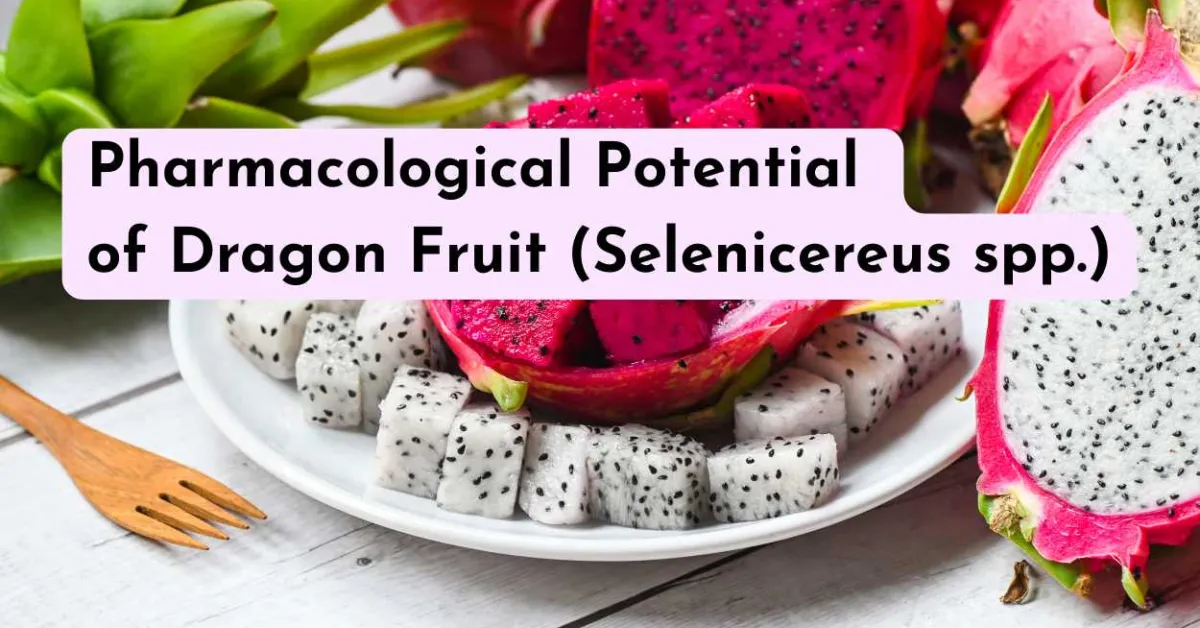
Selenicereus spp. (syn. Hylocereus spp.), commonly known as dragon fruit or pitaya, has drawn significant research interest beyond its nutritional profile. The pulp, peel, and seeds contain phenolic acids, flavonoids, betalains, anthocyanins, polysaccharides, and terpenoids. Each compound class has shown measurable biological activity in preclinical models, with reported antioxidant, anti-inflammatory, antimicrobial, antidiabetic, anticancer, hepatoprotective, neuroprotective, and prebiotic effects. This review draws on 50 peer-reviewed studies to assess what the phytochemical evidence actually shows, where it holds up, and where it falls short. Preclinical data are consistent, and the mechanistic picture is reasonably clear. Human clinical data, by contrast, are sparse. Poor bioavailability, substantial cultivar-level variability, and the absence of standardized protocols are the main obstacles between current laboratory findings and any clinical application.

Fig. 1 : Selenicereus undatus: Botanical Illustration
Introduction
Dragon fruit belongs to the genus Selenicereus, formerly classified under Hylocereus, within the family Cactaceae. Three species dominate commercial cultivation: S. undatus (white pulp, red skin), S. polyrhizus (red pulp), and S. megalanthus (white pulp, yellow skin). The crop is grown across tropical and subtropical Asia, Latin America, and parts of Australia and has found markets both as fresh produce and as an industrial food processing input.
Pharmacological research into dragon fruit grew out of early efforts to identify the compounds behind its pigmentation and nutritional attributes. Gallic acid, ferulic acid, quercetin, kaempferol, betacyanin, betaxanthin, pectic polysaccharides, terpenoids, and minor alkaloids have since been identified and quantified across species and fruit fractions in multiple independent studies (Chen et al., 2024; Coelho et al., 2024; Sharma et al., 2024; Bishoyi et al., 2024). Several of these act on pathways implicated in oxidative stress, chronic inflammation, and metabolic dysregulation, placing them in direct relevance to type 2 diabetes, cardiovascular disease, and cancer.
The peel does not get the attention it warrants. Commercial processors discard it routinely, yet phenolic concentrations in dragon fruit peel are often higher than in the pulp itself, and peel-derived polysaccharides have shown prebiotic activity in animal studies (Coelho et al., 2024; Cheong et al., 2025; Li et al., 2025). Juice processing pomace is in the same position. Both are pharmacologically relevant fractions being discarded at scale.
This review examines the phytochemical composition of dragon fruit and evaluates the current pharmacological evidence, including where the data are solid and where it is not.
Phytochemical Composition
Phytochemical content in dragon fruit varies with species, plant part, and cultivation conditions, but a set of core compounds appears consistently across the literature. Phenolic acids, gallic and ferulic acid in particular, are present in pulp, peel, and seeds. Flavonoids including quercetin, rutin, and kaempferol are detected across most species. Betacyanins are the red-violet betalain pigments found at highest concentrations in S. polyrhizus, while betaxanthins, the yellow-orange counterpart, are more broadly distributed. Anthocyanins are concentrated in red and purple-pulp varieties. Pectic polysaccharides are recoverable from peel and pomace fractions in useful quantities, and minor alkaloids appear in several compositional analyses (Chen et al., 2024; Coelho et al., 2024; Mondol et al., 2025).
Selenicereus megalanthus stands out for its vitamin C content. Seeds are a reasonable source of unsaturated fatty acids, and the fruit more broadly contributes dietary fibre, iron, magnesium, and vitamins C and E (Sharma et al., 2024; Bishoyi et al., 2024). None of these values are fixed. Altitude, cultivar, geographic origin, and post-harvest handling each shift the concentrations, which makes cross-study comparisons difficult and standardisation a genuine unresolved problem.
Antioxidant and Anti-Inflammatory Activity
Free radical scavenging in dragon fruit is driven mainly by phenolics and betalains, with flavonoids contributing alongside. Cell and animal models consistently report lower reactive oxygen species and reduced oxidative stress markers following administration of dragon fruit extracts (Chen et al., 2024; Coelho et al., 2024; Martinez et al., 2024; Direito et al., 2025). Betalains outperform anthocyanins by roughly threefold in comparative antioxidant assays. For anyone designing a therapeutic formulation, that gap in activity is a meaningful reason to prefer red-pulp species over white.
Anti-inflammatory effects track to COX enzyme inhibition and suppressed pro-inflammatory cytokine output. Polyphenol fractions consistently reduce both reactive oxygen species and downstream inflammatory mediators in preclinical models (Chen et al., 2024; Martinez et al., 2024; Lim et al., 2025). Bioavailability is where the story gets complicated, especially for betalains. They degrade under gastric acid conditions and lose potency with heat and light exposure. Phytosomal formulation of Hylocereus costaricensis phenolic extract produced measurably better bioactivity than the unencapsulated preparation, which points to absorption as the rate-limiting factor rather than any deficit in the compound itself (Direito et al., 2025).
Antimicrobial and Antidiabetic Effects
Pulp and peel extracts inhibit Escherichia coli and Staphylococcus spp. in vitro. Molecular docking studies have taken this further, identifying individual metabolites as structural leads against human pathogens and giving the earlier observational data a structure-activity basis (Asghar et al., 2024).
The antidiabetic case rests mainly on peel and pomace polysaccharides. These fractions act prebiotically on gut microbiota and, in high-fat diet animal models, improve glycaemic control and reduce dyslipidaemia (Cheong et al., 2025; Li et al., 2025). Peel extract has also reduced hepatic lipid accumulation and attenuated inflammatory markers in rats on a high-fat, high-fructose diet, a model relevant to non-alcoholic fatty liver disease (Chumroenvidhayakul et al., 2025). These findings are encouraging. They are also entirely from animals, and whether any of this carries through to humans is an open question.
Anticancer and Other Therapeutic Effects
Phenolic-rich fractions inhibit cell proliferation across multiple cancer lines through COX suppression and interference with mTOR signalling (Chen et al., 2024). Betalain-rich fractions show chemopreventive activity in cell assays. The data are in vitro. No clinical anticancer evidence in humans exists at this point, and projecting cell-line results into therapeutic claims requires more caution than the literature sometimes applies.
Separate from the antidiabetic work, polysaccharide fractions have produced hypolipidaemic and hypoglycaemic effects in additional animal studies (Li et al., 2025). Research into purple and red fruit fractions has reported neuronal protection in vitro, with the antioxidant load of those varieties credited as the likely mechanism (Sousa et al., 2025). On hepatoprotection, preclinical reviews document a role for red dragon fruit betacyanins in reducing oxidative liver damage, a finding consistent with their known antioxidant potency (Lim et al., 2025).

Fig. 2 : Phytochemical Composition of Selenicereus spp.
Discussion
At the preclinical level, the pharmacological data on dragon fruit are consistent. Antioxidant and anti-inflammatory activity replicates across independent research groups, and the mechanisms are clear enough to link specific compound classes to specific effects (Chen et al., 2024; Coelho et al., 2024; Martinez et al., 2024; Direito et al., 2025; Lim et al., 2025). That is a solid foundation. The problem is that almost none of it involves humans.
In vitro assays and animal models account for the bulk of the evidence. Well-designed clinical trials are scarce, a point the research itself acknowledges (Martinez et al., 2024). The distance between inhibiting a cancer cell line and establishing a clinical indication is not trivial. It requires dose-finding, pharmacokinetic characterisation, human safety profiling, and confirmation that the effect survives gastrointestinal processing and first-pass metabolism. None of that work has been done for dragon fruit in any systematic way.
Bioavailability is the most tractable of the current problems. Betalains are vulnerable to gastric acid and to heat and light during processing, limiting how much of a given dose reaches systemic circulation. Phytosomal encapsulation has shown measurably improved biological activity in controlled comparisons (Direito et al., 2025). The technology to address this is available. Clinical confirmation that it produces better outcomes in humans is still missing.
Standardisation is harder to solve. Phytochemical profiles shift with altitude, cultivar, soil type, and storage conditions. A highland Vietnamese fruit and a lowland Malaysian one can yield chemically different extracts from the same species. Any therapeutic application that needs to be reproducible requires the raw material to be specified at a level comparable to pharmaceutical-grade starting materials. The current literature does not come close to that.
The by-product question is practical, not theoretical. Dragon fruit peels and pomace are discarded in most commercial operations while carrying phenolics and polysaccharides with documented prebiotic and metabolic effects (Cheong et al., 2025; Li et al., 2025). What prevents their use as functional food ingredients is not a lack of pharmacological rationale. It is the absence of formal safety and toxicological data for human consumption. That gap is addressable with relatively modest investment compared to the potential value of the material.
Conclusion
The phytochemical profile of dragon fruit is well-documented, and its antioxidant, anti-inflammatory, antimicrobial, and metabolic effects in preclinical models are reproducible. Anticancer and neuroprotective findings are mechanistically interesting but confined to cell studies. Human clinical evidence is absent across all of these domains. Encapsulation improves bioavailability, though clinical trials using such formulations have yet to follow. Meaningful therapeutic application also requires standardisation of raw material quality, which has not been addressed in any systematic way. The mechanistic case for dragon fruit pharmacology is made. Translating it into clinical relevance will require human trials, and given how much preclinical data already exist, that work is long overdue.
Conflict of Interest : The authors declare no conflicts of interest. This review is based on publicly available peer-reviewed literature.
References
1. Asghar, A., Lin, H., Fang, Q., Khan, N., Shahid, M., Rui, W., & Jun, W. (2024). Uncovering potentially therapeutic phytochemicals, in silico analysis, and biological assessment of South-Chinese red dragon fruit (Hylocereus polyrhizus). Plant Foods for Human Nutrition, 79, 474-481. https://doi.org/10.1007/s11130-024-01151-4
2. Bishoyi, A., Saeed, F., Shehzadi, U., Shankar, A., Balaji, J., Kaur, J., Afzaal, M., Imran, A., Rasheed, M., Hussain, B., Hussain, M., Ahmed, A., Islam, F., & Kinki, A. (2024). Nutritional composition, phytochemical profile, and health benefits of Hylocereus undatus (pitaya): A comprehensive review. eFood. https://doi.org/10.1002/efd2.70017
3. Chen, S., Islam, M., Johnson, J., Xu, C., Mazhar, M., & Naiker, M. (2024). Comparative analysis of shelf-life, antioxidant activity, and phytochemical contents of Australian-grown and imported dragon fruit under ambient conditions. Horticulturae. https://doi.org/10.3390/horticulturae10101048
4. Cheong, K., Li, J., Tang, D., Wang, M., He, Y., Liew, A., Ji, X., Zhong, H., Zhong, S., & Sathuvan, M. (2025). From waste to wealth: A review of emerging approaches for utilizing dragon fruit (pitaya) waste polysaccharides in value-added bioproducts. International Journal of Biological Macromolecules, 149051. https://doi.org/10.1016/j.ijbiomac.2025.149051
5. Chumroenvidhayakul, S., Thilavech, T., Abeywardena, M., Conlon, M., Dallimore, J., Adams, M., Muhlhausler, B., & Adisakwattana, S. (2025). Dragon fruit peel (Hylocereus undatus) modulates hepatic lipid metabolism and inflammation in a rat model of high-fat, high-fructose-induced metabolic dysfunction. Antioxidants, 14. https://doi.org/10.3390/antiox14030319
6. Coelho, V., De Moura, D., Aguiar, L., Ribeiro, L., Silva, V., Da Veiga Correia, V., Melo, A., Silva, M., De Paula, A., De Araujo, R., & Melo, J. (2024). The profile of phenolic compounds identified in pitaya fruits, health effects, and food applications: An integrative review. Plants, 13. https://doi.org/10.3390/plants13213020
7. Direito, R., Sousa, I., Antunes, F., Barbalho, S., Simoes, S., Bronze, M., Reis, C., Gaspar, M., & Figueira, M. (2025). Phytosomal delivery enhances bioactivity of Hylocereus costaricensis phenolic extract. Frontiers in Nutrition, 12. https://doi.org/10.3389/fnut.2025.1659572
8. Li, G., He, Y., Liew, A., Huang, C., Song, B., Jia, X., Sathuvan, M., Zhong, S., & Cheong, K. (2025). Dietary polysaccharides from dragon fruit pomace, a co-product of the fruit processing industry, exhibit therapeutic potential in high-fat diet-induced metabolic disorders. Food Research International, 203, 115818. https://doi.org/10.1016/j.foodres.2025.115818
9. Lim, T., Lim, R., Pui, L., Tan, C., & Ho, C. (2025). Red dragon fruit (Hylocereus polyrhizus), a superfruit rich in betacyanins pigments with antioxidative potential for hepatoprotection: A review. Future Foods. https://doi.org/10.1016/j.fufo.2025.100562
10. Martinez, R., Melo, C., Pinto, I., Mendes-Pierotti, S., Vignoli, J., Verri, W., & Casagrande, R. (2024). Betalains: A narrative review on pharmacological mechanisms supporting the nutraceutical potential towards health benefits. Foods, 13. https://doi.org/10.3390/foods13233909
11. Mondol, M., Akbar, U., Mandal, O., Rani, A., Dar, A., Chatterjee, A., & Abdi, G. (2025). Advances in agronomic practices, postharvest technologies, and medicinal potential of dragon fruit (Hylocereus spp.): A comprehensive updated review. Journal of Agriculture and Food Research. https://doi.org/10.1016/j.jafr.2025.102157
12. Sharma, R., Patel, N., Gupta, A., & Munjal, K. (2024). Dragon, the wonder fruit: A review on its phytochemistry and nutritional benefits. Research Journal of Pharmacy and Technology. https://doi.org/10.52711/0974-360x.2024.00859
13. Sousa, J., Neri, A., Charlton, K., & Weston-Green, K. (2025). Investigating purple and red fruits in neuronal health: An in vitro study. Proceedings of the Nutrition Society, 84. https://doi.org/10.1017/s0029665125001338