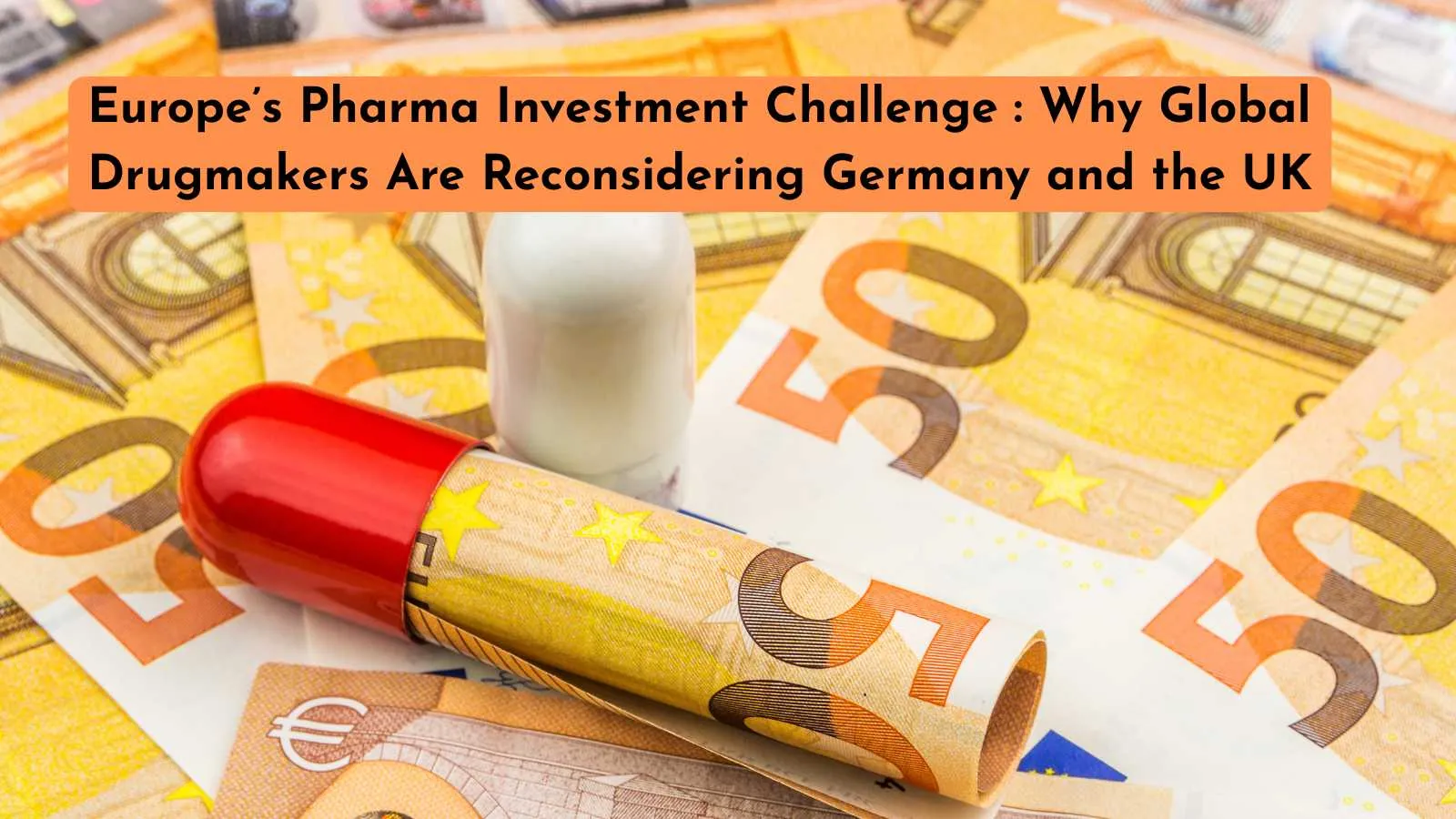
Billions in Planned Investments Are Being Delayed, Reduced, or Redirected as Pharmaceutical Companies Reassess Europe’s Competitiveness.
For decades, Europe has been one of the world's leading destinations for pharmaceutical research, manufacturing, and innovation. Germany has long been regarded as the manufacturing powerhouse of the European pharmaceutical industry, while the United Kingdom has served as a global center for life sciences research and drug development.
However, recent investment decisions by several major pharmaceutical companies suggest that Europe's position is facing increasing pressure.
Within days of each other, pharmaceutical giants Eli Lilly and Boehringer Ingelheim announced significant reductions in planned investments in Germany. At the same time, the United Kingdom continues to witness pharmaceutical companies scaling back projects or shifting capital toward the United States and other regions.
The developments have triggered discussions across the pharmaceutical sector about whether Europe is becoming a less attractive destination for large-scale pharmaceutical investments.
Eli Lilly Cuts German Investment Plans
One of the most significant announcements came from Eli Lilly, one of the world's fastest-growing pharmaceutical companies, driven largely by the success of its diabetes and obesity medicines.
The company had previously announced plans to invest approximately 2.3 billion euro in a manufacturing facility in Alzey, Germany. The project was expected to strengthen Lilly's global manufacturing network and support production of next-generation medicines.
However, the company has now decided to reduce the scale of the investment by nearly half. While construction activities will continue and the facility is expected to begin operations in the coming years, the revised plans include a substantially smaller workforce and lower overall production capacity than originally envisioned.
Industry analysts view the decision as particularly significant because obesity medicines represent one of the fastest-growing segments in global healthcare. Manufacturing facilities supporting these products are expected to become strategic assets for pharmaceutical companies worldwide.
Lilly executives have indicated that concerns regarding healthcare pricing policies and long-term market conditions influenced the company's decision-making process. The company has simultaneously announced substantial investments in the United States, highlighting a shift in where pharmaceutical companies perceive the most favorable business environment.
Boehringer Ingelheim Places Major Investments on Hold
The situation became even more noteworthy when German pharmaceutical leader Boehringer Ingelheim revealed plans to halt approximately 900 million euro in future investments that had been earmarked for Germany between 2027 and 2030.
The company reportedly suspended plans involving infrastructure expansion, laboratory development, and manufacturing upgrades.
Boehringer remains committed to its German operations and continues to employ thousands of workers across the country. Nevertheless, the decision reflects a broader trend emerging across the pharmaceutical industry: investment capital is becoming increasingly mobile, and companies are willing to relocate projects to regions offering stronger economic incentives.
Industry leaders have repeatedly emphasized that pharmaceutical investments are long-term commitments. Manufacturing plants and research facilities often require investments worth hundreds of millions or even billions of euros, making policy stability a critical factor in investment decisions.
The Growing Pull of the United States
A major factor influencing global pharmaceutical investment decisions is the growing attractiveness of the United States.
Over the past several years, the U.S. government has introduced substantial incentives for domestic manufacturing and innovation. Pharmaceutical companies have announced numerous multi-billion-dollar investments in American facilities, supported by favorable tax structures, larger market opportunities, and faster commercial returns.
For global pharmaceutical executives, the United States offers several advantages :
* The world's largest pharmaceutical market
* Higher medicine prices compared with Europe
* Strong investor confidence
* Extensive biotechnology ecosystems
* Significant government incentives for advanced manufacturing
As a result, pharmaceutical companies are increasingly directing new capital toward American manufacturing plants, research centers, and biotechnology collaborations.
The UK's Struggle to Retain Pharmaceutical Investments
Germany is not alone in facing these challenges.
The United Kingdom has also experienced growing concerns about its ability to attract and retain pharmaceutical investment.
One of the most visible examples has been AstraZeneca, the UK's largest pharmaceutical company. The company has repeatedly expressed concerns regarding the country's pricing and reimbursement environment.
In recent years, AstraZeneca has redirected substantial investments toward the United States while scaling back or cancelling certain UK projects. Industry observers viewed these decisions as warning signs for Britain's life sciences sector.
Merck & Co. (MSD) also attracted attention after abandoning plans for a major London research center that could have become one of the country's largest pharmaceutical R&D projects.
Meanwhile, other multinational companies have publicly questioned whether the UK remains sufficiently competitive compared with North America and parts of Asia.
While the UK government continues to promote life sciences as a strategic industry, pharmaceutical executives argue that policy uncertainty and cost-control measures can reduce the attractiveness of long-term investments.
Why Pharmaceutical Companies Are Becoming More Selective
The pharmaceutical industry has entered a new era of investment discipline. Unlike previous decades when companies expanded aggressively across multiple regions, today's pharmaceutical firms are making increasingly selective investment decisions.
Several factors are influencing these choices :
1. Rising Development Costs
Bringing a new medicine to market now costs billions of dollars and can take more than a decade. Companies are under pressure to maximize returns on every investment.
2. Global Competition
Countries across North America, Asia, and the Middle East are actively competing for pharmaceutical investments through tax benefits, infrastructure support, and regulatory incentives.
3. Manufacturing Transformation
Modern pharmaceutical manufacturing increasingly relies on automation, digital technologies, and specialized production capabilities. Companies are concentrating investments in fewer, strategically located facilities.
4. Pressure on Drug Pricing
Governments worldwide are attempting to control healthcare spending. Pharmaceutical companies often cite pricing pressures as a key factor when evaluating future investments.
What This Means for Europe
The recent announcements do not suggest that pharmaceutical companies are abandoning Europe.
Germany remains home to some of the world's most advanced pharmaceutical manufacturing facilities. The UK continues to be a leading center for biomedical research. Switzerland hosts many of the industry's largest innovators, while countries such as Ireland and Belgium continue to attract substantial investments.
However, the decisions by Eli Lilly and Boehringer Ingelheim highlight an emerging challenge.
The competition for pharmaceutical investment is no longer regional, it is global. Governments seeking to attract research centers, manufacturing plants, and biotechnology investments must increasingly compete with countries offering larger incentives, faster regulatory processes, and more favorable economic conditions.
For Europe, maintaining its position as a pharmaceutical powerhouse may require balancing healthcare affordability with policies that encourage innovation and investment.
A Warning Signal, Not an Exit
Industry experts caution against interpreting recent announcements as a pharmaceutical exodus from Europe. Instead, they represent a warning signal.
The pharmaceutical sector remains one of the most research-intensive industries in the world, and investment decisions are influenced by long-term expectations about profitability, innovation, and policy stability.
As global demand for medicines continues to grow, particularly in areas such as obesity, cancer, rare diseases, and advanced biologics, countries that create the most attractive environment for pharmaceutical innovation will be best positioned to secure future investments.
The decisions by Eli Lilly and Boehringer Ingelheim may therefore be remembered not simply as isolated corporate announcements, but as indicators of a broader global competition for the future of pharmaceutical manufacturing and research.