Researchers have identified a class of compounds that could help combat a virus which has stricken children with serious respiratory infections and is also associated with polio-like symptoms.

Researchers have identified a class of compounds that could help combat a virus which has stricken children with serious respiratory infections and is also associated with polio-like symptoms.
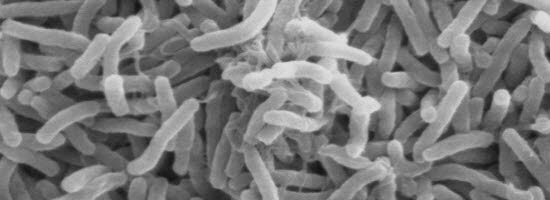
Scientists have discovered the unconventional way the cholera bacterium stabs and kills other bacteria to steal their DNA, making it potentially more virulent. Cholera is caused when the bacterium Vibrio cholerae (V cholerae) infects the small intestine. The disease is characterised by acute watery diarrhea resulting in severe dehydration.
Scientists have found for the first time that the building blocks of a protein can be assembled by another protein and without genetic instructions. The findings defy textbook science which says DNA spells out the instructions for making proteins, tiny machines that do much of the work in our body's cells.
In a surprising discovery, scientists have found that fat cells below the skin help protect us from bacteria.
Researchers at the University of California, San Diego School of Medicine and colleagues have found that dermal fat cells, known as adipocytes, produce antimicrobial peptides that help fend off invading bacteria and other pathogens.
S W Deshpande, Honorary Director General, All India Drug Control Officers Confederation released the book 'Reformation of Medical Education' authored by Dr Rapolu Satyanarayana.
[adsense:336x280:8701650588]
Belgian researchers have identified a new strategy for treating an inherited form of dementia after attempting to turn stem cells derived from patients into the neurons most affected by the disease.
Children with autism have stronger social skills when there is a pet at home, a new study has found.
Dogs and other pets play an important role in individuals' social lives, and they can act as catalysts for social interaction, previous research has shown.
Scientists have developed a new technique that manipulates bacteria to produce up to 30-fold more quantities of chemicals.
The advance is a big step toward a future in which the predominant chemical factories of the world are colonies of genetically engineered bacteria.
Exercise may help people with Parkinson's disease improve their balance, ability to move around and quality of life, according to a new study. In the study, 231 people with Parkinson's disease either received their usual care or took part in an exercise programme of 40 to 60 minutes of balance and leg strengthening exercises three times a week for six months.
Emotional eating among Indians, especially among urban population is on the rise, a biochemist told the 102nd Indian Science Congress.
CLICK HERE TO SUBSCRIBE,
PHARMATUTOR's DAILY EMAILS
Do Not Forget to Verify
(Click on Subscription link in your inbox)
--------