
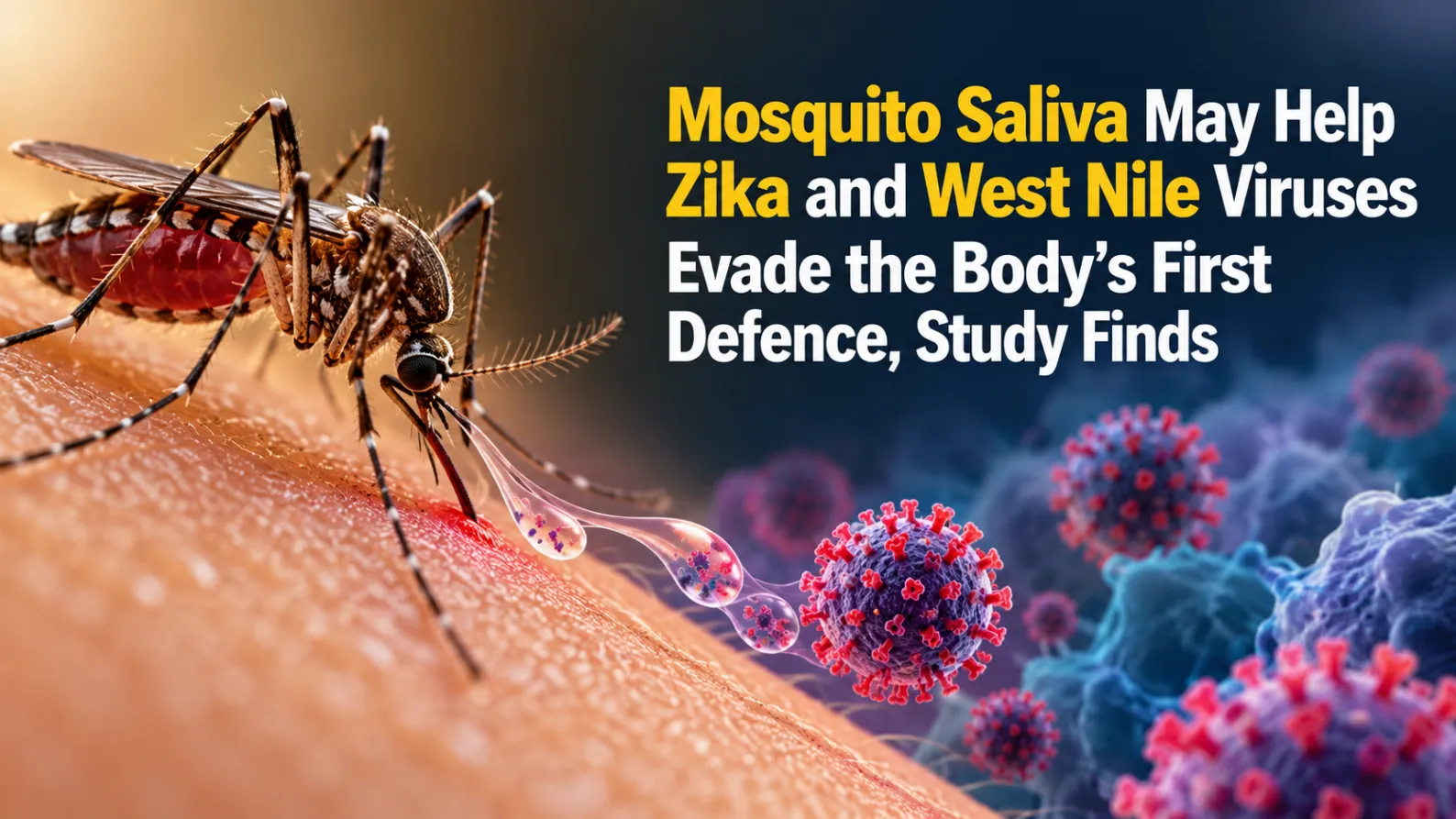
A study published in Nature Communications has uncovered a mechanism that may help mosquito-borne viruses establish infection more effectively after a mosquito bite. Researchers found that a viral RNA molecule present in mosquito saliva can interfere with the human body's early immune response, allowing viruses such as Zika virus and West Nile virus to gain an advantage at the site of infection.
The research, published on August 29, 2026, identifies subgenomic flaviviral RNA (sfRNA) as a transmission-enhancing factor shared by multiple orthoflaviviruses. The findings could help scientists better understand the earliest stages of mosquito-borne viral infections and explore potential targets for future preventive strategies.
Viral RNA in Mosquito Saliva May Weaken Early Immune Defences
When an infected mosquito bites a person, viral particles enter the skin along with mosquito saliva. The skin is not merely a physical barrier; it also contains immune cells that recognise invading pathogens and initiate antiviral responses.
The research team found that saliva from mosquitoes infected with West Nile virus or Zika virus contained sfRNA, a non-coding RNA molecule produced during viral infection. Unlike RNA that serves as a template for producing viral proteins, sfRNA can influence host-cell processes without encoding proteins itself.
The study also found that this RNA was carried within lipid-containing vesicles distinct from the virus particles. These structures may help protect the RNA and facilitate its delivery into cells at the bite site.
How sfRNA Interferes With the Body’s Antiviral Response
The researchers investigated how salivary sfRNA affects the immune response following viral exposure. Their findings indicate that sfRNA can disrupt signalling involving MDA5, a cellular sensor that helps detect viral RNA and initiate antiviral defence mechanisms.
Under normal conditions, this detection process contributes to the production of interferons and other immune signals that help limit viral replication. By weakening this early response, sfRNA may allow a virus to establish infection more efficiently before the host's defences become fully activated.
The researchers observed that higher concentrations of sfRNA in infectious mosquito saliva were associated with greater infection intensity in laboratory cells and human skin explants. Experiments using human skin tissue further supported the role of sfRNA in enhancing infection.
Experiments Also Indicate Increased Disease Severity in Mice
The study extended its investigation beyond laboratory cells and human skin tissue. In a mouse model, researchers found that introducing sfRNA alongside West Nile virus increased infection in the skin and was associated with more severe disease outcomes.
These results support the proposed role of salivary sfRNA in enhancing viral transmission and early infection. However, the findings come from experimental models and do not establish the extent to which this mechanism affects disease severity in humans.
Potential Implications for Future Prevention Strategies
The findings provide a new perspective on mosquito-borne disease transmission by highlighting the biological interactions that occur immediately after a bite. Rather than focusing exclusively on the virus itself, future research may also investigate the molecules delivered through mosquito saliva and their effects on the host's immune defences.
Because sfRNA appears to play a similar transmission-enhancing role in the two virus systems investigated, the discovery could inform research into interventions targeting mechanisms shared by multiple mosquito-borne viruses.
Nevertheless, further studies will be required to determine whether blocking sfRNA activity or its interaction with host immune pathways can safely reduce infection in humans. The research does not establish a new treatment, vaccine, or clinically validated preventive intervention.