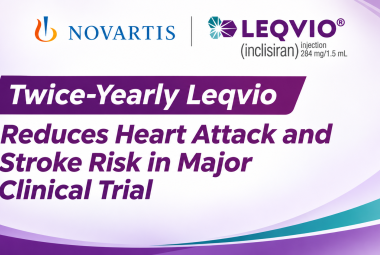

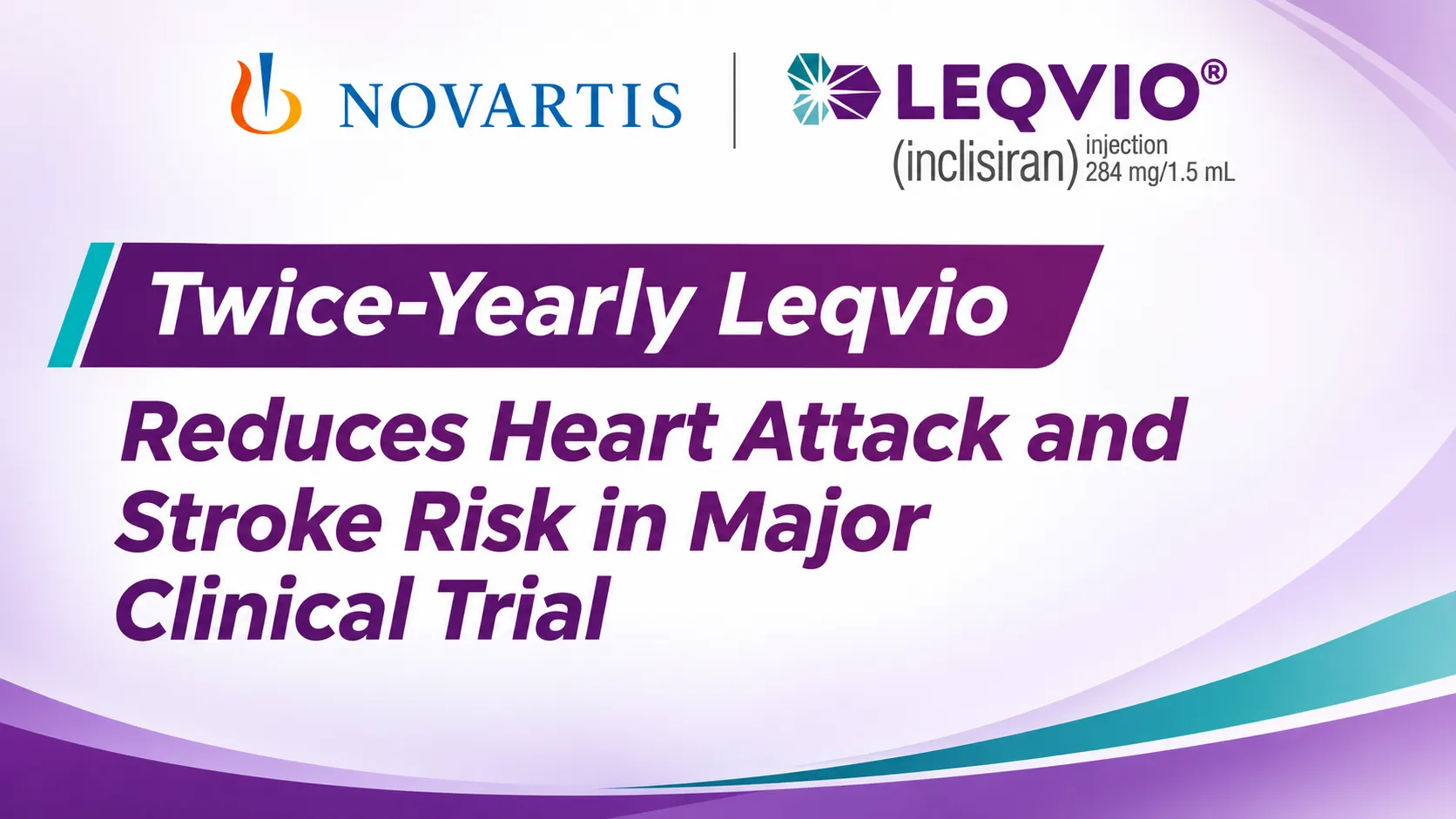
Novartis has announced positive topline results from its Phase III ORION-4 trial, showing that Leqvio® (inclisiran), when added to standard lipid-lowering therapy, reduced the risk of major cardiovascular events in patients with established atherosclerotic cardiovascular disease (ASCVD).
The findings mark the first cardiovascular outcomes evidence for a small interfering RNA (siRNA) therapy, highlighting the potential of twice-yearly inclisiran treatment to improve long-term cardiovascular risk management.
ORION-4 evaluated the efficacy and safety of inclisiran in more than 16,000 participants with established ASCVD. Patients received inclisiran or placebo on Day 1, at three months, and subsequently every six months. The trial assessed major adverse cardiovascular events (MACE), including coronary heart disease death, myocardial infarction, fatal or non-fatal ischaemic stroke, and urgent coronary revascularisation.
According to Novartis, the results demonstrate that inclisiran can significantly reduce cardiovascular risk when used alongside standard-of-care lipid-lowering treatments.
“ORION-4 marks a meaningful advance demonstrating for the first time the potential to significantly reduce cardiovascular risk with a twice-yearly therapy,” said Ruchira Glaser, Head of the Cardiovascular, Renal and Metabolism Development Unit at Novartis.
Lead ORION-4 investigator Louise Bowman, Professor of Medicine and Clinical Trials at Oxford Population Health, said the findings provide evidence that inclisiran is well tolerated and can reduce major cardiovascular events in people with established vascular disease.
Addressing the persistent burden of ASCVD
ASCVD remains a major cause of death worldwide and is primarily driven by the accumulation of LDL cholesterol within arterial walls, leading to plaque formation and an increased risk of heart attacks and strokes. Despite the availability of lipid-lowering therapies, a substantial proportion of patients with ASCVD fail to achieve recommended LDL-C targets, underscoring the need for effective and sustainable treatment strategies.
Leqvio works through RNA interference to reduce hepatic production of PCSK9, helping lower LDL cholesterol levels. It is administered as a subcutaneous injection by a healthcare professional, with an initial dose, a second dose after three months, and subsequent doses every six months.
Its infrequent dosing schedule may help address treatment adherence challenges commonly associated with long-term cholesterol management.
Expanding cardiovascular outcomes evidence
ORION-4 forms part of Novartis' broader VictORION clinical development programme. Together, ORION-4 and the ongoing VICTORION-2 PREVENT trial have enrolled more than 33,000 participants worldwide, representing one of the largest cardiovascular outcomes programmes in secondary prevention.
The ORION-4 study is led by the University of Oxford in collaboration with the TIMI Study Group and co-sponsored by the University of Oxford and Novartis. Full ORION-4 results are expected to be published in the first half of 2027, while results from VICTORION-2 PREVENT are also anticipated in 2027.
The findings could represent an important step forward in the use of RNA-based therapies for cardiovascular disease, potentially expanding treatment strategies beyond conventional cholesterol-lowering approaches.