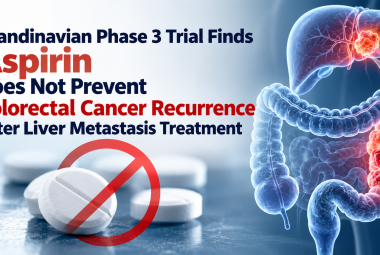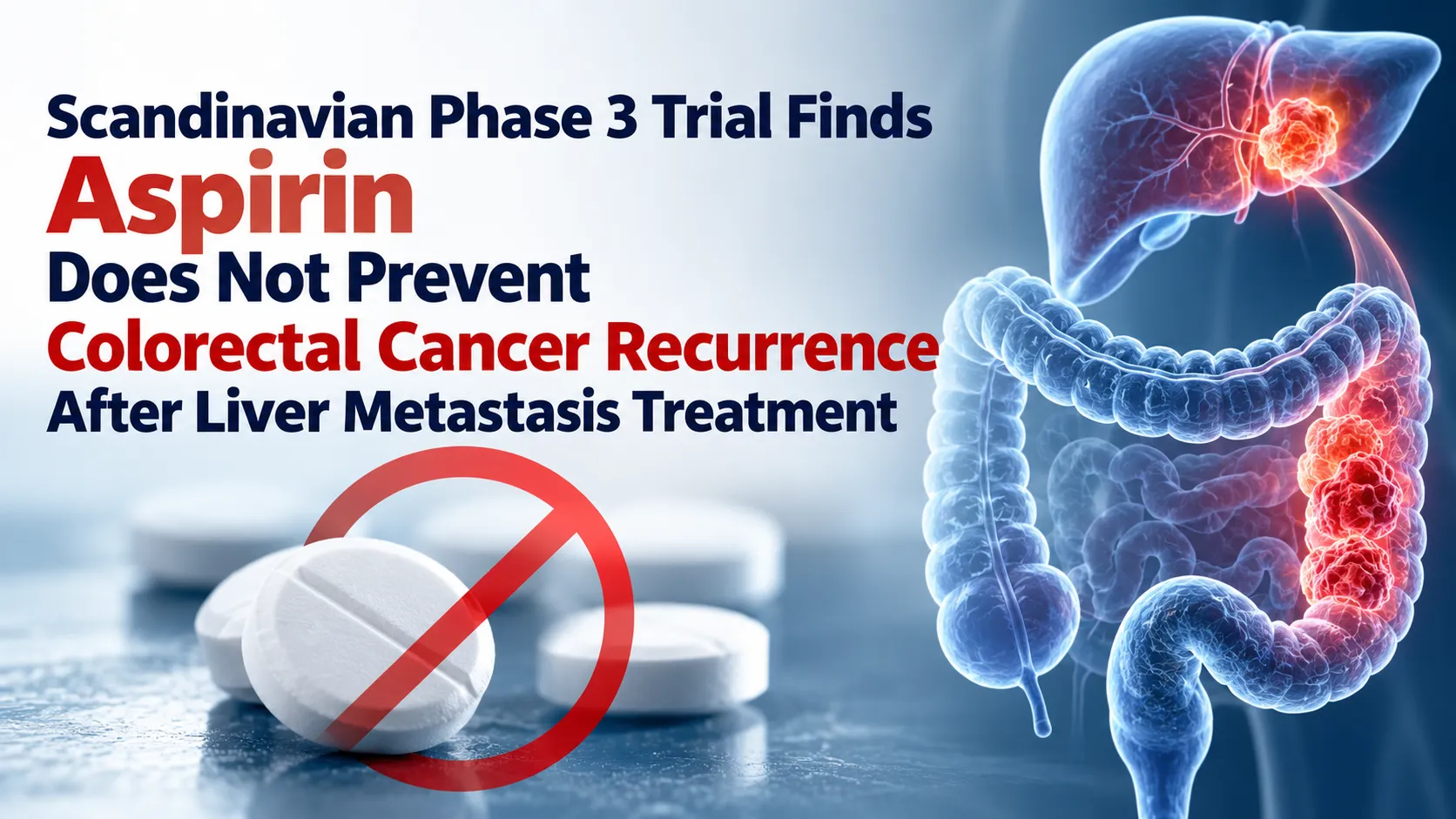
A large Scandinavian phase 3 clinical trial has found that starting aspirin after curative-intent treatment for colorectal cancer that has spread to the liver does not reduce the risk of cancer recurrence or death. The findings come from the ASAC trial, conducted across hospitals in Norway, Sweden and Denmark.
Colorectal cancer is among the most common cancers globally, and liver metastases develop in a substantial proportion of patients during the course of the disease. For patients whose liver metastases can be treated with curative intent, surgery and, in some cases, local ablative procedures are important treatment options. However, recurrence remains a major clinical concern.
The ASAC trial was designed to investigate whether aspirin could reduce this recurrence risk when started after curative-intent treatment of colorectal cancer liver metastases. Interest in aspirin as an anticancer treatment has increased following studies suggesting that the drug may reduce cancer development or recurrence in certain patient groups.
ASAC Trial Evaluated Aspirin After Liver Metastasis Treatment
The ASAC study was a randomised, double-blind, placebo-controlled phase 3 trial conducted at 14 hospitals across Norway, Sweden and Denmark. The trial was led by Oslo University Hospital.
A total of 466 patients were randomly assigned to receive either aspirin 160 mg once daily or placebo following curative-intent treatment of colorectal cancer liver metastases through surgical resection and/or ablation. Of these participants, 428 initiated the assigned study treatment and were included in the primary analysis.
Aspirin Did Not Improve Disease-Free Survival
The primary endpoint of the trial was disease-free survival, defined as the period until cancer recurrence or death.
The researchers found no reduction in recurrence or death among patients receiving aspirin compared with placebo. The hazard ratio for disease-free survival was 1.08 (95.44% CI, 0.85–1.38).
Median disease-free survival was 1.13 years in the aspirin group, compared with 1.40 years in the placebo group.
The researchers also found no evidence that aspirin's effect differed according to molecular subgroups based on mutations in PIK3CA or KRAS.
Findings Differ From Some Previous Aspirin Research
The results are notable because previous research has suggested that aspirin may have a role in preventing colorectal cancer recurrence in selected patients.
For example, the ALASCCA trial reported a reduction in recurrence when aspirin was used as adjuvant treatment after surgery in molecularly selected patients with non-metastatic colorectal cancer. These findings have subsequently been incorporated into clinical guidelines for certain patient groups.
The ASAC trial, however, examined a different clinical setting: patients who had already developed metastatic colorectal cancer involving the liver and had undergone treatment with curative intent.
The researchers said the contrasting findings highlight the importance of considering the stage of cancer, tumour biology and treatment setting when evaluating aspirin as an anticancer therapy.
Overall Survival Result Requires Cautious Interpretation
The trial also reported a difference in overall survival. At three years after treatment initiation, overall survival was 75.7% among patients receiving aspirin, compared with 84.9% in the placebo group.
The hazard ratio for death was 1.64 (95% CI, 1.01–2.65).
However, the investigators emphasised that this was a secondary endpoint and that the study was not primarily designed or powered to evaluate overall survival. In addition, information about treatments patients received after cancer recurrence was not collected under the trial protocol, making the survival finding difficult to interpret fully.
Serious Adverse Events Were More Frequent With Aspirin
Safety findings also differed between the two groups.
Serious adverse events were reported in 17 of 217 patients (7.8%) receiving aspirin, compared with 4 of 211 patients (1.9%) receiving placebo.
No deaths were considered related to the study treatment.
According to the investigators, the absence of a demonstrated recurrence benefit combined with the higher rate of serious adverse events does not support routinely starting aspirin solely to prevent recurrence in patients who have undergone curative-intent treatment for colorectal cancer liver metastases.
Trial Does Not Address Patients Already Taking Aspirin
The researchers stressed that the ASAC trial specifically evaluated starting aspirin after treatment of liver metastases.
Patients who were already taking aspirin were not included in the trial. Therefore, the results cannot be used to determine whether patients who are already taking aspirin for another medical reason should discontinue the drug.
Patients prescribed aspirin for an existing medical indication should discuss any changes to their treatment with their doctor.
Researchers to Examine Tumour Biology Further
The investigators plan additional molecular analyses to determine whether tumour biology could help explain why aspirin appears beneficial in some colorectal cancer settings but not in others.
Previous observational studies have associated long-term aspirin use with a lower risk of developing colorectal cancer, while randomised trials have reported benefits in selected patients with non-metastatic disease and specific molecular characteristics.
The ASAC results suggest that these findings cannot automatically be extended to patients who have undergone treatment for colorectal cancer that has metastasised to the liver.
Scandinavian Collaboration Provided Large Randomised Evidence
The ASAC trial was an investigator-initiated collaboration involving hepatopancreatobiliary centres in Norway, Sweden and Denmark and was coordinated by Oslo University Hospital.
The first results were presented as a late-breaking oral presentation at the 2025 American Society of Clinical Oncology (ASCO) Annual Meeting in Chicago. The final analyses have now been published in The Lancet Gastroenterology & Hepatology.
The study was funded by the Research Council of Norway, the Norwegian Cancer Society, the Norwegian national programme for clinical treatment research (KLINBEFORSK), and Oslo University Hospital Fondsstiftelsen. According to the investigators, the funders had no role in data collection, analysis, interpretation or manuscript preparation.