Pharma News

Get the latest news from world and India’s leading pharmaceutical companies Pharma Industry, pharmaceutical marketing, generic drugs, and Complete news for Pharmacy and Life Sciences professionals.

  • Hormones may have therapeutic potential to prevent wrinkles, hair graying

    Hormones may be leveraged to treat and prevent signs of aging such as wrinkles and hair graying, according to a new study published in the EndocrineSociety journal Endocrine Reviews.

    Until now, only a limited number of hormones, mainly topical retinoids (retinol and tretinoin) and estrogen which is typically used to treat side effects of menopause, have been used in clinical practice as anti-skin aging compounds. This study reviews a new class of hormones and their anti-aging properties.

  • Research challenges our understanding of cancer predisposition

    New findings question assumptions of cancer formation in individuals with the cancer-predisposition syndrome, neurofibromatosis type 1, and offer hope for a personalised approach to early cancer recognition including for those with similar conditions.

  • Diclofenac increases cardiac risk by 50%
    Diclofenac is having a cardiovascular health risk compared with non-use, paracetamol use, and use of other traditional non-steroidal anti-inflammatory drugs, as per research. The research was conducted by Morten Schmidt and published at the BMJ.
  • FDA Approves First Treatment for Cerebrotendinous Xanthomatosis, a Rare Lipid Storage Disease

    the U.S. Food and Drug Administration approved Ctexli for the treatment of cerebrotendinous xanthomatosis (CTX) in adults. Ctexli is the first FDA-approved drug to treat CTX, a very rare lipid storage disease.

  • Sandoz launches biosimilar Pyzchiva (ustekinumab-ttwe) in the US
    Pyzchiva is a key biosimilar value driver for Sandoz, contributing to the company’s overall growth strategy. The company ranks number one in biosimilars globally and across key markets in Europe. The commercial availability of Pyzchiva, which builds on the US launch of Hyrimoz in July 2023, marks an important step in the Sandoz strategic ambition to become number one in biosimilars in the US.
  • New class of antimalarial drugs discovered
    Malaria remains one of the greatest global health threats. In 2022, there were an estimated 247 million infections and over 600,000 deaths, mostly in sub-Saharan Africa. Innovative research approaches are therefore urgently needed to achieve long-term progress in prevention and treatment.
  • Groundbreaking study shows potential of new mRNA vaccine to help fight tuberculosis
    A new vaccine that boosts immunity against tuberculosis has been shown to be effective in pioneering pre-clinical trials, as part of a successful collaboration between three leading Australian research institutions. A study into the vaccine’s effectiveness, published in eBioMedicine, was led by experts from the Sydney Infectious Diseases Institute at University of Sydney, the Centenary Institute and the Monash Institute of Pharmaceutical Science at Monash University.
  • Dysfunctional B Cells is a new Cancer Immunotherapy Target
    University of Pittsburgh School of Medicine and UPMC Hillman Cancer Center scientists have discovered a novel subset of cancer-fighting immune cells that reside outside of their normal neighborhood, known as the tertiary lymphoid structure, where they become frustratingly dysfunctional when in close contact with tumors.
  • New Therapy May Effectively Control HIV in Uganda
    A multi-national, multi-institutional study led by Weill Cornell Medicine investigators found little natural resistance to a new HIV therapy called lenacapavir in a population of patients in Uganda.
  • Nemluvio of Gladerma granted marketing authorization in the United Kingdom and Switzerland
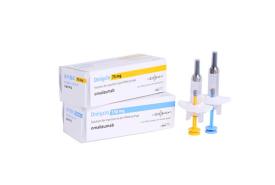
    Galderma today announced that the United Kingdom (UK) Medicines and Healthcare products Regulatory Agency and Swissmedic have granted the marketing authorization of nemolizumab for the treatment of both atopic dermatitis and prurigo nodularis in the UK and Switzerland, respectively. Specifically, the approvals are for nemolizumabs subcutaneous use for the treatment of moderate-to-severe atopic dermatitis in combination with topical corticosteroids and/or calcineurin inhibitors
Subscribe to Pharma News