
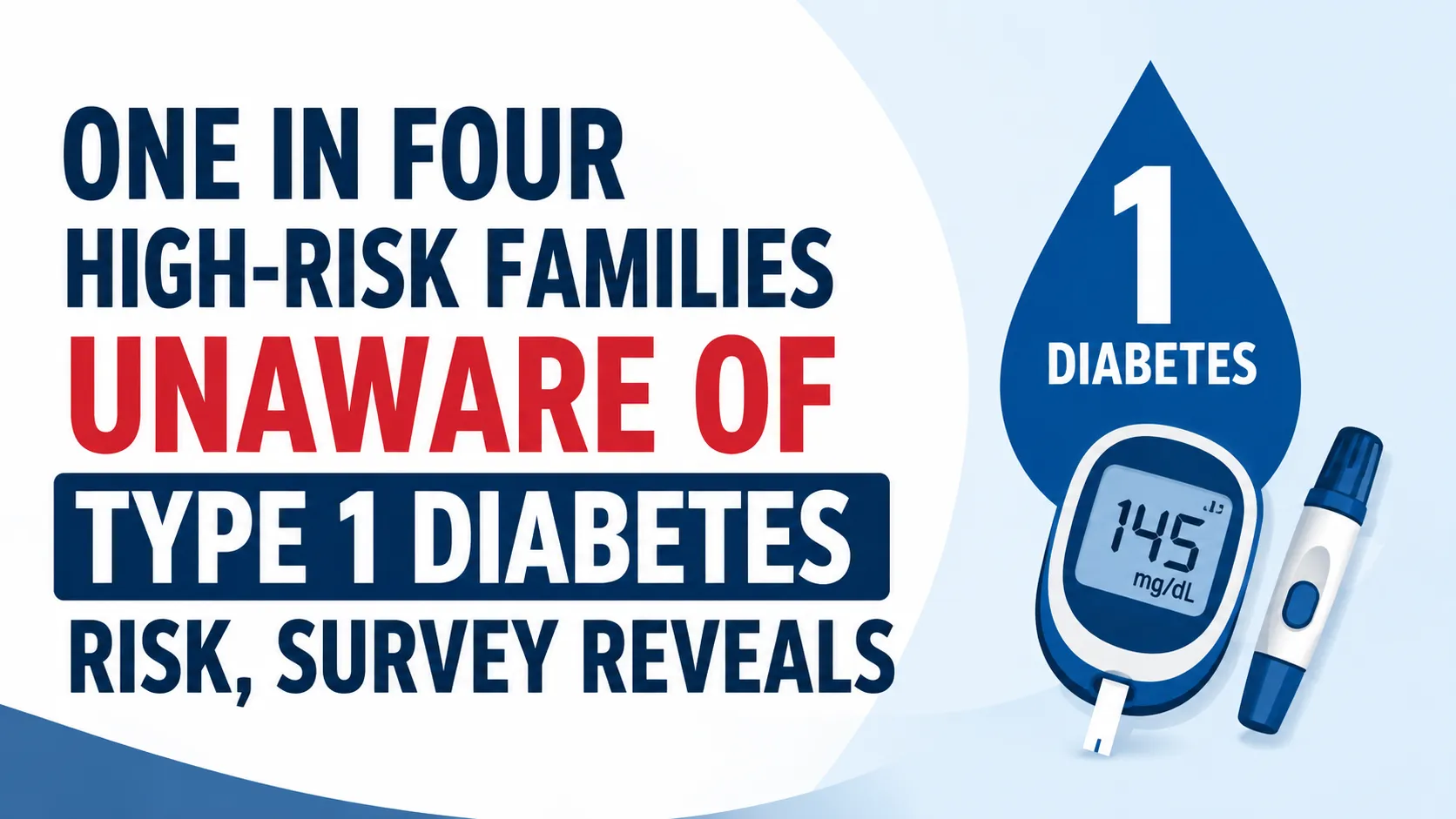
A new survey has uncovered significant knowledge gaps among families with a history of type 1 diabetes (T1D), highlighting misconceptions that may delay early screening and diagnosis despite their increased risk of developing the disease.
The survey, titled "The Family Factor: A T1D Risk Awareness Survey," was conducted by global diabetes nonprofit Beyond Type 1 and commissioned by Sanofi. It focused on adults and caregivers with a first-degree family member living with type 1 diabetes.
Key Findings
The survey found that 26% of respondents with a first-degree relative affected by T1D did not believe they or their child were at risk, even though these individuals may face up to a 15-fold higher likelihood of developing the condition.
Researchers also identified several widespread misconceptions :
• 63% incorrectly believed that type 1 diabetes is mainly diagnosed in children, although adults account for around 60% of new diagnoses each year.
• 38% mistakenly identified lack of physical activity as a risk factor, despite T1D being an autoimmune disease unrelated to lifestyle.
• 26% believed screening is only possible after symptoms appear.
• 31% thought screening is available only through specialist healthcare providers.
• Awareness Does Not Always Lead to Action
Although 85% of participants said learning about an increased risk would make them more likely to undergo screening, nearly 46% reported they were either not planning or remained undecided about having early autoantibody screening within the next six months.
The survey also revealed limited awareness of diabetic ketoacidosis (DKA), a potentially life-threatening complication that often accompanies an unexpected diagnosis of type 1 diabetes. Nearly 28% of respondents had either never heard of DKA or were unfamiliar with the condition.
Importance of Early Screening
Health experts emphasize that early identification of diabetes-related autoantibodies can detect type 1 diabetes before symptoms develop, allowing closer monitoring and reducing the risk of severe complications at diagnosis. The findings suggest that improving public education about T1D risk, screening availability, and disease progression could encourage more at-risk families to seek timely testing.