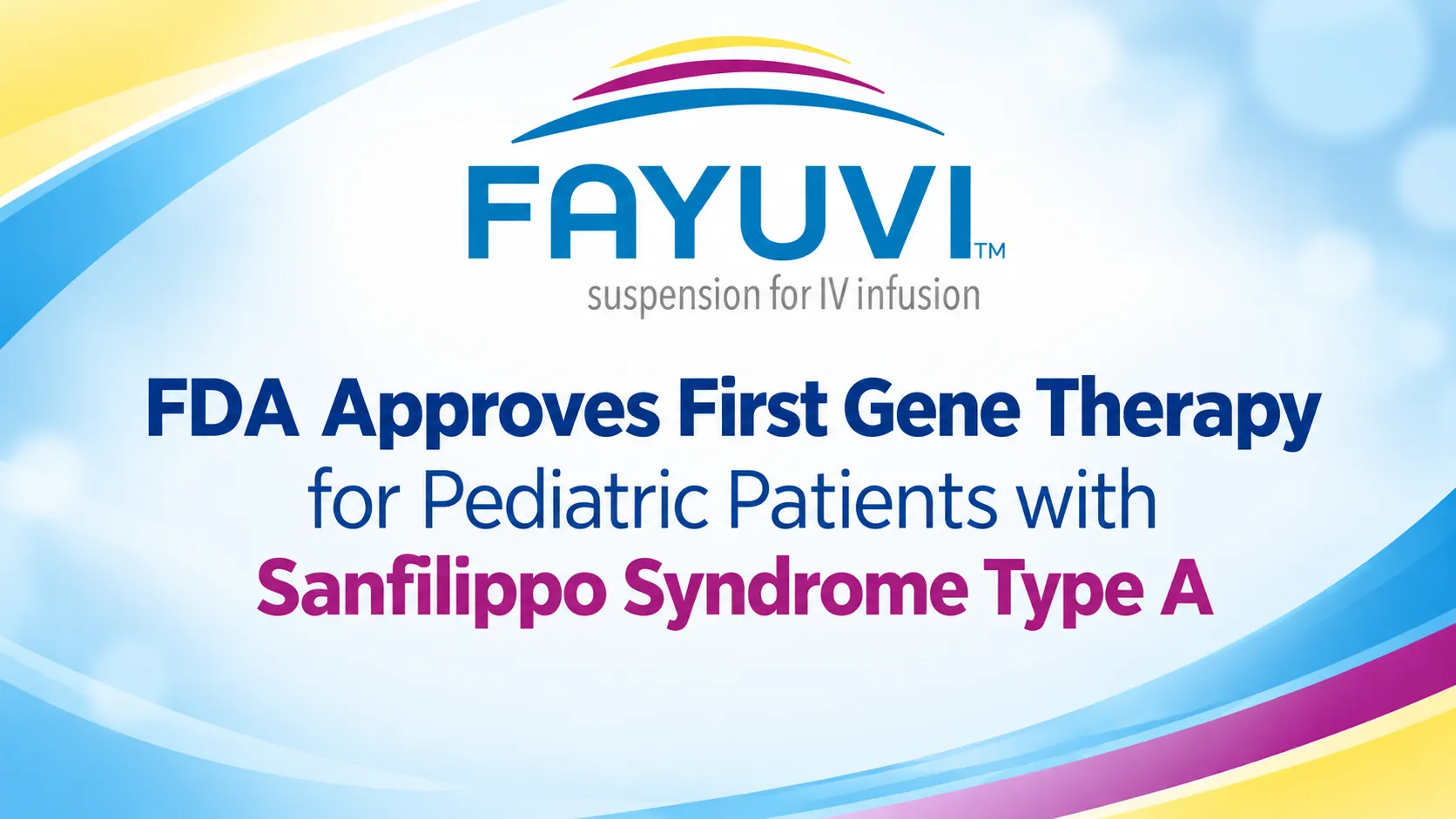
The U.S. Food and Drug Administration (FDA) has approved Fayuvi (rebisufligene etisparvovec-hopf), the first FDA-approved gene therapy for pediatric patients with mucopolysaccharidosis type IIIA (MPS IIIA), also known as Sanfilippo syndrome type A. The approval was announced on September 17, 2026.
Sanfilippo syndrome type A is a rare inherited disorder that primarily affects the brain and nervous system. Children with the condition can experience progressive loss of cognitive, language and other developmental abilities. Before this approval, there was no FDA-approved treatment specifically designed to address the underlying cause of MPS IIIA.
Fayuvi is administered as a one-time intravenous infusion. The gene therapy uses a modified, non-infectious adeno-associated virus serotype 9 (AAV9) vector to deliver a functional copy of the SGSH gene into the patient's cells.
The SGSH gene provides instructions for producing sulfamidase, an enzyme that is deficient in people with MPS IIIA. Sulfamidase helps break down heparan sulfate, a substance that can accumulate to harmful levels in cells when the enzyme is deficient. By delivering a functional SGSH gene, Fayuvi is designed to enable cells to produce sulfamidase and reduce the accumulation of heparan sulfate.
The safety and effectiveness of Fayuvi were evaluated in an open-label, single-arm, multicenter clinical study involving pediatric patients with MPS IIIA. The study evaluated changes in cognitive function in children between 2 and 5 years of age.
According to the FDA, children treated with Fayuvi maintained or improved cognitive function compared with an untreated historical control group. This was important because MPS IIIA is generally associated with progressive developmental and cognitive decline as the disease advances.
The safety profile of Fayuvi included adverse reactions such as increased AST levels, nausea, vomiting, fever, decreased appetite, decreased white blood cell counts, decreased platelet counts and increased amylase levels. The FDA has also included a warning regarding the risk of thrombotic microangiopathy (TMA).
Because Fayuvi is an AAV-based gene therapy, long-term monitoring is also important. The FDA notes a potential risk that genetic material delivered by the vector could integrate into the genome and potentially contribute to tumor development.
Patients receiving Fayuvi are required to receive corticosteroid treatment beginning one day before the gene therapy infusion and continuing for at least eight weeks afterward. Treatment should be administered in a healthcare setting capable of managing potential infusion-related reactions and other complications.
Before approval, Fayuvi received several FDA development designations, including Orphan Drug, Fast Track and Breakthrough Therapy designations. The therapy was developed by Ultragenyx Pharmaceutical, Inc.
The approval marks another development in the use of gene therapy for rare pediatric genetic disorders. Unlike conventional treatments that primarily manage symptoms, Fayuvi is designed to address an underlying genetic defect by providing cells with a functional copy of the SGSH gene.
The approval also highlights the growing role of AAV vector technology and genetic medicines in the treatment of rare diseases, particularly disorders affecting the central nervous system. Long-term follow-up will remain important to evaluate the durability of treatment benefits and potential delayed safety risks.