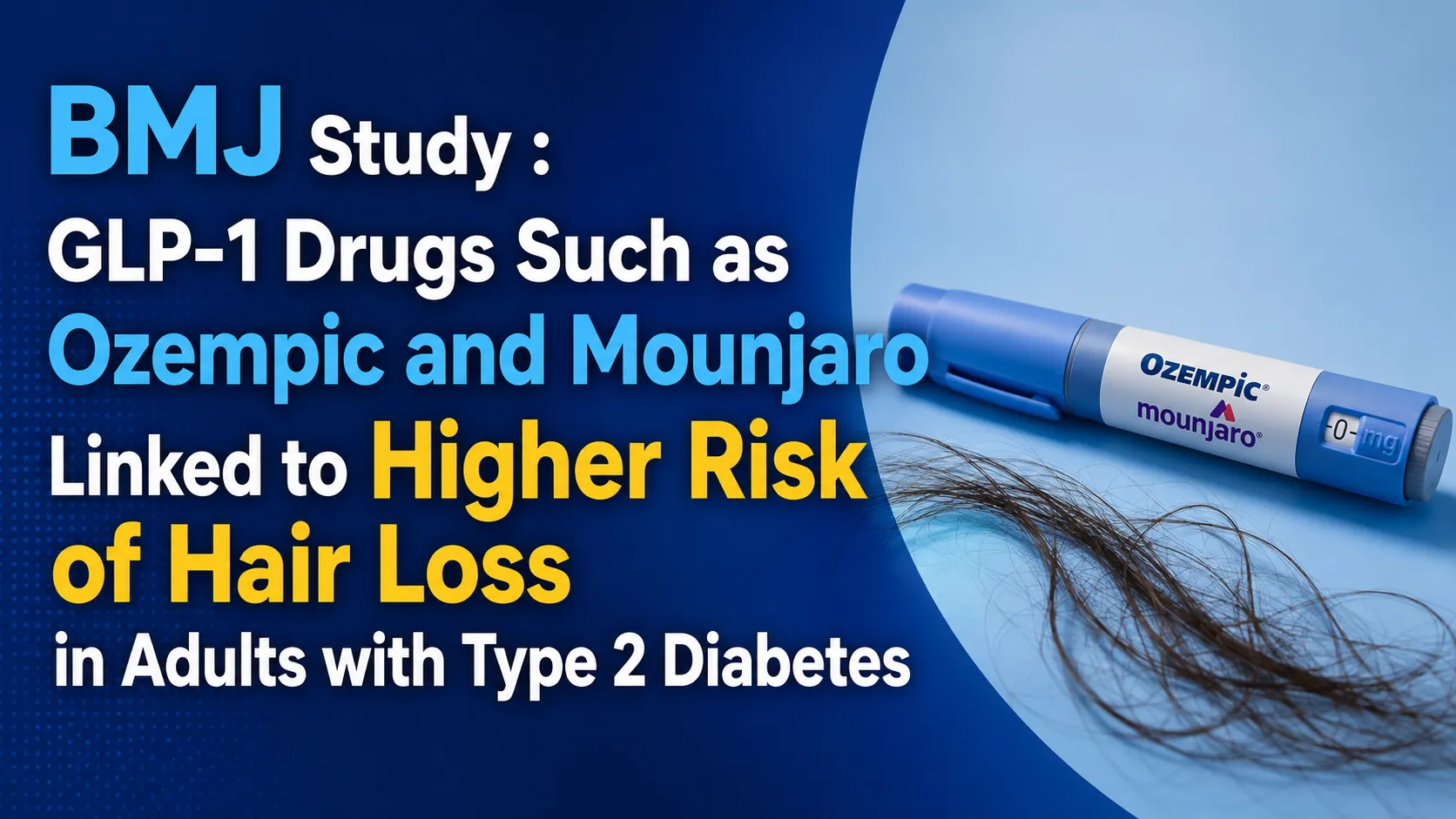
A new study published in The BMJ has found that adults with type 2 diabetes who use glucagon-like peptide-1 receptor agonists (GLP-1 RAs), including medications such as semaglutide (Ozempic, Wegovy) and tirzepatide (Mounjaro, Zepbound), may face a higher risk of developing non-scarring hair loss (alopecia) compared with patients taking other commonly prescribed diabetes medicines. While the researchers observed a significant increase in relative risk, they emphasized that the overall absolute risk remains low, and the benefits of these medicines continue to outweigh this potential adverse effect for most patients.
Growing Use of GLP-1 Medicines
GLP-1 receptor agonists have transformed the management of type 2 diabetes and obesity by improving blood glucose control, promoting substantial weight loss, and reducing cardiovascular risk in many patients. As their use has rapidly expanded worldwide, clinicians have increasingly reported cases of hair loss among users. Until now, however, evidence linking these medicines to alopecia had been limited and inconsistent.
About the Study
Researchers conducted a target trial emulation using electronic health record data from a large, multisite academic health system in the United States. This approach attempts to mimic the design of a randomized clinical trial by comparing patients receiving different therapies while carefully accounting for differences between treatment groups.
The investigators compared adults with type 2 diabetes initiating GLP-1 receptor agonists with similar patients starting either:
Sodium-glucose cotransporter-2 (SGLT-2) inhibitors
Dipeptidyl peptidase-4 (DPP-4) inhibitors
The primary outcome was the occurrence of clinically diagnosed non-scarring alopecia during follow-up.
Key Findings
The study found that patients receiving GLP-1 receptor agonists had a significantly higher likelihood of developing non-scarring hair loss than those treated with alternative diabetes medications.
Major findings included :
37% higher risk of alopecia compared with SGLT-2 inhibitor users.
68% higher risk compared with DPP-4 inhibitor users.
Hair loss remained uncommon overall, occurring at approximately 3–9 cases per 1,000 person-years.
Most cases involved non-scarring alopecia, meaning the hair follicles remain intact and hair regrowth is generally possible.
Why Might GLP-1 Drugs Cause Hair Loss?
The study was observational and therefore cannot prove that GLP-1 medicines directly cause hair loss. However, researchers proposed several biological explanations.
Rapid weight loss associated with these medicines may reduce intake or absorption of essential nutrients such as iron, zinc, and protein, all of which are important for healthy hair growth. Significant metabolic changes and hormonal adaptations occurring during rapid weight reduction may also shift hair follicles into a resting phase, leading to temporary shedding known as telogen effluvium.
Researchers also suggested that endocrine and metabolic changes beyond weight loss could contribute, although further investigation is required.
Clinical Implications
Although the findings identify a measurable increase in risk, experts caution that patients should not discontinue GLP-1 therapy without consulting their healthcare provider.
These medicines continue to provide substantial benefits, including :
Better blood glucose control
Significant weight reduction
Lower risk of cardiovascular events in appropriate patients
Improved metabolic health
The newly identified risk should instead become part of shared decision-making between physicians and patients, particularly for individuals who consider hair loss an important quality-of-life concern.
Monitoring Patients
Healthcare professionals may consider monitoring patients receiving GLP-1 receptor agonists for early signs of excessive hair shedding, especially during the first year of treatment.
Patients experiencing noticeable hair loss should undergo evaluation for other possible causes, including:
Iron deficiency
Zinc deficiency
Thyroid disorders
Nutritional deficiencies
Hormonal abnormalities
Other dermatological conditions
Addressing these underlying factors may help reduce or reverse hair loss in many individuals.
Study Limitations
The authors acknowledged several limitations.
Because the investigation used electronic health records, only hair loss severe enough to receive a clinical diagnosis was captured. Mild cases may have gone unreported. Additionally, despite advanced statistical methods, observational studies cannot completely eliminate residual confounding, and a direct cause-and-effect relationship cannot be confirmed.
The researchers recommend additional prospective studies to clarify the biological mechanisms underlying this association.
Conclusion
The new BMJ study provides important real-world evidence that GLP-1 receptor agonists are associated with an increased relative risk of non-scarring alopecia in adults with type 2 diabetes compared with SGLT-2 and DPP-4 inhibitors. However, the absolute risk remains low, and the established benefits of these medications for diabetes and obesity management continue to outweigh this uncommon adverse event for most patients.
The findings underscore the importance of informed patient counseling, nutritional monitoring, and individualized treatment decisions as the use of GLP-1 medicines continues to expand globally.